

Vanderbilt University
Meest recente samenvattingen op de Vanderbilt University. Op zoek naar een samenvatting op de Vanderbilt University? Wij hebben diverse samenvattingen en notities voor jouw school of universiteit.
-
396
- 0
-
17
All courses for Vanderbilt University
-
ATI PHARMACOLOGY 1
-
Burns And Grove's The Practice Of Nursing Research: Appraisal, Synthesis, And Generation Of Evidence 8th Edition 2
-
DeWit: Medical-Surgical Nursing: Concepts & Practice, 3rd Edition 1
-
DeWit: Medical-Surgical Nursing: Concepts & Practice, 3rd Edition{chapter 1 to 48} 2
-
Du Bois 1
-
ECON 1010 ECON1010 1
-
Essentials of Psychiatric Mental Health Nursing 4t 1
-
Exam 1
-
HOD 1250 1
-
Intro to International Politics psci1102 19
-
Neuroscience NSC2201 3
-
NURS 100 NR324 21
-
Nursing 1
-
NURSING 100 NURSING 100 (NUR100) 9
-
NURSING 100/NURSING 100 Medical-Surgical Nursing- Concepts and Practice 3th Edition deWit NURSING100 5
-
PSY-PC 2110 2
-
PSYCH 100 psych100 48
-
Psychiatric-Mental Health Nursing 1
-
PYSCH100 1
-
RN MATERNAL 1
-
TEST BANK Psychiatric-Mental Health Nursing 8th edition by VIDEBECK PSYCH100 9
-
TESTBANK FOR Psychiatric-Mental Health Nursing 8th edition LATEST PSYCH100 2
-
Vanderbilt University 1
Populaire boeken Vanderbilt University
Ricky W. Griffin, Ronald J. Ebert • ISBN 9789702605973
Laatste content Vanderbilt University
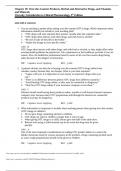
1. You are teaching a patient about taking over-the-counter (OTC) drugs. Which important safety information should you include in your teaching plan? a. “OTC drugs will only maintain their potency months after the expiration date.” b. “OTC drugs often interact with other drugs, and with food or alcohol” c. “Be sure to take all the pills in the bottle.” d. “Adjust the dosage to your specific needs.” ANS: B OTC drugs often interact with other drugs, and with food or alcohol,...
- Tentamen (uitwerkingen)
- • 9 pagina's's •
-
Vanderbilt University•NSC 3260
Voorbeeld 2 van de 9 pagina's
Document laden...
1. You are teaching a patient about taking over-the-counter (OTC) drugs. Which important safety information should you include in your teaching plan? a. “OTC drugs will only maintain their potency months after the expiration date.” b. “OTC drugs often interact with other drugs, and with food or alcohol” c. “Be sure to take all the pills in the bottle.” d. “Adjust the dosage to your specific needs.” ANS: B OTC drugs often interact with other drugs, and with food or alcohol,...
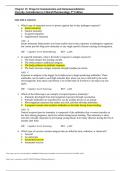
1. Which type of immunity serves to protect against day-to-day pathogen exposure? a. Innate immunity b. Natural immunity c. Acquired immunity d. Supplemental immunity ANS: A Innate immunity helps protect you from smaller day-to-day exposures to pathogenic organism but cannot provide long-term immunity to any single specific disease-causing microorganism. DIF: Cognitive Level: Remembering REF: p.280 2. In acquired immunity, what is the body’s response to antigen exposure? a. The body ...
- Tentamen (uitwerkingen)
- • 6 pagina's's •
-
Vanderbilt University•NSC 3260
Voorbeeld 2 van de 6 pagina's
Document laden...
1. Which type of immunity serves to protect against day-to-day pathogen exposure? a. Innate immunity b. Natural immunity c. Acquired immunity d. Supplemental immunity ANS: A Innate immunity helps protect you from smaller day-to-day exposures to pathogenic organism but cannot provide long-term immunity to any single specific disease-causing microorganism. DIF: Cognitive Level: Remembering REF: p.280 2. In acquired immunity, what is the body’s response to antigen exposure? a. The body ...
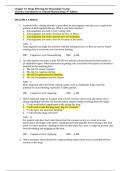
1. A patient with a clotting disorder is prescribed an anticoagulant and asks you to explain the purpose of anticoagulant therapy. What is your best response? a. Anticoagulants are used to lyse existing clots. b. Anticoagulants are used to increase the flow of blood. c. Anticoagulants are used to prevent new clot formation. d. Anticoagulants are used to thin the viscosity of the blood. ANS: C Anticoagulants are drugs that interfere with the clotting process, so they are used to reduce ex...
- Tentamen (uitwerkingen)
- • 10 pagina's's •
-
Vanderbilt University•NSC 3260
Voorbeeld 2 van de 10 pagina's
Document laden...
1. A patient with a clotting disorder is prescribed an anticoagulant and asks you to explain the purpose of anticoagulant therapy. What is your best response? a. Anticoagulants are used to lyse existing clots. b. Anticoagulants are used to increase the flow of blood. c. Anticoagulants are used to prevent new clot formation. d. Anticoagulants are used to thin the viscosity of the blood. ANS: C Anticoagulants are drugs that interfere with the clotting process, so they are used to reduce ex...
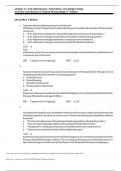
Apatientwithahistoryofcardiovasculardiseasehasbeenprescribedaspirindaily.Whatspecificrisk shouldthispatientbeinformedofbecauseoftakingaspirin? a. Riskofinfection b. Riskofbleeding c. Riskofliverimpairment d. Riskofcognitiveimpairment ANS: B Patientswhotakeaspirinmustbemonitoredforbleedingduetoirreversibleplateletinhibitionforthe lifespanoftheplateletsoaslongas7to8days. DIF: CognitiveLevel:Applying REF: p.228 3. Amalepatienttakingdailyaspirinforthepreventionofcardiovascularcomplication...
- Tentamen (uitwerkingen)
- • 9 pagina's's •
-
Vanderbilt University•NSC 3260
Voorbeeld 2 van de 9 pagina's
Document laden...
Apatientwithahistoryofcardiovasculardiseasehasbeenprescribedaspirindaily.Whatspecificrisk shouldthispatientbeinformedofbecauseoftakingaspirin? a. Riskofinfection b. Riskofbleeding c. Riskofliverimpairment d. Riskofcognitiveimpairment ANS: B Patientswhotakeaspirinmustbemonitoredforbleedingduetoirreversibleplateletinhibitionforthe lifespanoftheplateletsoaslongas7to8days. DIF: CognitiveLevel:Applying REF: p.228 3. Amalepatienttakingdailyaspirinforthepreventionofcardiovascularcomplication...
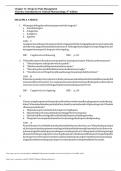
1. Whattypesofdrugshavethemainpurposeofrelievingpain? a. Anticholinergics b. Antagonists c. Analgesics d. Agonists ANS: C Analgesicshavethespecificpurposeofrelievingpaineitherbychangingthepatient’sperceptionofp ainorbyreducingpainfulstimulationatitssource.Althoughsomeanalgesicsareopioidagonists,the termagonistisnotspecificforapain-relievingdrug. DIF: CognitiveLevel:Knowing REF: p.213 2. Thehealthcareproviderasksyoutorateapatient’spostoperativepain.Whatisyourbestresponse? a. “Hei...
- Tentamen (uitwerkingen)
- • 7 pagina's's •
-
Vanderbilt University•NSC 3260
Voorbeeld 2 van de 7 pagina's
Document laden...
1. Whattypesofdrugshavethemainpurposeofrelievingpain? a. Anticholinergics b. Antagonists c. Analgesics d. Agonists ANS: C Analgesicshavethespecificpurposeofrelievingpaineitherbychangingthepatient’sperceptionofp ainorbyreducingpainfulstimulationatitssource.Althoughsomeanalgesicsareopioidagonists,the termagonistisnotspecificforapain-relievingdrug. DIF: CognitiveLevel:Knowing REF: p.213 2. Thehealthcareproviderasksyoutorateapatient’spostoperativepain.Whatisyourbestresponse? a. “Hei...
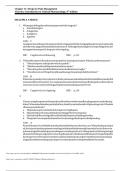
1. Whattypesofdrugshavethemainpurposeofrelievingpain? a. Anticholinergics b. Antagonists c. Analgesics d. Agonists ANS: C Analgesicshavethespecificpurposeofrelievingpaineitherbychangingthepatient’sperceptionofp ainorbyreducingpainfulstimulationatitssource.Althoughsomeanalgesicsareopioidagonists,the termagonistisnotspecificforapain-relievingdrug. DIF: CognitiveLevel:Knowing REF: p.213 2. Thehealthcareproviderasksyoutorateapatient’spostoperativepain.Whatisyourbestresponse? a. “Hei...
- Tentamen (uitwerkingen)
- • 7 pagina's's •
-
Vanderbilt University•NSC 3260
Voorbeeld 2 van de 7 pagina's
Document laden...
1. Whattypesofdrugshavethemainpurposeofrelievingpain? a. Anticholinergics b. Antagonists c. Analgesics d. Agonists ANS: C Analgesicshavethespecificpurposeofrelievingpaineitherbychangingthepatient’sperceptionofp ainorbyreducingpainfulstimulationatitssource.Althoughsomeanalgesicsareopioidagonists,the termagonistisnotspecificforapain-relievingdrug. DIF: CognitiveLevel:Knowing REF: p.213 2. Thehealthcareproviderasksyoutorateapatient’spostoperativepain.Whatisyourbestresponse? a. “Hei...
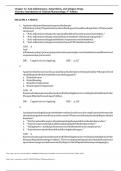
1. Apatientwithjointinflammationisprescribedanantiinflammatorydrug.Thepatientasksyouhowthisdrugworkstoaddressthisproblem.Whatisyourbe stresponse? a. “Anti-inflammatorydrugsreducepainandlimitbloodvesselresponsestojointinjury.” b. “Anti-inflammatorydrugscontainantibacterialandanti-inflammatoryproperties.” c. “Anti-inflammatorydrugslimitthebody’sresponsetocortisolinthebody.” d. “Anti-inflammatorydrugsincreasethereleaseofTNFandothermediators.” ANS: A Antiinflammatorydrug’s...
- Tentamen (uitwerkingen)
- • 9 pagina's's •
-
Vanderbilt University•NSC 3260
Voorbeeld 2 van de 9 pagina's
Document laden...
1. Apatientwithjointinflammationisprescribedanantiinflammatorydrug.Thepatientasksyouhowthisdrugworkstoaddressthisproblem.Whatisyourbe stresponse? a. “Anti-inflammatorydrugsreducepainandlimitbloodvesselresponsestojointinjury.” b. “Anti-inflammatorydrugscontainantibacterialandanti-inflammatoryproperties.” c. “Anti-inflammatorydrugslimitthebody’sresponsetocortisolinthebody.” d. “Anti-inflammatorydrugsincreasethereleaseofTNFandothermediators.” ANS: A Antiinflammatorydrug’s...
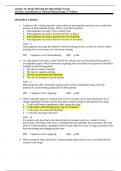
1. A patient with a clotting disorder is prescribed an anticoagulant and asks you to explain the purpose of anticoagulant therapy. What is your best response? a. Anticoagulants are used to lyse existing clots. b. Anticoagulants are used to increase the flow of blood. c. Anticoagulants are used to prevent new clot formation. d. Anticoagulants are used to thin the viscosity of the blood. ANS: C Anticoagulants are drugs that interfere with the clotting process, so they are used to reduce ex...
- Tentamen (uitwerkingen)
- • 10 pagina's's •
-
Vanderbilt University•NSC 3260
Voorbeeld 2 van de 10 pagina's
Document laden...
1. A patient with a clotting disorder is prescribed an anticoagulant and asks you to explain the purpose of anticoagulant therapy. What is your best response? a. Anticoagulants are used to lyse existing clots. b. Anticoagulants are used to increase the flow of blood. c. Anticoagulants are used to prevent new clot formation. d. Anticoagulants are used to thin the viscosity of the blood. ANS: C Anticoagulants are drugs that interfere with the clotting process, so they are used to reduce ex...
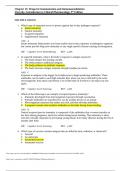
1. Which type of immunity serves to protect against day-to-day pathogen exposure? a. Innate immunity b. Natural immunity c. Acquired immunity d. Supplemental immunity ANS: A Innate immunity helps protect you from smaller day-to-day exposures to pathogenic organism but cannot provide long-term immunity to any single specific disease-causing microorganism. DIF: Cognitive Level: Remembering REF: p.280 2. In acquired immunity, what is the body’s response to antigen exposure? a. The body ...
- Tentamen (uitwerkingen)
- • 6 pagina's's •
-
Vanderbilt University•NSC 3260
Voorbeeld 2 van de 6 pagina's
Document laden...
1. Which type of immunity serves to protect against day-to-day pathogen exposure? a. Innate immunity b. Natural immunity c. Acquired immunity d. Supplemental immunity ANS: A Innate immunity helps protect you from smaller day-to-day exposures to pathogenic organism but cannot provide long-term immunity to any single specific disease-causing microorganism. DIF: Cognitive Level: Remembering REF: p.280 2. In acquired immunity, what is the body’s response to antigen exposure? a. The body ...
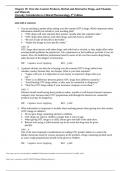
1. You are teaching a patient about taking over-the-counter (OTC) drugs. Which important safety information should you include in your teaching plan? a. “OTC drugs will only maintain their potency months after the expiration date.” b. “OTC drugs often interact with other drugs, and with food or alcohol” c. “Be sure to take all the pills in the bottle.” d. “Adjust the dosage to your specific needs.” ANS: B OTC drugs often interact with other drugs, and with food or alcohol,...
- Tentamen (uitwerkingen)
- • 9 pagina's's •
-
Vanderbilt University•NSC 3260
Voorbeeld 2 van de 9 pagina's
Document laden...
1. You are teaching a patient about taking over-the-counter (OTC) drugs. Which important safety information should you include in your teaching plan? a. “OTC drugs will only maintain their potency months after the expiration date.” b. “OTC drugs often interact with other drugs, and with food or alcohol” c. “Be sure to take all the pills in the bottle.” d. “Adjust the dosage to your specific needs.” ANS: B OTC drugs often interact with other drugs, and with food or alcohol,...