PET
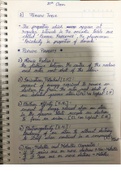
Introduction to land law and transfer of land
Property Legislation which was passed in 1925 which came into force on 1 jan 1926
● Settled Land Act 1925
● Trustee Act 1925
● Law of Property Act 1925
-Created legal estates.
● Land Registration Act 1925
- Central registration, where information of a registered property could be found.
● Administration of Estates Act 1925
- Passing on estates, when person dies.
● Land Charges Act 1925
Classification of Property
Real property (referred to as Land)
-Realty
-Rem
-Res (Thing)
- In Specie
- ‘something similar to the thing’
- Rather than money, the claimant wants an object
Personal Property (Personalty Property)
- Personnam
-Rights against the person
- Choses in possession (tangible chattels)
-Tangible objects other than land
- which can be physically possessed
- i.e- cars, books & clothes
- Choses in Action (Intangible Chattels)
- Intangible objects, other than those relating to land
- which one cannot take physical possession
- which depend for their existence on enforcement by the courts
- i.e- Debts, copyrights and patents, amongst other rights
- Also known as Incorporeal property
- Chattels real
- Leases, which are estates in land
- but were classified as personal property
- although they are chattels they became very like real property
,What is Land?
Cuius est solem eius est usque ad coelum usque ad inferos
-”He who owns the land owns everything extending to the heavens and to the depth of the
earth”
Quicquid plantatur solo, solo cedit
-Whatever is attached to the ground becomes part of it
Law of Property Act 1925 s.205 ss(1)(ix)
- ‘Land’ includes land of any tenure, and mines and minerals whether or not held apart from the
surface, buildings or parts of buildings...easement,right,privilege or benefit in or over or derived
from land
- settled land Act 1925 s.117 (1)(ix)
- trustee act 1925 s.68 (6)
- Land Registration Act 1925 s.3 (viii)
- s.25(2) of Trusts of Land and Appointment of Trustees Act 1996 adopts the definition of Land
from LPA s.205...
-sch 4 TOLATA 1996 repealed some words
- When dealing with any of the main property statutes you should be using the same
definition of land
Interpretation Act 1978 sch 1
- ‘Land’ includes buildings and other structures, land covered with water, and any estates,
interest, easement, servitude in or over land
- But this only applies to statutes passed on or after 1 january 1979
Fixtures and Fittings
‘Land’-includes the earth beneath our feet and any minerals contained
- Legal definition of the land goes further and includes in:
- The definition plants growing on the land
- any other thing which is actually fixed to the land
Any item affixed to the land becomes the Land itself
-Thus in Buckland v Butterfield (1820) 2 Brod & Bing 54
Held-that conservatory which was attached to a house by eight cantilevers, each 9 inches
long, formed part of the land.[If one wishes to retain and remove such a fixture when selling
freehold estates in the land, one must specifically contract to exclude the fixture from the sale]
- This case illustrates the point that since the house is land because it is fixed to the
earth
, - anything fixed to the house becomes land
- Something which is merely placed upon land, & not fixed will not be regarded as
part
of the land
If an item is heavy and would be very difficult to move,
it shall not be considered as fixture. As seen in:
- Berkeley v Poulett (1976) 242 EG39
- Large statue, made of marble and weighing nearly half ton
- was ought not to be regarded as part of land as it was not affixed to the land
The courts have accepted that something which is affixed to merely facilitate its display or in
order to steady it;
- is not to be regarded as becoming a part of a land
- Leigh v Taylor [1902] AC 157
-Tapestry tacked to strips of wood, which were then affixed to the wall
- was not regarded as being part of the land
- The degree of annexation was merely necessary for the display of tapestry.
- Hulme v Brigham [1943] KB 152
- Printing machines weighing 9 & 12 tons
- The degree of annexation was slight
- this was necessary, merely to render the motors stable.
Items not fixed to the land
-Something which is not actually fixed to the land but which appears to form an integral part of it
-D’Eyncourt v Gregory (1866) LR 3 EQ 382
- Where stone statutes, seats and garden vases were held to be part of the land
-Eventhough they were free-standing
- Decision was based upon the fact that the ornaments formed an integral part of architectural
design of the house property.
- Existence of a ‘master plan’ concerning the property may render items part of the land..
-Holland v Hodgson (1872) LR7 CP
- Blackburn J explained that:
- Pile of stones lying in a builders yard would obviously not form part of the land
- Were the same stones to be constructed into dry stone wall
- The wall obviously would form part of the land
Thing resting on its own weight can be regarded as annexed
-If it can be shown that it was intended to become part of the land or benefit it.
Three-fold classification (Elitestone ltd v Morris, Woodfall, landlord and tenants (1994))
Introduction to land law and transfer of land
Property Legislation which was passed in 1925 which came into force on 1 jan 1926
● Settled Land Act 1925
● Trustee Act 1925
● Law of Property Act 1925
-Created legal estates.
● Land Registration Act 1925
- Central registration, where information of a registered property could be found.
● Administration of Estates Act 1925
- Passing on estates, when person dies.
● Land Charges Act 1925
Classification of Property
Real property (referred to as Land)
-Realty
-Rem
-Res (Thing)
- In Specie
- ‘something similar to the thing’
- Rather than money, the claimant wants an object
Personal Property (Personalty Property)
- Personnam
-Rights against the person
- Choses in possession (tangible chattels)
-Tangible objects other than land
- which can be physically possessed
- i.e- cars, books & clothes
- Choses in Action (Intangible Chattels)
- Intangible objects, other than those relating to land
- which one cannot take physical possession
- which depend for their existence on enforcement by the courts
- i.e- Debts, copyrights and patents, amongst other rights
- Also known as Incorporeal property
- Chattels real
- Leases, which are estates in land
- but were classified as personal property
- although they are chattels they became very like real property
,What is Land?
Cuius est solem eius est usque ad coelum usque ad inferos
-”He who owns the land owns everything extending to the heavens and to the depth of the
earth”
Quicquid plantatur solo, solo cedit
-Whatever is attached to the ground becomes part of it
Law of Property Act 1925 s.205 ss(1)(ix)
- ‘Land’ includes land of any tenure, and mines and minerals whether or not held apart from the
surface, buildings or parts of buildings...easement,right,privilege or benefit in or over or derived
from land
- settled land Act 1925 s.117 (1)(ix)
- trustee act 1925 s.68 (6)
- Land Registration Act 1925 s.3 (viii)
- s.25(2) of Trusts of Land and Appointment of Trustees Act 1996 adopts the definition of Land
from LPA s.205...
-sch 4 TOLATA 1996 repealed some words
- When dealing with any of the main property statutes you should be using the same
definition of land
Interpretation Act 1978 sch 1
- ‘Land’ includes buildings and other structures, land covered with water, and any estates,
interest, easement, servitude in or over land
- But this only applies to statutes passed on or after 1 january 1979
Fixtures and Fittings
‘Land’-includes the earth beneath our feet and any minerals contained
- Legal definition of the land goes further and includes in:
- The definition plants growing on the land
- any other thing which is actually fixed to the land
Any item affixed to the land becomes the Land itself
-Thus in Buckland v Butterfield (1820) 2 Brod & Bing 54
Held-that conservatory which was attached to a house by eight cantilevers, each 9 inches
long, formed part of the land.[If one wishes to retain and remove such a fixture when selling
freehold estates in the land, one must specifically contract to exclude the fixture from the sale]
- This case illustrates the point that since the house is land because it is fixed to the
earth
, - anything fixed to the house becomes land
- Something which is merely placed upon land, & not fixed will not be regarded as
part
of the land
If an item is heavy and would be very difficult to move,
it shall not be considered as fixture. As seen in:
- Berkeley v Poulett (1976) 242 EG39
- Large statue, made of marble and weighing nearly half ton
- was ought not to be regarded as part of land as it was not affixed to the land
The courts have accepted that something which is affixed to merely facilitate its display or in
order to steady it;
- is not to be regarded as becoming a part of a land
- Leigh v Taylor [1902] AC 157
-Tapestry tacked to strips of wood, which were then affixed to the wall
- was not regarded as being part of the land
- The degree of annexation was merely necessary for the display of tapestry.
- Hulme v Brigham [1943] KB 152
- Printing machines weighing 9 & 12 tons
- The degree of annexation was slight
- this was necessary, merely to render the motors stable.
Items not fixed to the land
-Something which is not actually fixed to the land but which appears to form an integral part of it
-D’Eyncourt v Gregory (1866) LR 3 EQ 382
- Where stone statutes, seats and garden vases were held to be part of the land
-Eventhough they were free-standing
- Decision was based upon the fact that the ornaments formed an integral part of architectural
design of the house property.
- Existence of a ‘master plan’ concerning the property may render items part of the land..
-Holland v Hodgson (1872) LR7 CP
- Blackburn J explained that:
- Pile of stones lying in a builders yard would obviously not form part of the land
- Were the same stones to be constructed into dry stone wall
- The wall obviously would form part of the land
Thing resting on its own weight can be regarded as annexed
-If it can be shown that it was intended to become part of the land or benefit it.
Three-fold classification (Elitestone ltd v Morris, Woodfall, landlord and tenants (1994))