ACADEMIC AND JURIDIC ENGLISH INTERMEDIATE TEST 2
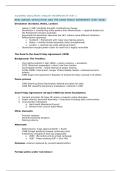
NEW LABOUR, DEVOLUTION, AND THE GOOD FRIDAY AGREEMENT (1997-2008)
Devolution (Scotland, Wales, London)
- Labour’s 1997 landslide brought constitutional change
- Devolution = transferring some powers from Westminster → regional bodies but
the Parliament remains sovereign
- Asymmetrical devolution (because the UK’s nations have different histories)
- Referendums approved:
o Scotland → Parliament with major law-making powers
o Wales → initially limited assembly (later strengthened)
o London → restored city-wide self-government
- Devolution brought power closer to voter but is legally reversible
The Road to the Good Friday Agreement (1998)
Background: The Troubles:
- Civil-rights protests in late 1960s → police violence → escalation
- 1972: Stormont suspended → direct rule from London
- Sunningdale (1973) – failed attempt at power sharing
- 1970s-1980s: Internment, hunger strikes (Bobby Sands), mainland terrorist
attacks
- 1985 Anglo-Irish Agreement: Republic of Ireland formally involved in NI affairs
Peace process
- 1993 Downing Street Declaration defined principles for talks
- 1994 IRA ceasefire (temporary breakdown, restored in 1997
Good Friday Agreement (10 April 1998) has three foundations
1. Consent principle: NI stays UK unless a majority votes otherwise
2. Power-sharing: devolved Assembly + Executive including both communities
3. Cross-border institutions
a. Nort-South Ministerial Council
b. Britisch-Irish Council (East-West)
Other elements:
- Prisoner releases
- Decommissioning weapons
- Policing reforms
Aftermath:
- Referendums: huge approval North + South
- 1998 Omagh bombing showed continuing risks
- Institutions unstable at first but progressed:
o 2005 IRA orders end to armed campaign
o 2007 Power-sharing DUP + Sinn Féin
Outcome: violence replaced by consent-based politics
Foreign policy under new labour:
NEW LABOUR, DEVOLUTION, AND THE GOOD FRIDAY AGREEMENT (1997-2008)
Devolution (Scotland, Wales, London)
- Labour’s 1997 landslide brought constitutional change
- Devolution = transferring some powers from Westminster → regional bodies but
the Parliament remains sovereign
- Asymmetrical devolution (because the UK’s nations have different histories)
- Referendums approved:
o Scotland → Parliament with major law-making powers
o Wales → initially limited assembly (later strengthened)
o London → restored city-wide self-government
- Devolution brought power closer to voter but is legally reversible
The Road to the Good Friday Agreement (1998)
Background: The Troubles:
- Civil-rights protests in late 1960s → police violence → escalation
- 1972: Stormont suspended → direct rule from London
- Sunningdale (1973) – failed attempt at power sharing
- 1970s-1980s: Internment, hunger strikes (Bobby Sands), mainland terrorist
attacks
- 1985 Anglo-Irish Agreement: Republic of Ireland formally involved in NI affairs
Peace process
- 1993 Downing Street Declaration defined principles for talks
- 1994 IRA ceasefire (temporary breakdown, restored in 1997
Good Friday Agreement (10 April 1998) has three foundations
1. Consent principle: NI stays UK unless a majority votes otherwise
2. Power-sharing: devolved Assembly + Executive including both communities
3. Cross-border institutions
a. Nort-South Ministerial Council
b. Britisch-Irish Council (East-West)
Other elements:
- Prisoner releases
- Decommissioning weapons
- Policing reforms
Aftermath:
- Referendums: huge approval North + South
- 1998 Omagh bombing showed continuing risks
- Institutions unstable at first but progressed:
o 2005 IRA orders end to armed campaign
o 2007 Power-sharing DUP + Sinn Féin
Outcome: violence replaced by consent-based politics
Foreign policy under new labour: