27.12.2024
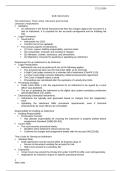
SA6 Indictments
The Indictment, Time Limits, Structure and Format
Overview of Indictments
Definition:
An indictment is the formal document that lists the charges against the accused in a
trial on indictment. It is essential for the accused's arraignment and for initiating the
trial.
Legal Framework:
Governed by:
Indictments Act 1915.
CrimPR Part 10 (as updated).
Four primary aspects of indictments:
(1) Form: Layout, drafting responsibility, and time limits.
(2) Composition: Inclusion and wording of charges.
(3) Alteration: Joinder, severance, and amendment.
(4) Objections: Grounds for quashing or appealing an indictment.
Requirement for an Indictment to be Preferred
Legal Prerequisites:
Indictments can only be preferred if one of the following applies:
The accused has been sent for trial (CDA 1998, ss.51 and 51A).
A High Court judge consents to a voluntary bill of indictment (CrimPR 10.9).
A Crown Court judge consents following a deferred prosecution agreement.
The Court of Appeal orders a retrial.
Proceedings are reinstituted after the expiration of custody time limits.
Procedural Changes:
Under CAJA 2009, s.116, the requirement for an indictment to be signed by a court
officer was abolished.
The act of uploading the indictment to the digital case system constitutes preferment
(MJ [2018] EWCA Crim 2485).
Electronically Generated Indictments:
Indictments are typically auto generated based on charges from the magistrates’
court.
Uploading the indictment fulfils procedural requirements, even if technical
endorsements by court officers are incomplete.
Responsibility for Drafting an Indictment
Drafting Responsibility:
Prosecution Counsel:
Has ultimate responsibility for ensuring the indictment is properly drafted before
arraignment (Newland [1988] QB 402).
Court’s Role:
The court ensures procedural clarity:
Identifies which indictment will proceed to trial.
Confirms the charges and arraignment details with the accused (MJ [2018]).
Time Limits for Serving an Indictment
Standard Rule:
Draft indictments must be served within 20 business days of:
Service of documents sending the accused for trial.
High Court consent to a voluntary bill.
Extensions:
Crown Court may extend the 20-day limit under CrimPR 10.2(8), even retrospectively.
Applications for extension require no specific procedural format.
1
Max Lewis
, 27.12.2024
PTPH Deadline:
Indictments must be served at least 7 days before the PTPH, which occurs within 28
days of the case being sent for trial (CrimPD 6.3.8).
Composition of an Indictment
Counts That May Be Included:
(1) Charges Based on Evidence:
An indictment may include:
Original charges for which the accused was sent to trial.
Additional charges revealed in the evidence served under CDA 1998, s.51.
(2) Wording of Counts:
Each count must:
Clearly identify the offence in ordinary language.
Reference statutory provisions where applicable (Indictments Act 1915, s.3(1)).
Form and Layout of an Indictment
General Form:
Each offence appears as a separate count.
Counts are numbered consecutively.
Components of Each Count:
Statement of Offence:
Concise description of the offence, including statutory references if applicable.
Particulars of Offence:
Provide reasonable details of the conduct alleged against the defendant.
Date Specification:
Precise dates of offences should be included where possible.
If the exact date is unknown:
Use approximate phrases such as ‘on or about’ or ‘on a day unknown.’
Continuous Offences:
For offences spanning multiple dates, use appropriate formulations, e.g., ‘on divers
days between [date] and [date].’
Continuous offences include conspiracies and similar activities (Greenfield [1973]
and Landy [1981]).
Multiple Incidents in a Single Count:
Permitted under CrimPR 10.2(2) if incidents form a single course of conduct.
Factors for appropriateness:
Same victim or method.
Defined period (e.g., no more than a year).
Defence applies uniformly to all incidents.
Prohibited Practices
Duplicity:
Each count must allege only one offence.
Exceptions:
Continuous offences.
Multiple incidents forming a course of conduct.
Overburdening the Indictment:
Excessive or overlapping counts should be avoided to ensure clarity and
manageability.
Practical Considerations
Prosecution:
Draft indictments carefully to ensure compliance with procedural rules.
Monitor deadlines for service and extension applications.
Defence:
2
Max Lewis
, 27.12.2024
Verify the accuracy and clarity of charges.
Challenge duplicity or inappropriate multiple incident counts.
Judges:
Confirm procedural compliance for indictments before trial.
Address disputes over indictment content or validity promptly.
Key Cases and Rules
MJ [2018]:
Electronic uploading of indictments satisfies procedural requirements.
Newland [1988]:
Prosecution counsel holds ultimate responsibility for drafting.
Hartley [2011]:
Guidance on drafting multiple incident counts.
Summary of Legal Framework
Indictments Act 1915:
Governs form and drafting requirements.
CrimPR Part 10:
Sets procedural rules for drafting, serving, and amending indictments.
CDA 1998, ss. 51 & 51A:
Basis for sending cases to trial.
Rules Governing Joinder of Counts and Consequences of Misjoinder
Overview of Joinder
Definition:
Joinder of Counts: The inclusion of two or more charges against the same defendant
in a single indictment. Governed by CrimPR 3.29(4), which replaced earlier rules like
r.9 of the Indictment Rules 1971.
Purpose:
To streamline trials by consolidating charges when appropriate.
To ensure fairness by avoiding unnecessary duplication or prejudice.
Legal Framework:
Indictments Act 1915, s.5(3):
Grants courts discretion to order separate trials.
CrimPR 3.29(4):
Allows joinder of counts where:
Offences are founded on the same facts.
Offences form a series of the same or similar character.
Judicial Discretion:
The court may (not must) order separate trials if:
Joinder would prejudice or embarrass the defendant’s defence.
Separate trials are otherwise desirable for fairness.
Application of the Rule
Newland [1988] QB 402:
Principles:
Judges can sever indictments if joinder causes unfairness.
Improperly joined counts can invalidate proceedings for those counts but do not
automatically nullify the entire trial.
Subsequent Clarifications:
Smith (Brian Peter) [1997] QB 836 disapproved the idea that proceedings on properly
joined counts are nullified by the presence of improperly joined counts.
Key Developments:
Hamou [2019] EWCA Crim 281:
3
Max Lewis
SA6 Indictments
The Indictment, Time Limits, Structure and Format
Overview of Indictments
Definition:
An indictment is the formal document that lists the charges against the accused in a
trial on indictment. It is essential for the accused's arraignment and for initiating the
trial.
Legal Framework:
Governed by:
Indictments Act 1915.
CrimPR Part 10 (as updated).
Four primary aspects of indictments:
(1) Form: Layout, drafting responsibility, and time limits.
(2) Composition: Inclusion and wording of charges.
(3) Alteration: Joinder, severance, and amendment.
(4) Objections: Grounds for quashing or appealing an indictment.
Requirement for an Indictment to be Preferred
Legal Prerequisites:
Indictments can only be preferred if one of the following applies:
The accused has been sent for trial (CDA 1998, ss.51 and 51A).
A High Court judge consents to a voluntary bill of indictment (CrimPR 10.9).
A Crown Court judge consents following a deferred prosecution agreement.
The Court of Appeal orders a retrial.
Proceedings are reinstituted after the expiration of custody time limits.
Procedural Changes:
Under CAJA 2009, s.116, the requirement for an indictment to be signed by a court
officer was abolished.
The act of uploading the indictment to the digital case system constitutes preferment
(MJ [2018] EWCA Crim 2485).
Electronically Generated Indictments:
Indictments are typically auto generated based on charges from the magistrates’
court.
Uploading the indictment fulfils procedural requirements, even if technical
endorsements by court officers are incomplete.
Responsibility for Drafting an Indictment
Drafting Responsibility:
Prosecution Counsel:
Has ultimate responsibility for ensuring the indictment is properly drafted before
arraignment (Newland [1988] QB 402).
Court’s Role:
The court ensures procedural clarity:
Identifies which indictment will proceed to trial.
Confirms the charges and arraignment details with the accused (MJ [2018]).
Time Limits for Serving an Indictment
Standard Rule:
Draft indictments must be served within 20 business days of:
Service of documents sending the accused for trial.
High Court consent to a voluntary bill.
Extensions:
Crown Court may extend the 20-day limit under CrimPR 10.2(8), even retrospectively.
Applications for extension require no specific procedural format.
1
Max Lewis
, 27.12.2024
PTPH Deadline:
Indictments must be served at least 7 days before the PTPH, which occurs within 28
days of the case being sent for trial (CrimPD 6.3.8).
Composition of an Indictment
Counts That May Be Included:
(1) Charges Based on Evidence:
An indictment may include:
Original charges for which the accused was sent to trial.
Additional charges revealed in the evidence served under CDA 1998, s.51.
(2) Wording of Counts:
Each count must:
Clearly identify the offence in ordinary language.
Reference statutory provisions where applicable (Indictments Act 1915, s.3(1)).
Form and Layout of an Indictment
General Form:
Each offence appears as a separate count.
Counts are numbered consecutively.
Components of Each Count:
Statement of Offence:
Concise description of the offence, including statutory references if applicable.
Particulars of Offence:
Provide reasonable details of the conduct alleged against the defendant.
Date Specification:
Precise dates of offences should be included where possible.
If the exact date is unknown:
Use approximate phrases such as ‘on or about’ or ‘on a day unknown.’
Continuous Offences:
For offences spanning multiple dates, use appropriate formulations, e.g., ‘on divers
days between [date] and [date].’
Continuous offences include conspiracies and similar activities (Greenfield [1973]
and Landy [1981]).
Multiple Incidents in a Single Count:
Permitted under CrimPR 10.2(2) if incidents form a single course of conduct.
Factors for appropriateness:
Same victim or method.
Defined period (e.g., no more than a year).
Defence applies uniformly to all incidents.
Prohibited Practices
Duplicity:
Each count must allege only one offence.
Exceptions:
Continuous offences.
Multiple incidents forming a course of conduct.
Overburdening the Indictment:
Excessive or overlapping counts should be avoided to ensure clarity and
manageability.
Practical Considerations
Prosecution:
Draft indictments carefully to ensure compliance with procedural rules.
Monitor deadlines for service and extension applications.
Defence:
2
Max Lewis
, 27.12.2024
Verify the accuracy and clarity of charges.
Challenge duplicity or inappropriate multiple incident counts.
Judges:
Confirm procedural compliance for indictments before trial.
Address disputes over indictment content or validity promptly.
Key Cases and Rules
MJ [2018]:
Electronic uploading of indictments satisfies procedural requirements.
Newland [1988]:
Prosecution counsel holds ultimate responsibility for drafting.
Hartley [2011]:
Guidance on drafting multiple incident counts.
Summary of Legal Framework
Indictments Act 1915:
Governs form and drafting requirements.
CrimPR Part 10:
Sets procedural rules for drafting, serving, and amending indictments.
CDA 1998, ss. 51 & 51A:
Basis for sending cases to trial.
Rules Governing Joinder of Counts and Consequences of Misjoinder
Overview of Joinder
Definition:
Joinder of Counts: The inclusion of two or more charges against the same defendant
in a single indictment. Governed by CrimPR 3.29(4), which replaced earlier rules like
r.9 of the Indictment Rules 1971.
Purpose:
To streamline trials by consolidating charges when appropriate.
To ensure fairness by avoiding unnecessary duplication or prejudice.
Legal Framework:
Indictments Act 1915, s.5(3):
Grants courts discretion to order separate trials.
CrimPR 3.29(4):
Allows joinder of counts where:
Offences are founded on the same facts.
Offences form a series of the same or similar character.
Judicial Discretion:
The court may (not must) order separate trials if:
Joinder would prejudice or embarrass the defendant’s defence.
Separate trials are otherwise desirable for fairness.
Application of the Rule
Newland [1988] QB 402:
Principles:
Judges can sever indictments if joinder causes unfairness.
Improperly joined counts can invalidate proceedings for those counts but do not
automatically nullify the entire trial.
Subsequent Clarifications:
Smith (Brian Peter) [1997] QB 836 disapproved the idea that proceedings on properly
joined counts are nullified by the presence of improperly joined counts.
Key Developments:
Hamou [2019] EWCA Crim 281:
3
Max Lewis