PNUR101 FINAL EXAM
Leave the first rating
Save
Students also studied
Flashcard sets Study guides
CELL MEDIATED VS HUMORAL IMM... W2 L2 Second Line of Defence Immunity
18 terms 49 terms 10 terms
inyourdreamsss Preview hillarygraham Preview Aclarke259
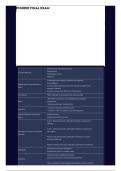
Terms in this set (415)
Chemical and mechanical barriers
Phagocytosis
4 Innate defenses
Inflammation / fever
Interferon
1) damaged cells release Cytokines and histamine
2) vasodilation
Inflammation of injured tissue: 4
3) leukocytes and plasma move into tissues (exudate), limits
steps
spread of infection
4) lymph vessels drain fluid from inflamed area
Pus makeup WBC, pathogens, destroyed tissue cells, exudate
-Stims WBC production and substances that increase
Fever temperature
-Decrease pathogen multiplication
- Cytokine released by infected cells
Interferon
- Interferes with virus ability to reproduce/spread
Specific Defenses (immunity, 2 Innate immunity
types) Adaptive/Acquired immunity
Active- Natural immunity: antibodies develop in response to
infection
Active- Artificial immunity: antibodies develop in response to
Examples of 4 types of acquired vaccination
immunity
Passive- Natural immunity: antibodes received from parent
through breast milk
Passive- Artificial immunity: antibodies received from medicine
produced by Humoral regulation
Antibodies
proteins that match to antigen shape
immune protein: signalling chemicals
aid cell to cell comms during immune response
Cytokines
stims movement of cells toward inflammation, infection, trauma
, immune protein in blood: - stims histamine
Complement - binds to micro-org, initiating phagocytosis
- bores holes into foreign cells to destroy
Neutrophils move into infection site
Monocytes move into infection site, mature into macrophages,
Phagocytes
and phagocytize
Dendritic cells act as antigen-presenting cells
B cells: antibody production / Humoral immunity
Lymphocytes
T cells: cell mediated immunity
Plasma B cells: bind to foreign antigens, release cytokines, stim
antibody production
Humoral B Cell immunity: 2
types
Memory B cells: responsible for secondary response, divide into
plasma B cells for speed
How do antibodies affect Antibodies bind to antigen, inactivate the pathogen by clumping,
antigens directly? then phagocytize
antibody/antigen complex attract complement protein, promotes
How do antibodies affect
cell rupture by boring holes in pathogen, Na+and H2o enter,
antigens INdirectly?
pathogen bursts - macrophages phagocytize burst pathogen
Cytotoxic: use enzymes to destroy infected cells
Helper: release cytokines which stimulate cytotoxic, B cells, and
macrophages
4 types of T cells
Regulatory: inhibit B and T cells after antigens are destroyed
Memory: remember antigens for faster response next time
muscle cell energy ATP
squamous, columnar, cubodial, stratified, simple, function for
epithelial cell types and fn
protective covering
area around heart and esophagus through which major blood
mediastinum
vessels pass
circumduction circular motion
homeostasis maintaining of constant internal environment
between parietal and visceral serous membranes to prevent
serous fluid
damage as organs move
pleura serous membrane surrounding thoracic cavity and lungs
pericardium serous membrane surrounding heart and pericardial cavity
peritoneum serous membrane lining abdominal cavity and organs
synovial membrane surrounds joint cavities
meninges membranes covering brain and spinal cord
epidermis stratum corneum (keratin) and stratum basale (melanin)
dermis papillary and reticular layers
skin colour make-up melanin, hemoglobin, carotene
hair make-up medulla, cortex, cuticle
arrector pili muscle makes hair stand up
sudoriferous glands eccrine and apocrine (bacteria breakdown)
ceruminous glands ear wax
, ciliary glands tears
types of bone flat short long irregular sesamoid
sesamoid bone embedded in a tendon
long bone diaphysis is compact, epiphysis is spongey
hematopoiesis creates blood cells (in spongey bone)
trabeculae small bony plates
yellow marrow found in medullary cavity of long bones, produces fat
endosteum membrane lining medullary cavity, contains osteoclasts
periosteum surrounds outside of bone, contains osteoblasts
osteons central canal, lamellae, run lengthways
osteocytes mature bone cells (within lacunae)
canaliculi tiny canals connecting lacunae with eachother in compact bone
Volkman's / transverse canals cross channels for transport in bone
ossification formation of bone (at 8th week) at epiphyseal plate
epiphyseal line remains when no cartilage left
repair, Ca+2 regulation, adjustment to stress, occurs around
bone remodelling
diaphysis
bone markings projections and depressions
axial skeleton skull and trunk
appendicular skeleton upper and lower extremities
sphenoid bone floor of skull
stella turcica cavity for pituitary gland
hyoid bone attachment point for neck muscles for larynx
foramen magnum opening for spinal cord
fontanelles soft cartilage of newborn skull
vertebrae cervical, thoracic, lumbar, sacrum, coccyx
ribs 7 true, 5 false, 2 floating
clavicular notch, manubrium, sternal angle, body, xiphoid
sternum
process
ischium bone loops under bum
pubic symphysis connection between pubic bones
acetabulum hip bone socket
patella knee cap
calcaneous heel bone
malleolus ankle bone
fibrous joints synarthrosis, immovable (skull)
cartilaginous joints amphiarthrosis, semi moveable (pubic bones, vertebrae)
synovial joints diarthrosis: ball and socket, plane, pivot, hinge, saddle, condylar
cardiac muscle myocardium, intercalated discs (cell to cell comms), ANS
4 fnal characteristics of skeletal contractility, excitability, extensibility, elasticity
muscle
Leave the first rating
Save
Students also studied
Flashcard sets Study guides
CELL MEDIATED VS HUMORAL IMM... W2 L2 Second Line of Defence Immunity
18 terms 49 terms 10 terms
inyourdreamsss Preview hillarygraham Preview Aclarke259
Terms in this set (415)
Chemical and mechanical barriers
Phagocytosis
4 Innate defenses
Inflammation / fever
Interferon
1) damaged cells release Cytokines and histamine
2) vasodilation
Inflammation of injured tissue: 4
3) leukocytes and plasma move into tissues (exudate), limits
steps
spread of infection
4) lymph vessels drain fluid from inflamed area
Pus makeup WBC, pathogens, destroyed tissue cells, exudate
-Stims WBC production and substances that increase
Fever temperature
-Decrease pathogen multiplication
- Cytokine released by infected cells
Interferon
- Interferes with virus ability to reproduce/spread
Specific Defenses (immunity, 2 Innate immunity
types) Adaptive/Acquired immunity
Active- Natural immunity: antibodies develop in response to
infection
Active- Artificial immunity: antibodies develop in response to
Examples of 4 types of acquired vaccination
immunity
Passive- Natural immunity: antibodes received from parent
through breast milk
Passive- Artificial immunity: antibodies received from medicine
produced by Humoral regulation
Antibodies
proteins that match to antigen shape
immune protein: signalling chemicals
aid cell to cell comms during immune response
Cytokines
stims movement of cells toward inflammation, infection, trauma
, immune protein in blood: - stims histamine
Complement - binds to micro-org, initiating phagocytosis
- bores holes into foreign cells to destroy
Neutrophils move into infection site
Monocytes move into infection site, mature into macrophages,
Phagocytes
and phagocytize
Dendritic cells act as antigen-presenting cells
B cells: antibody production / Humoral immunity
Lymphocytes
T cells: cell mediated immunity
Plasma B cells: bind to foreign antigens, release cytokines, stim
antibody production
Humoral B Cell immunity: 2
types
Memory B cells: responsible for secondary response, divide into
plasma B cells for speed
How do antibodies affect Antibodies bind to antigen, inactivate the pathogen by clumping,
antigens directly? then phagocytize
antibody/antigen complex attract complement protein, promotes
How do antibodies affect
cell rupture by boring holes in pathogen, Na+and H2o enter,
antigens INdirectly?
pathogen bursts - macrophages phagocytize burst pathogen
Cytotoxic: use enzymes to destroy infected cells
Helper: release cytokines which stimulate cytotoxic, B cells, and
macrophages
4 types of T cells
Regulatory: inhibit B and T cells after antigens are destroyed
Memory: remember antigens for faster response next time
muscle cell energy ATP
squamous, columnar, cubodial, stratified, simple, function for
epithelial cell types and fn
protective covering
area around heart and esophagus through which major blood
mediastinum
vessels pass
circumduction circular motion
homeostasis maintaining of constant internal environment
between parietal and visceral serous membranes to prevent
serous fluid
damage as organs move
pleura serous membrane surrounding thoracic cavity and lungs
pericardium serous membrane surrounding heart and pericardial cavity
peritoneum serous membrane lining abdominal cavity and organs
synovial membrane surrounds joint cavities
meninges membranes covering brain and spinal cord
epidermis stratum corneum (keratin) and stratum basale (melanin)
dermis papillary and reticular layers
skin colour make-up melanin, hemoglobin, carotene
hair make-up medulla, cortex, cuticle
arrector pili muscle makes hair stand up
sudoriferous glands eccrine and apocrine (bacteria breakdown)
ceruminous glands ear wax
, ciliary glands tears
types of bone flat short long irregular sesamoid
sesamoid bone embedded in a tendon
long bone diaphysis is compact, epiphysis is spongey
hematopoiesis creates blood cells (in spongey bone)
trabeculae small bony plates
yellow marrow found in medullary cavity of long bones, produces fat
endosteum membrane lining medullary cavity, contains osteoclasts
periosteum surrounds outside of bone, contains osteoblasts
osteons central canal, lamellae, run lengthways
osteocytes mature bone cells (within lacunae)
canaliculi tiny canals connecting lacunae with eachother in compact bone
Volkman's / transverse canals cross channels for transport in bone
ossification formation of bone (at 8th week) at epiphyseal plate
epiphyseal line remains when no cartilage left
repair, Ca+2 regulation, adjustment to stress, occurs around
bone remodelling
diaphysis
bone markings projections and depressions
axial skeleton skull and trunk
appendicular skeleton upper and lower extremities
sphenoid bone floor of skull
stella turcica cavity for pituitary gland
hyoid bone attachment point for neck muscles for larynx
foramen magnum opening for spinal cord
fontanelles soft cartilage of newborn skull
vertebrae cervical, thoracic, lumbar, sacrum, coccyx
ribs 7 true, 5 false, 2 floating
clavicular notch, manubrium, sternal angle, body, xiphoid
sternum
process
ischium bone loops under bum
pubic symphysis connection between pubic bones
acetabulum hip bone socket
patella knee cap
calcaneous heel bone
malleolus ankle bone
fibrous joints synarthrosis, immovable (skull)
cartilaginous joints amphiarthrosis, semi moveable (pubic bones, vertebrae)
synovial joints diarthrosis: ball and socket, plane, pivot, hinge, saddle, condylar
cardiac muscle myocardium, intercalated discs (cell to cell comms), ANS
4 fnal characteristics of skeletal contractility, excitability, extensibility, elasticity
muscle