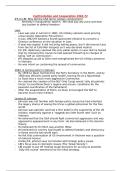
Confrontation and Cooperation 1963-72
JFK to LBJ: Why did the USA fail to contain communism?
- Kennedy’s Inauguration speech: ‘We shall pay any price and bear
any burden to defend freedom.’
Laos
- Laos was also in turmoil in 1961; US military advisors were proving
unsuccessful (Operation Pincushion).
- In July 1962 JFK backed a Soviet-sponsored initiative to convene a
Geneva conference on the situation in Laos.
- A deal was signed. It did not bring lasting peace, but it did remove Laos
from the list of Cold War hotspots as it was declared neutral.
- For JFK, diplomacy seemed the only viable option in Laos. But he feared
that by choosing this course he had opened himself up to charges of
being ‘soft on communism’.
- JFK stepped up aid to Diem and strengthened the US military presence
in Vietnam.
- He was intent on containing the spread of communism.
1963: A turning point in Vietnam
- By 1958 Le Duan had become the Party Secretary in the North, and by
1960 was officially named party leader, leaving Ho as a figurehead.
- Le Duan was a much more aggressive Communist.
- He claimed the creation of the NLF (Viet Cong) would ‘rally all patriotic
forces’ to overthrow Diem’s regime and ensure ‘conditions for the
peaceful reunification of the Fatherland’.
- After the assassination of Diem, Le Duan encouraged the NLF to
become much more militant.
Lyndon B. Johnson
- Johnson was not familiar with foreign policy issues but had inherited
the legacy stance of seeing the US as a global policeman for the free
world.
- Johnson was patriotic and had a firm belief in the superiority of the US
military, especially against a ‘raggedy-ass little fourth rate’ such as
Vietnam.
- He believed that the USA should fight communist aggressors and was
opposed to appeasement in any form. He also believed in the domino
theory.
- He believed Ho Chi Minh was another Hitler.
- He believed his country had fought to defend freedom and democracy
in Korea and the two world wars.
- He felt that continuation of US involvement in Vietnam was a question
of national honour.
- Unlike JFK, Johnson was not familiar with foreign policy issues.
- LBJ’s focus was on domestic issues (The ‘Great Society.’)
- LBJ sought to put off making tough decisions for as long as possible.
- ‘Stay the course’ seemed to be his initial strategy.
,The Democrats: LBJ
- As Democrats, both JFK and LBJ worried that the loss of South Vietnam
to communism would ignite a political firestorm at home that would
destroy their respective presidencies.
- ‘I believed that the loss of China had played a large part in the rise of
Joe McCarthy. And I knew that all these problems, taken together, were
chickenshit compared with what might happen if we lost Vietnam.’-
Lyndon B. Johnson
- As VP, Johnson was opposed to greater involvement in Vietnam: he was
against the assassination of Diem as he knew it would draw the
Americans in further. However, Johnson was motivated by the guilt of
Kennedy’s assassination, claiming ‘I would continue for my partner who
had gone down ahead of me.’
LBJ’s advisors- Retaining JFK’s advisors meant there was a lack of fresh
thinking on the strategy for Vietnam
Robert McNamara
- Secretary of Defence – outspoken supporter of US involvement in
Vietnam, and his solutions were invariably military ones.
Dean Rusk
- Secretary of State – believed it was the fault of appeasement that led
to the outbreak of war in the Pacific in 1941. He was a very influential
advisor and was known to take a hard-line against communist
aggression.
Curtis LeMay
- Chief of the Airforce – frequently advocated the bombing of Vietnam.
1963-4: Johnson’s approach to Vietnam
OPLAN 34A
- A strategy based on covert action progressively escalating pressure …
to inflict increasing punishment upon North Vietnam’ and designed to
force Hanoi ‘to desist from its aggressive policies’.
Counterinsurgency Strategy
- Johnson increased the number of military ‘advisers’ from 16,300 to
23,300.
LBJ: An architect of his downfall?
- Johnson surrounded himself by advisors who agreed with him.
- Johnson did not want to be the first US president to lose a war.
- Despite private misgivings, he announced on 20th April 1964 that the
USA was ‘in this battle as long as South Vietnam wants our support’.
August 1964: Gulf of Tonkin incident (The 1964 election was imminent)
- Two separate attacks on two U.S. Navy destroyers, U.S.S. Maddox and
U.S.S. Turner Joy, occurred on August 2nd and August 4th, 1964,
respectively.
- The two destroyers were stationed in the Gulf Tonkin. They were there
as part of an effort to support South Vietnamese military raids in the
North Vietnamese coast.
, - According to the U.S. Navy, both Maddox and Turner Joy reported being
fired upon by North Vietnamese patrol boats.
The Gulf of Tonkin Resolution
- Johnson (and his secretary of defence Robert McNamara) seized on the
evidence to retaliate with air strikes against the North Vietnamese.
- LBJ then pushed through Congress, the Gulf of Tonkin Resolution, which
gave him authority to ‘take all necessary measures to repel any armed
attack against the forces of the US and to prevent further aggression.’
10th August 1964: The Blank Cheque
- The Gulf of Tonkin Resolution was controversial as it granted the
President complete freedom to dictate policy in Vietnam with no
Congressional oversight.
- In so doing, Congress essentially surrendered its war-making powers to
the executive branch.
- It passed unanimously in the House of Representatives: 416-0.
- It had passed in the Senate 88-2.
- The resolution, Secretary of Defence Robert McNamara later noted,
served ‘to open the floodgates.’
- Democratic Senator Wayne Morse (D-OR) warned ‘I believe this
resolution to be a historic mistake.’
LBJ emboldened
- Although LBJ would have preferred to keep Vietnam out of the
presidential election campaign the ‘Tonkin Incident’ helped him win the
election and improved his political standing with the American people.
- In the wake of the Gulf of Tonkin incident, US aircraft attacked the
North for the first time, but only in limited, retaliatory raids, not the all-
out bombing campaign which US military leaders favoured.
- However, this show of force in response to Tonkin effectively removed
Vietnam as a campaign issue for the Republican candidate (Barry
Goldwater).
1964: Landslide victory for LBJ
- Johnson won the biggest percentage of the vote in history.
- The Democrats had the biggest majority in the House of
Representatives any party had enjoyed since 1945 and retained a huge
majority in the Senate.
- The Democrat’s triumph empowered Johnson in two ways.
- It allowed him to enact a raft of liberal legislation: the Voting Rights Act
etc.
- It also appeared to remove all political constraints on his Vietnam
policy.
7th February 1965: Pleiku incident
- The Viet Cong launched an attack on an American airbase at Pleiku,
destroying 10 aircraft, damaging 15 more, killing 8 US soldiers and
injuring 126 others.
JFK to LBJ: Why did the USA fail to contain communism?
- Kennedy’s Inauguration speech: ‘We shall pay any price and bear
any burden to defend freedom.’
Laos
- Laos was also in turmoil in 1961; US military advisors were proving
unsuccessful (Operation Pincushion).
- In July 1962 JFK backed a Soviet-sponsored initiative to convene a
Geneva conference on the situation in Laos.
- A deal was signed. It did not bring lasting peace, but it did remove Laos
from the list of Cold War hotspots as it was declared neutral.
- For JFK, diplomacy seemed the only viable option in Laos. But he feared
that by choosing this course he had opened himself up to charges of
being ‘soft on communism’.
- JFK stepped up aid to Diem and strengthened the US military presence
in Vietnam.
- He was intent on containing the spread of communism.
1963: A turning point in Vietnam
- By 1958 Le Duan had become the Party Secretary in the North, and by
1960 was officially named party leader, leaving Ho as a figurehead.
- Le Duan was a much more aggressive Communist.
- He claimed the creation of the NLF (Viet Cong) would ‘rally all patriotic
forces’ to overthrow Diem’s regime and ensure ‘conditions for the
peaceful reunification of the Fatherland’.
- After the assassination of Diem, Le Duan encouraged the NLF to
become much more militant.
Lyndon B. Johnson
- Johnson was not familiar with foreign policy issues but had inherited
the legacy stance of seeing the US as a global policeman for the free
world.
- Johnson was patriotic and had a firm belief in the superiority of the US
military, especially against a ‘raggedy-ass little fourth rate’ such as
Vietnam.
- He believed that the USA should fight communist aggressors and was
opposed to appeasement in any form. He also believed in the domino
theory.
- He believed Ho Chi Minh was another Hitler.
- He believed his country had fought to defend freedom and democracy
in Korea and the two world wars.
- He felt that continuation of US involvement in Vietnam was a question
of national honour.
- Unlike JFK, Johnson was not familiar with foreign policy issues.
- LBJ’s focus was on domestic issues (The ‘Great Society.’)
- LBJ sought to put off making tough decisions for as long as possible.
- ‘Stay the course’ seemed to be his initial strategy.
,The Democrats: LBJ
- As Democrats, both JFK and LBJ worried that the loss of South Vietnam
to communism would ignite a political firestorm at home that would
destroy their respective presidencies.
- ‘I believed that the loss of China had played a large part in the rise of
Joe McCarthy. And I knew that all these problems, taken together, were
chickenshit compared with what might happen if we lost Vietnam.’-
Lyndon B. Johnson
- As VP, Johnson was opposed to greater involvement in Vietnam: he was
against the assassination of Diem as he knew it would draw the
Americans in further. However, Johnson was motivated by the guilt of
Kennedy’s assassination, claiming ‘I would continue for my partner who
had gone down ahead of me.’
LBJ’s advisors- Retaining JFK’s advisors meant there was a lack of fresh
thinking on the strategy for Vietnam
Robert McNamara
- Secretary of Defence – outspoken supporter of US involvement in
Vietnam, and his solutions were invariably military ones.
Dean Rusk
- Secretary of State – believed it was the fault of appeasement that led
to the outbreak of war in the Pacific in 1941. He was a very influential
advisor and was known to take a hard-line against communist
aggression.
Curtis LeMay
- Chief of the Airforce – frequently advocated the bombing of Vietnam.
1963-4: Johnson’s approach to Vietnam
OPLAN 34A
- A strategy based on covert action progressively escalating pressure …
to inflict increasing punishment upon North Vietnam’ and designed to
force Hanoi ‘to desist from its aggressive policies’.
Counterinsurgency Strategy
- Johnson increased the number of military ‘advisers’ from 16,300 to
23,300.
LBJ: An architect of his downfall?
- Johnson surrounded himself by advisors who agreed with him.
- Johnson did not want to be the first US president to lose a war.
- Despite private misgivings, he announced on 20th April 1964 that the
USA was ‘in this battle as long as South Vietnam wants our support’.
August 1964: Gulf of Tonkin incident (The 1964 election was imminent)
- Two separate attacks on two U.S. Navy destroyers, U.S.S. Maddox and
U.S.S. Turner Joy, occurred on August 2nd and August 4th, 1964,
respectively.
- The two destroyers were stationed in the Gulf Tonkin. They were there
as part of an effort to support South Vietnamese military raids in the
North Vietnamese coast.
, - According to the U.S. Navy, both Maddox and Turner Joy reported being
fired upon by North Vietnamese patrol boats.
The Gulf of Tonkin Resolution
- Johnson (and his secretary of defence Robert McNamara) seized on the
evidence to retaliate with air strikes against the North Vietnamese.
- LBJ then pushed through Congress, the Gulf of Tonkin Resolution, which
gave him authority to ‘take all necessary measures to repel any armed
attack against the forces of the US and to prevent further aggression.’
10th August 1964: The Blank Cheque
- The Gulf of Tonkin Resolution was controversial as it granted the
President complete freedom to dictate policy in Vietnam with no
Congressional oversight.
- In so doing, Congress essentially surrendered its war-making powers to
the executive branch.
- It passed unanimously in the House of Representatives: 416-0.
- It had passed in the Senate 88-2.
- The resolution, Secretary of Defence Robert McNamara later noted,
served ‘to open the floodgates.’
- Democratic Senator Wayne Morse (D-OR) warned ‘I believe this
resolution to be a historic mistake.’
LBJ emboldened
- Although LBJ would have preferred to keep Vietnam out of the
presidential election campaign the ‘Tonkin Incident’ helped him win the
election and improved his political standing with the American people.
- In the wake of the Gulf of Tonkin incident, US aircraft attacked the
North for the first time, but only in limited, retaliatory raids, not the all-
out bombing campaign which US military leaders favoured.
- However, this show of force in response to Tonkin effectively removed
Vietnam as a campaign issue for the Republican candidate (Barry
Goldwater).
1964: Landslide victory for LBJ
- Johnson won the biggest percentage of the vote in history.
- The Democrats had the biggest majority in the House of
Representatives any party had enjoyed since 1945 and retained a huge
majority in the Senate.
- The Democrat’s triumph empowered Johnson in two ways.
- It allowed him to enact a raft of liberal legislation: the Voting Rights Act
etc.
- It also appeared to remove all political constraints on his Vietnam
policy.
7th February 1965: Pleiku incident
- The Viet Cong launched an attack on an American airbase at Pleiku,
destroying 10 aircraft, damaging 15 more, killing 8 US soldiers and
injuring 126 others.