Disti nguishing sources
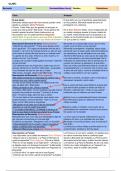
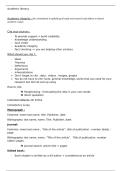
Primary sources: uninterpreted
Direct connection btwn wource and creator with no filter
Secondary sources: analyse, review, or restate info in primary sources or other secondary sources. They can
be academic or non academic
- fil/book review. - nonfiction
e.g. secondary source :
- magazine article. - newspaper
Ways to categorise info
- Scholar - Publication format - Conference
- Popular - Podcast - Professional
- Videos - Newspaper - Fact/opinion
-
Filter:
- Editing
- Translation
- Repair or restoratio
What about translated primary sources:
Secondary source unless translated by the author or his agency
Translation is useful if you are interested in the content. But you need to be critical.
Academic secondary sources are not evidence but rather a commentary or/and a discussion of evidence
Scholarly monographs/books, journal articles.
Tertiary source:
Further away from 1st hand info.
Usually index, condense, or summarise info gathered from other resources
Eg. Tertiary source:
- Dictionaries - manuals - bibliographies
- Enciclopedias - textbooks
Some complications : sources are not inherently primary, secondary or tertiary . what is considered a
primary sorce can vary from discipline to discipline
Secondary or tertiary?
Eg.; textbooks, can give opinion so secodary but sumarise so tertiary. Same as enciclopedia.
Primary sources: uninterpreted
Direct connection btwn wource and creator with no filter
Secondary sources: analyse, review, or restate info in primary sources or other secondary sources. They can
be academic or non academic
- fil/book review. - nonfiction
e.g. secondary source :
- magazine article. - newspaper
Ways to categorise info
- Scholar - Publication format - Conference
- Popular - Podcast - Professional
- Videos - Newspaper - Fact/opinion
-
Filter:
- Editing
- Translation
- Repair or restoratio
What about translated primary sources:
Secondary source unless translated by the author or his agency
Translation is useful if you are interested in the content. But you need to be critical.
Academic secondary sources are not evidence but rather a commentary or/and a discussion of evidence
Scholarly monographs/books, journal articles.
Tertiary source:
Further away from 1st hand info.
Usually index, condense, or summarise info gathered from other resources
Eg. Tertiary source:
- Dictionaries - manuals - bibliographies
- Enciclopedias - textbooks
Some complications : sources are not inherently primary, secondary or tertiary . what is considered a
primary sorce can vary from discipline to discipline
Secondary or tertiary?
Eg.; textbooks, can give opinion so secodary but sumarise so tertiary. Same as enciclopedia.