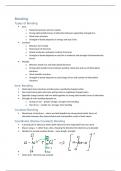
Bonding
Types of Bonding
Ionic
o Metal/ammonium and non-metals
o Strong electrostatic forces of attraction between oppositely charged ions
o Giant ionic structure
o Strength of bonds depends on charge and size of ion
Covalent
o Between non-metals
o Shared pair of electrons
o Simple molecular and giant covalent structures
o Strength of bonds depends on size/Mr of molecule and strength of intermolecular
forces
Metallic
o Between metal ions and delocalised electrons
o Strong electrostatic forces between positive metal ions and sea of delocalised
electrons
o Giant metallic structure
o Strength of bonds depends on size/charge of ion and number of delocalised
electrons
Ionic Bonding
Metal atom loses electrons and becomes a positively charged cation
Non-metal atom gains electrons and becomes a negatively charged anion
Opposite charges attract and ions held together by strong electrostatic forces of attraction
Strength of ionic bonding depends on:
o Charge on ion – greater charge, stronger ionic bonding
o Size of ion – smaller ion, stronger ionic bonding
Covalent Bonding
Shared pair of electrons – atoms are held together by strong electrostatic forces of
attraction between the shared eletron pair and positive nuclei of both atoms
Coordinate (Dative Covalent) Bonding
A shared pair of electrons where both electrons have originated from one atom
Drawn using a -> rather than a line, showing the direction the electrons are donated
Identical to normal covalent bonds – same length, strength
Lewis Acid – Electron pair acceptor
, Lewis Base – Electron pair donor
Metallic Bonding
Electrostatic forces of attraction between positive ions and the sea of delocalised electrons
Strength of metallic bonding depends on:
o Strength of electrostatic forces of attraction between positive metal ions and sea of
delocalised electrons
o Smaller, more highly charged ions with lots of delocalised electrons – stronger
metallic bonds
Crystal Types
Monoatomic
All gases at room temperature
Single atoms held by very weak forces of attraction
E.g. Noble gases
Ionic
High melting and boiling points
o Strong electrostatic forces of attraction between oppositely charged ions require
lots of energy to break
Conducts electricity when molten or aqueous
o Ions are free to move when liquid or in solution as electrostatic forces have been
broken
Brittle
o Force pushes ions into a position where charges are aligned and repel each other
Soluble in water
o Polar water molecules pull ions away from the lattice, causing it to dissolve
Metallic
High melting and boiling points
o Strong electrostatic forces of attraction between metal ions and sea of delocalised
electrons
Conducts electricity
o Delocalised electrons are free to move
Malleable
o Layers of cations can slide over each other whilst maintaining the eletrostatic
attraction
Insoluble
Types of Bonding
Ionic
o Metal/ammonium and non-metals
o Strong electrostatic forces of attraction between oppositely charged ions
o Giant ionic structure
o Strength of bonds depends on charge and size of ion
Covalent
o Between non-metals
o Shared pair of electrons
o Simple molecular and giant covalent structures
o Strength of bonds depends on size/Mr of molecule and strength of intermolecular
forces
Metallic
o Between metal ions and delocalised electrons
o Strong electrostatic forces between positive metal ions and sea of delocalised
electrons
o Giant metallic structure
o Strength of bonds depends on size/charge of ion and number of delocalised
electrons
Ionic Bonding
Metal atom loses electrons and becomes a positively charged cation
Non-metal atom gains electrons and becomes a negatively charged anion
Opposite charges attract and ions held together by strong electrostatic forces of attraction
Strength of ionic bonding depends on:
o Charge on ion – greater charge, stronger ionic bonding
o Size of ion – smaller ion, stronger ionic bonding
Covalent Bonding
Shared pair of electrons – atoms are held together by strong electrostatic forces of
attraction between the shared eletron pair and positive nuclei of both atoms
Coordinate (Dative Covalent) Bonding
A shared pair of electrons where both electrons have originated from one atom
Drawn using a -> rather than a line, showing the direction the electrons are donated
Identical to normal covalent bonds – same length, strength
Lewis Acid – Electron pair acceptor
, Lewis Base – Electron pair donor
Metallic Bonding
Electrostatic forces of attraction between positive ions and the sea of delocalised electrons
Strength of metallic bonding depends on:
o Strength of electrostatic forces of attraction between positive metal ions and sea of
delocalised electrons
o Smaller, more highly charged ions with lots of delocalised electrons – stronger
metallic bonds
Crystal Types
Monoatomic
All gases at room temperature
Single atoms held by very weak forces of attraction
E.g. Noble gases
Ionic
High melting and boiling points
o Strong electrostatic forces of attraction between oppositely charged ions require
lots of energy to break
Conducts electricity when molten or aqueous
o Ions are free to move when liquid or in solution as electrostatic forces have been
broken
Brittle
o Force pushes ions into a position where charges are aligned and repel each other
Soluble in water
o Polar water molecules pull ions away from the lattice, causing it to dissolve
Metallic
High melting and boiling points
o Strong electrostatic forces of attraction between metal ions and sea of delocalised
electrons
Conducts electricity
o Delocalised electrons are free to move
Malleable
o Layers of cations can slide over each other whilst maintaining the eletrostatic
attraction
Insoluble