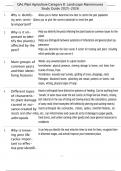
QAL Plant Agriculture Category B: Landscape Maintenance
Study Guide 2025-2026
1. Why is identify- Allows you to better determine how best to control the pest population
ing pests correct- Allows you to pick the correct pesticide to treat the pest
ly important?
2. Why is it im- Help you identify the pests infesting the plant based on common issues for the
portant to iden- plant
tify the plant(s) Helps you distinguish between symptoms of infestation and general plant ap-
affected by the pearance
pest? Helps you determine the best course if action for treating said plant- including
which pesticides you can use on it
3. Main groups of Weeds- any unwanted plant in a given location
common pests Invertebrates- physical presence, chewing damage to leaves, exit holes from
and their identi- trunks of trees, frass
fying features Vertebrates- mounds near tunnels, girdling of trees, droppings, nests
Pathogens- discolored leaves, splotching and mosaic patterns on leaves, root
issues, wilting, physical signs of fungi
4. Different types Insects/arthropods have distinctive patterns of feeding. Can be anything from
of characteris- "tunnels" of eaten tissue under the leaf cuticle (in things like leaf miners), missing
tic plant damage leaf material (in the case of biting and chewing insects like caterpillars), presence
caused or nui- of sooty mold (from honeydew left behind by piercing and sucking insects)
sance created by Insects/arthropods like cockroaches, crickets, spiders, silverfish/firebrats, ter-
insects and other mites, etc. can infest homes and cause all sorts of damage to paper goods,
arthropods food stores, and lumber (among other goods) and cause general nuisances to
residents
5. Why is know- It can help you identify the most ettective times to treat for them, recognize them
ing pest life in ditterent stages, and overall improve your treatment plans
cycles impor-
tant to effec-
tive pest identifi-
, QAL Plant Agriculture Category B: Landscape Maintenance
Study Guide 2025-2026
cation and man-
agement?
6. What are the Broadleaf: weeds that are dicots
differences be- Grassy: weeds that are monocots
tween broadleaf Sedges: weeds that resemble grasses but have triangular stems
weeds, grassy
weeds, and
sedges?
7. What are the dif- Abiotics: poor growth, chlorosis, necrosis ,deformed plant parts
ferent types of Pathogens: chlorosis, necrosis, poor growth, deformed plant parts, wilt, shoot
plant damages blight, cankers, galls, leaf spots, soft rots, scabs, discoloration or mosaic pattern
cased by abiot- on leaves
ic factors and NOTE: Big ditterence between abiotic and pathogen damage is that pathogens
pathogens? often have physical signs- like mycelium for fungus, or presence of bacterium or
viruses on tests- that help ditterentiate between the two. Lab testing helps out a
lot with identifying biotic factors and determining if you have a biotic issue or an
abiotic issue when no physical signs are present
8. Common verte- Birds and Mammals
brate pests of Mammals include things like rats, mice, ground squirrels, gophers, moles
landscapes and they cause many types of damage:
turfgrass and - birds: nests, droppings, eat fruits and veggies, damage plant material
the damage they - mammals: carry disease causing fleas, mites, lice and ticks; damage turf and
cause plants, infest homes, large mammals can prey on pets, create mounds or burrows
that are safety hazards, infest homes and food stores
9. What resources Online guides, illustrations, photos, labs, experts
are available for
identifying pests,
symptoms of in-
festation, and
, QAL Plant Agriculture Category B: Landscape Maintenance
Study Guide 2025-2026
damage caused
by pests?
10. Define IPM in a Ecosystem based strategy that focuses on long-term prevention of pests or their
landscape main- damage through a combination of techniques such as biological control, habitat
tenance context manipulation, modification of cultural practices, and use of resistant varieties
11. What are the Chemical control:
advantages and - advantages: ettective, quick and easy to get control with chemicals, reasonable
disadvantages of cost
pest manage- - disadvantages: risk of damaging nontarget organisms, some have the potential
ment methods to damage surfaces or the environment
that make up an Biological control:
IPM program in - advantages: no need for chemicals, provides long term control, does not nega-
landscapes, turf- tively impact the environment
grass, and interi- - disadvantages: not aways cost ettective, does not work quickly
orscapes Mechanical/Physical/Cultural control:
- advantages: can prevent damage in the first place (depending on method),
requires no pesticides, many methods result in healthier plants and a better
managed environment (i.e. ensuring proper irrigation and overall plant vigor)
- disadvantages: time and labor intensive
12. What is the - avoid damaging nearby organisms, humans, items, and environmentally sensi-
importance of tive areas
site-specific vari- - avoid potential hazards that might endanger the operator during application
ables? - time the application to reduce rusk to beneficials and to disrupt the least amount
of people in the area
13. What is the im- Pest populations: their presence is the reason you will treat
portance of pest, Host populations: if hosts are present, the pests can still remain- includes unde-
host, and natur- sired plants and desired plants
al enemy popula- Natural enemy populations: help keep the pests controlled in an environment. its
tions?
Study Guide 2025-2026
1. Why is identify- Allows you to better determine how best to control the pest population
ing pests correct- Allows you to pick the correct pesticide to treat the pest
ly important?
2. Why is it im- Help you identify the pests infesting the plant based on common issues for the
portant to iden- plant
tify the plant(s) Helps you distinguish between symptoms of infestation and general plant ap-
affected by the pearance
pest? Helps you determine the best course if action for treating said plant- including
which pesticides you can use on it
3. Main groups of Weeds- any unwanted plant in a given location
common pests Invertebrates- physical presence, chewing damage to leaves, exit holes from
and their identi- trunks of trees, frass
fying features Vertebrates- mounds near tunnels, girdling of trees, droppings, nests
Pathogens- discolored leaves, splotching and mosaic patterns on leaves, root
issues, wilting, physical signs of fungi
4. Different types Insects/arthropods have distinctive patterns of feeding. Can be anything from
of characteris- "tunnels" of eaten tissue under the leaf cuticle (in things like leaf miners), missing
tic plant damage leaf material (in the case of biting and chewing insects like caterpillars), presence
caused or nui- of sooty mold (from honeydew left behind by piercing and sucking insects)
sance created by Insects/arthropods like cockroaches, crickets, spiders, silverfish/firebrats, ter-
insects and other mites, etc. can infest homes and cause all sorts of damage to paper goods,
arthropods food stores, and lumber (among other goods) and cause general nuisances to
residents
5. Why is know- It can help you identify the most ettective times to treat for them, recognize them
ing pest life in ditterent stages, and overall improve your treatment plans
cycles impor-
tant to effec-
tive pest identifi-
, QAL Plant Agriculture Category B: Landscape Maintenance
Study Guide 2025-2026
cation and man-
agement?
6. What are the Broadleaf: weeds that are dicots
differences be- Grassy: weeds that are monocots
tween broadleaf Sedges: weeds that resemble grasses but have triangular stems
weeds, grassy
weeds, and
sedges?
7. What are the dif- Abiotics: poor growth, chlorosis, necrosis ,deformed plant parts
ferent types of Pathogens: chlorosis, necrosis, poor growth, deformed plant parts, wilt, shoot
plant damages blight, cankers, galls, leaf spots, soft rots, scabs, discoloration or mosaic pattern
cased by abiot- on leaves
ic factors and NOTE: Big ditterence between abiotic and pathogen damage is that pathogens
pathogens? often have physical signs- like mycelium for fungus, or presence of bacterium or
viruses on tests- that help ditterentiate between the two. Lab testing helps out a
lot with identifying biotic factors and determining if you have a biotic issue or an
abiotic issue when no physical signs are present
8. Common verte- Birds and Mammals
brate pests of Mammals include things like rats, mice, ground squirrels, gophers, moles
landscapes and they cause many types of damage:
turfgrass and - birds: nests, droppings, eat fruits and veggies, damage plant material
the damage they - mammals: carry disease causing fleas, mites, lice and ticks; damage turf and
cause plants, infest homes, large mammals can prey on pets, create mounds or burrows
that are safety hazards, infest homes and food stores
9. What resources Online guides, illustrations, photos, labs, experts
are available for
identifying pests,
symptoms of in-
festation, and
, QAL Plant Agriculture Category B: Landscape Maintenance
Study Guide 2025-2026
damage caused
by pests?
10. Define IPM in a Ecosystem based strategy that focuses on long-term prevention of pests or their
landscape main- damage through a combination of techniques such as biological control, habitat
tenance context manipulation, modification of cultural practices, and use of resistant varieties
11. What are the Chemical control:
advantages and - advantages: ettective, quick and easy to get control with chemicals, reasonable
disadvantages of cost
pest manage- - disadvantages: risk of damaging nontarget organisms, some have the potential
ment methods to damage surfaces or the environment
that make up an Biological control:
IPM program in - advantages: no need for chemicals, provides long term control, does not nega-
landscapes, turf- tively impact the environment
grass, and interi- - disadvantages: not aways cost ettective, does not work quickly
orscapes Mechanical/Physical/Cultural control:
- advantages: can prevent damage in the first place (depending on method),
requires no pesticides, many methods result in healthier plants and a better
managed environment (i.e. ensuring proper irrigation and overall plant vigor)
- disadvantages: time and labor intensive
12. What is the - avoid damaging nearby organisms, humans, items, and environmentally sensi-
importance of tive areas
site-specific vari- - avoid potential hazards that might endanger the operator during application
ables? - time the application to reduce rusk to beneficials and to disrupt the least amount
of people in the area
13. What is the im- Pest populations: their presence is the reason you will treat
portance of pest, Host populations: if hosts are present, the pests can still remain- includes unde-
host, and natur- sired plants and desired plants
al enemy popula- Natural enemy populations: help keep the pests controlled in an environment. its
tions?