Zadok the Priest-Handel
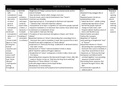
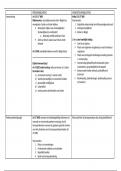
Texture Timbre Harmony Melody Rhythm
-Opens solely -SSAATBB -Bright key of D Major common key for ceremonial works and for Intro -Repeated
with choir natural trumpets -Repeated rising arpeggio idea in use of
homophonic -Large -Slow harmonic rhythm which changes every bar violin opening
instrumental orchestra, -Seventh chords used in bb,4,6 diminished in bar 7 beat 4 -Repeated quaver chords acc. pattern
then entry harpsichord -Common use of pedals -Sustained bass notes -Use of
of choral and organ -Opening harmony (1-7) transposed to dominant and repeated - “Zadok the Priest”- syllabic setting dotted
parts at continuo - “Solomon king” ends with imperfect cadence emphasising importance of text rhythms
bb.23 in - 3-part violin, -Transposition to G major in repetition of “and all the people rejoiced” - “And all the people rejoiced” and long
homophonic 2 oboes, 2 -Sequence modulates us to dominant then relative minor before back change to triple metre, with running
texture bassoons, 3 to dominant on restatement of text frequent dotted rhythms) sense of semi
-Continued trumpets -Tonic pedal in ‘God save the king’ dance and therefore joy) quavers
homophonic and timpani -Prevalence of tonic dominant throughout, timpani, and “Amen -Dotted rhythms prevalent
texture in 3 -Doubling of alleluia” -Fanfare like trumpets
time vocal parts Sequential melisma on “Amen” (descending then ascending) first in -Repetition of “rejoiced”
-Unison triadic in orchestra dominant then used to modulate A major then second time to tonic -word painting on lengthened “ever”
figure on ‘may -Parallel thirds add to brightness of “Amen alleluia” of “forever”
the king live -Suspensions on “God save the king” restatement in dominant (twice) -Sequential melisma on “Amen”
forever’ then later in tonic (descending then ascending) first in
-Question and -Restatement of “Amen” melisma doubled in thirds in oboes dominant then used to modulate A
answer -bb 87 imperfect cadence (Phrygian cadence) major then second time to tonic
between - Restatement of “Amen” semiquavers in thirds in Altos, tenors and - Sequences on “God save the king”
unison motif first basses -Semiquaver and dotted motifs
(above) and -Descending Amen sequence that descends through E minor, DM, F#m summed together in an ascending
tutti “Amen leads to resolve in tonic on “God Save the King more satisfying” sequence to build to bb 87
alleluias” -Repetition of “Amen Alleluia” in G major -Descending Amen sequence that
-Contrapuntal -ends with plagal cadence and trumpet fanfare descends through E minor, DM,
writing -Modulations to restricted keys F#m
throughout -Consonant harmonies with prepared and resolved dissonances -Ornamentation especially at
cadence points
Texture Timbre Harmony Melody Rhythm
-Opens solely -SSAATBB -Bright key of D Major common key for ceremonial works and for Intro -Repeated
with choir natural trumpets -Repeated rising arpeggio idea in use of
homophonic -Large -Slow harmonic rhythm which changes every bar violin opening
instrumental orchestra, -Seventh chords used in bb,4,6 diminished in bar 7 beat 4 -Repeated quaver chords acc. pattern
then entry harpsichord -Common use of pedals -Sustained bass notes -Use of
of choral and organ -Opening harmony (1-7) transposed to dominant and repeated - “Zadok the Priest”- syllabic setting dotted
parts at continuo - “Solomon king” ends with imperfect cadence emphasising importance of text rhythms
bb.23 in - 3-part violin, -Transposition to G major in repetition of “and all the people rejoiced” - “And all the people rejoiced” and long
homophonic 2 oboes, 2 -Sequence modulates us to dominant then relative minor before back change to triple metre, with running
texture bassoons, 3 to dominant on restatement of text frequent dotted rhythms) sense of semi
-Continued trumpets -Tonic pedal in ‘God save the king’ dance and therefore joy) quavers
homophonic and timpani -Prevalence of tonic dominant throughout, timpani, and “Amen -Dotted rhythms prevalent
texture in 3 -Doubling of alleluia” -Fanfare like trumpets
time vocal parts Sequential melisma on “Amen” (descending then ascending) first in -Repetition of “rejoiced”
-Unison triadic in orchestra dominant then used to modulate A major then second time to tonic -word painting on lengthened “ever”
figure on ‘may -Parallel thirds add to brightness of “Amen alleluia” of “forever”
the king live -Suspensions on “God save the king” restatement in dominant (twice) -Sequential melisma on “Amen”
forever’ then later in tonic (descending then ascending) first in
-Question and -Restatement of “Amen” melisma doubled in thirds in oboes dominant then used to modulate A
answer -bb 87 imperfect cadence (Phrygian cadence) major then second time to tonic
between - Restatement of “Amen” semiquavers in thirds in Altos, tenors and - Sequences on “God save the king”
unison motif first basses -Semiquaver and dotted motifs
(above) and -Descending Amen sequence that descends through E minor, DM, F#m summed together in an ascending
tutti “Amen leads to resolve in tonic on “God Save the King more satisfying” sequence to build to bb 87
alleluias” -Repetition of “Amen Alleluia” in G major -Descending Amen sequence that
-Contrapuntal -ends with plagal cadence and trumpet fanfare descends through E minor, DM,
writing -Modulations to restricted keys F#m
throughout -Consonant harmonies with prepared and resolved dissonances -Ornamentation especially at
cadence points