1
Page | 1
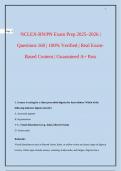
NCLEX-RN/PN Exam Prep 2025–2026 |
Questions 160 | 100% Verified | Real Exam-
Based Content | Guaranteed A+ Pass
1. A nurse is caring for a client prescribed digoxin for heart failure. Which of the
following indicates digoxin toxicity?
A. Increased appetite
B. Hypertension
✔ C. Visual disturbances (e.g., halos, blurred vision)
D. Tachycardia
Rationale:
Visual disturbances such as blurred vision, halos, or yellow vision are classic signs of digoxin
toxicity. Other signs include nausea, vomiting, bradycardia, and fatigue. Digoxin has a
, 2
narrow therapeutic index, and toxicity can be fatal. Monitoring serum digoxin levels and
potassium levels is essential, as hypokalemia increases toxicity risk. Nurses should educate
clients on symptoms and report immediately if these occur. Hypertension and tachycardia are
Page | 2
not typical signs of toxicity.
2. Which of the following interventions is a priority for a client in the manic phase of
bipolar disorder?
✔ A. Provide a calm, structured environment
B. Encourage group therapy sessions
C. Allow unlimited activity to reduce energy
D. Discuss delusional thoughts in detail
Rationale:
In mania, the client's mood is elevated, speech is rapid, and attention span is short. Providing
a low-stimulation, structured environment is crucial to reduce agitation and prevent
overstimulation. Limiting group activities and avoiding direct confrontation of delusions
helps maintain safety. Group therapy is more effective during stable phases. Discussing
delusions at length may reinforce them rather than reorienting the client. Safety and reduction
of environmental triggers is the priority.
3. A postpartum mother is Rh-negative and delivers an Rh-positive newborn. What is
the priority nursing intervention?
A. Provide iron supplements
✔ B. Administer Rho(D) immune globulin within 72 hours
, 3
C. Prepare for phototherapy
D. Begin oxytocin infusion
Page | 3 Rationale:
Rho(D) immune globulin (RhoGAM) prevents maternal sensitization to Rh-positive fetal
blood cells and must be given within 72 hours after delivery if the mother is Rh-negative and
the baby is Rh-positive. This prevents hemolytic disease in future pregnancies. Administering
it early ensures maternal antibodies do not form. Iron supplements and phototherapy are
unrelated to Rh incompatibility. Oxytocin is used for labor induction or postpartum
hemorrhage, not Rh prevention.
4. A child with asthma is prescribed albuterol. Which of the following side effects
should the nurse monitor for?
A. Drowsiness
✔ B. Tachycardia
C. Hypoglycemia
D. Constipation
Rationale:
Albuterol is a short-acting beta-2 agonist that can cause tachycardia, nervousness, and
tremors due to its stimulating effects. It works by relaxing bronchial smooth muscles to
improve airflow. Monitoring heart rate and teaching the client to report palpitations is
essential. Drowsiness is uncommon; in fact, stimulation is more likely. Hypoglycemia and
constipation are not side effects of albuterol. Overuse of the medication can lead to cardiac
effects and reduced efficacy.
, 4
5. Which assessment finding requires immediate action in a postoperative client?
Page | 4
A. Pain score of 7/10
B. Hypoactive bowel sounds
✔ C. Respiratory rate of 8 breaths/min
D. Temperature of 37.8°C (100°F)
Rationale:
A respiratory rate of 8 breaths/min suggests respiratory depression, which is a critical
postoperative complication, often related to opioid use. Immediate assessment and potential
reversal with naloxone may be required. A high pain score, mild fever, or reduced bowel
sounds are expected in the early postop period. However, respiratory compromise is life-
threatening and takes precedence. Monitoring vital signs and respiratory status closely is
essential for early detection.
6. Which lab value should be reported immediately in a client receiving heparin
therapy?
A. Hematocrit 38%
✔ B. Platelets 80,000/mm³
C. aPTT 55 seconds
D. Hemoglobin 13.2 g/dL
Rationale:
A platelet count of 80,000/mm³ suggests thrombocytopenia, potentially indicating heparin-
induced thrombocytopenia (HIT), a serious immune-mediated complication. HIT can cause
Page | 1
NCLEX-RN/PN Exam Prep 2025–2026 |
Questions 160 | 100% Verified | Real Exam-
Based Content | Guaranteed A+ Pass
1. A nurse is caring for a client prescribed digoxin for heart failure. Which of the
following indicates digoxin toxicity?
A. Increased appetite
B. Hypertension
✔ C. Visual disturbances (e.g., halos, blurred vision)
D. Tachycardia
Rationale:
Visual disturbances such as blurred vision, halos, or yellow vision are classic signs of digoxin
toxicity. Other signs include nausea, vomiting, bradycardia, and fatigue. Digoxin has a
, 2
narrow therapeutic index, and toxicity can be fatal. Monitoring serum digoxin levels and
potassium levels is essential, as hypokalemia increases toxicity risk. Nurses should educate
clients on symptoms and report immediately if these occur. Hypertension and tachycardia are
Page | 2
not typical signs of toxicity.
2. Which of the following interventions is a priority for a client in the manic phase of
bipolar disorder?
✔ A. Provide a calm, structured environment
B. Encourage group therapy sessions
C. Allow unlimited activity to reduce energy
D. Discuss delusional thoughts in detail
Rationale:
In mania, the client's mood is elevated, speech is rapid, and attention span is short. Providing
a low-stimulation, structured environment is crucial to reduce agitation and prevent
overstimulation. Limiting group activities and avoiding direct confrontation of delusions
helps maintain safety. Group therapy is more effective during stable phases. Discussing
delusions at length may reinforce them rather than reorienting the client. Safety and reduction
of environmental triggers is the priority.
3. A postpartum mother is Rh-negative and delivers an Rh-positive newborn. What is
the priority nursing intervention?
A. Provide iron supplements
✔ B. Administer Rho(D) immune globulin within 72 hours
, 3
C. Prepare for phototherapy
D. Begin oxytocin infusion
Page | 3 Rationale:
Rho(D) immune globulin (RhoGAM) prevents maternal sensitization to Rh-positive fetal
blood cells and must be given within 72 hours after delivery if the mother is Rh-negative and
the baby is Rh-positive. This prevents hemolytic disease in future pregnancies. Administering
it early ensures maternal antibodies do not form. Iron supplements and phototherapy are
unrelated to Rh incompatibility. Oxytocin is used for labor induction or postpartum
hemorrhage, not Rh prevention.
4. A child with asthma is prescribed albuterol. Which of the following side effects
should the nurse monitor for?
A. Drowsiness
✔ B. Tachycardia
C. Hypoglycemia
D. Constipation
Rationale:
Albuterol is a short-acting beta-2 agonist that can cause tachycardia, nervousness, and
tremors due to its stimulating effects. It works by relaxing bronchial smooth muscles to
improve airflow. Monitoring heart rate and teaching the client to report palpitations is
essential. Drowsiness is uncommon; in fact, stimulation is more likely. Hypoglycemia and
constipation are not side effects of albuterol. Overuse of the medication can lead to cardiac
effects and reduced efficacy.
, 4
5. Which assessment finding requires immediate action in a postoperative client?
Page | 4
A. Pain score of 7/10
B. Hypoactive bowel sounds
✔ C. Respiratory rate of 8 breaths/min
D. Temperature of 37.8°C (100°F)
Rationale:
A respiratory rate of 8 breaths/min suggests respiratory depression, which is a critical
postoperative complication, often related to opioid use. Immediate assessment and potential
reversal with naloxone may be required. A high pain score, mild fever, or reduced bowel
sounds are expected in the early postop period. However, respiratory compromise is life-
threatening and takes precedence. Monitoring vital signs and respiratory status closely is
essential for early detection.
6. Which lab value should be reported immediately in a client receiving heparin
therapy?
A. Hematocrit 38%
✔ B. Platelets 80,000/mm³
C. aPTT 55 seconds
D. Hemoglobin 13.2 g/dL
Rationale:
A platelet count of 80,000/mm³ suggests thrombocytopenia, potentially indicating heparin-
induced thrombocytopenia (HIT), a serious immune-mediated complication. HIT can cause