

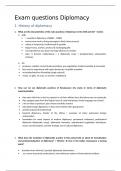
Exam questions Diplomacy
1. History of diplomacy
1. What are the characteristics of the main practices of diplomacy in the ANE and AG? < Cohen
o ANE:
= cuneiform diplomacy: 2500BC – 500BC
envoys were sent to bring messages to kinds (slow process)
values of reciprocity, brotherhood & equality
lingua franca, archive, protocol & exchanging gifts
correspondence was about marriage alliances & treaties
later, it became multicultural + a diplomatic corps + penipotentiary ambassador,
emissary
o AG
proxenos: resident consul (trade promotion, pre-negotiation, limited mandate & immunity)
first ones to experiment with open democracy via public assembly
no brotherhood but friendship (single cultural)
rivalry, no gifts, no trust, no archive, multilateral
2. How can we see diplomatic practices of Renaissance city states in terms of diplomatic
experimentation
• they were the firsts to feel so superior bc of their military force that there was no reciprocity
• they stepped away from the lingua franca & used interpreters (main language was Greek)
• a lot of value to protocol, pax romana and fides romana
• educated foreign dignitaries so they were friends when going home
• amicitia instead of brotherhood
• imperial diplomacy: Master of the offices < secretary of state: welcomed foreign
ambassadors
• foundation for many aspects of modern diplomacy: permanent embassies, professional
diplomats (diplomatic corps), diplomatic immunity, sophisticated negotiation techniques,
secure communication, and the strategic use of cultural diplomacy.
3. What does the evolution of diplomatic practice in this period tells us about its formalisation
and professionalisation of diplomacy? < Fletcher how is the italian renaissance a turning
point?
• transition from informal, sporadic diplomatic interactions…
• …to a more structured, professional, and continuous system of international relations
, • groundwork for modern diplomatic practices and the establishment of diplomacy as a
recognized and essential function of statecraft (resident ambassy, immunity, protocol, …)
• people realised that they are dependent on each other (part of system instead of rivals)
4. Give examples and arguments about diplomatic experimentations < Wiseman
• ANE: formal treaties, royal correspondence, and the exchange of gifts.
• AG: proxenos + open democracy
• AR: permanent embassies, professional diplomats, immunity, sophisticated techniques
5. Compare how Wiseman defines diplomacy compared to Constantinou and Sharp.
Geoffrey Wiseman:
• the processes and institutions by which the interests and identities of sovereign states are
represented to one another part of foreign policy
• perpetual tension between continuity and change
• traditional diplomacy is growing in importance & complexity 4 dimensions: traditional
bilateral, multilateral, polylateral, and omnilateral diplomacy
• low context vs high context negotiations
• regional, national & universal diplomatic culture
• state-based, multi-actor & cosmopolitan view
Costas M. Constantinou and Paul Sharp:
• “complex diplomacy” evolving needs of diplomatic practice
• mytho-diplomacy & medieval diplomacy
• is dimplomacy instrument or medium of foreign policy?
• enacted by everyone cosmopolitan, non-state view
• strategy, continuous negotiation & raison d’état for negotiation
2. Theory of diplomacy
1. Definieer voor jezelf op basis van de literatuur wat diplomatie is
• Diplomacy is conventionally understood as the processes and institutions by which the
interests and identities of sovereign states are represented to one another.
1. History of diplomacy
1. What are the characteristics of the main practices of diplomacy in the ANE and AG? < Cohen
o ANE:
= cuneiform diplomacy: 2500BC – 500BC
envoys were sent to bring messages to kinds (slow process)
values of reciprocity, brotherhood & equality
lingua franca, archive, protocol & exchanging gifts
correspondence was about marriage alliances & treaties
later, it became multicultural + a diplomatic corps + penipotentiary ambassador,
emissary
o AG
proxenos: resident consul (trade promotion, pre-negotiation, limited mandate & immunity)
first ones to experiment with open democracy via public assembly
no brotherhood but friendship (single cultural)
rivalry, no gifts, no trust, no archive, multilateral
2. How can we see diplomatic practices of Renaissance city states in terms of diplomatic
experimentation
• they were the firsts to feel so superior bc of their military force that there was no reciprocity
• they stepped away from the lingua franca & used interpreters (main language was Greek)
• a lot of value to protocol, pax romana and fides romana
• educated foreign dignitaries so they were friends when going home
• amicitia instead of brotherhood
• imperial diplomacy: Master of the offices < secretary of state: welcomed foreign
ambassadors
• foundation for many aspects of modern diplomacy: permanent embassies, professional
diplomats (diplomatic corps), diplomatic immunity, sophisticated negotiation techniques,
secure communication, and the strategic use of cultural diplomacy.
3. What does the evolution of diplomatic practice in this period tells us about its formalisation
and professionalisation of diplomacy? < Fletcher how is the italian renaissance a turning
point?
• transition from informal, sporadic diplomatic interactions…
• …to a more structured, professional, and continuous system of international relations
, • groundwork for modern diplomatic practices and the establishment of diplomacy as a
recognized and essential function of statecraft (resident ambassy, immunity, protocol, …)
• people realised that they are dependent on each other (part of system instead of rivals)
4. Give examples and arguments about diplomatic experimentations < Wiseman
• ANE: formal treaties, royal correspondence, and the exchange of gifts.
• AG: proxenos + open democracy
• AR: permanent embassies, professional diplomats, immunity, sophisticated techniques
5. Compare how Wiseman defines diplomacy compared to Constantinou and Sharp.
Geoffrey Wiseman:
• the processes and institutions by which the interests and identities of sovereign states are
represented to one another part of foreign policy
• perpetual tension between continuity and change
• traditional diplomacy is growing in importance & complexity 4 dimensions: traditional
bilateral, multilateral, polylateral, and omnilateral diplomacy
• low context vs high context negotiations
• regional, national & universal diplomatic culture
• state-based, multi-actor & cosmopolitan view
Costas M. Constantinou and Paul Sharp:
• “complex diplomacy” evolving needs of diplomatic practice
• mytho-diplomacy & medieval diplomacy
• is dimplomacy instrument or medium of foreign policy?
• enacted by everyone cosmopolitan, non-state view
• strategy, continuous negotiation & raison d’état for negotiation
2. Theory of diplomacy
1. Definieer voor jezelf op basis van de literatuur wat diplomatie is
• Diplomacy is conventionally understood as the processes and institutions by which the
interests and identities of sovereign states are represented to one another.


