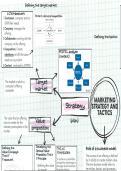
Defining the target market:
5 C’s framework
Porter’s 5 forces of competition
1. Customers: company aims to
fulfill their needs
2. Company: manages the
offering
3. Collaborators working with the
Defining the tactics
company on this offering
4. Competitors: Create
PESTEL analysis
substitutes to fulfill the same (context)
needs as my product
5. Context : analyzed by STEPPLE
The market in which a Target
company’s offering
competes market
MARKETING
Strategy STRATEGY AND
TACTICS
The value that an offering
aims to create for the Value (plan)
relevant participants in the proposition
market.
Defining the Developing the
Optimal Value
THE 3-C Role of a business model:
Value Exchange: FRAMEWORK
The 6-V Proposition: The 3- The success of an offering is defined
Framework V Principle To achieve a sustainable by its ability to create market value.
competitive advantage a
1. Defining the value manager should evaluate The term business model refers to
three key factors: he entities, factors, and processes
5 C’s framework
Porter’s 5 forces of competition
1. Customers: company aims to
fulfill their needs
2. Company: manages the
offering
3. Collaborators working with the
Defining the tactics
company on this offering
4. Competitors: Create
PESTEL analysis
substitutes to fulfill the same (context)
needs as my product
5. Context : analyzed by STEPPLE
The market in which a Target
company’s offering
competes market
MARKETING
Strategy STRATEGY AND
TACTICS
The value that an offering
aims to create for the Value (plan)
relevant participants in the proposition
market.
Defining the Developing the
Optimal Value
THE 3-C Role of a business model:
Value Exchange: FRAMEWORK
The 6-V Proposition: The 3- The success of an offering is defined
Framework V Principle To achieve a sustainable by its ability to create market value.
competitive advantage a
1. Defining the value manager should evaluate The term business model refers to
three key factors: he entities, factors, and processes