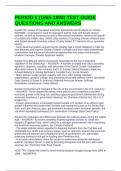
PERIOD 6 (1865-1898) TEST GUIDE
QUESTIONS AND ANSWERS
Explain the causes of increased economic opportunity and its effects on society -
ANSWER-- Corporations' need for managers and for male and female clerical
workers, as well as increased access to educational institutions, fostered the growth
of a distinctive middle class. (white collar workers) A growing amount of leisure time
also helped expand consumer culture. (Coney Island, P.T Barnum circus, spectator
sports)
- Some business leaders argued that the wealthy had a moral obligation to help the
less fortunate and improve society (Gospel of Wealth) and they made philanthropic
contributions that enhanced educational opportunities and urban environments.
(Andrew Carnegie, Phoebe Apperson Hearst)
Explain how different reform movements responded to the rise of industrial
capitalism in the Gilded Age. - ANSWER-- A number of artists and critics, including
agrarians, utopians, socialists, and advocates of the Social Gospel, championed
alternative visions for the economy and U.S. society. (Henry George's single tax,
Edward Bellamy's Looking Backward, Socialist Party, Social Gospel)
- Many women sought greater equality with men, often joining voluntary
organizations, going to college, and promoting social and political reform. (Elizabeth
Cady Stanton & Susan B. Anthony's National American Woman Suffrage
Association, temperance, Carrie Nation)
Explain continuities and changes in the role of the government in the U.S. economy.
- ANSWER-- Some argued that laissez-faire policies and competition promoted
economic growth in the long run, and they opposed government intervention during
economic downturns. ( government absence: ex. Sherman Antitrust Act, US v. E.C.
Knight CO.)
- Foreign policymakers increasingly looked outside U.S. borders in an effort to gain
greater influence and control over markets and natural resources in the Pacific Rim,
Asia, and Latin America. (gov. got involved in business when economic benefits, but
not when regulating businesses) (ex. annexation of Hawaii, Open Door Policy)
Explain the similarities and differences between the political parties during the Gilded
Age. - ANSWER-- Economic instability inspired agrarian activists to create the
People's (Populist) Party, which called for a stronger governmental role in regulating
the American economic system. (ex. Omaha Platform)
- The major political parties appealed to lingering divisions from the Civil War and
contended over tariffs and currency issues, even as reformers argued that economic
greed and self-interest had corrupted all levels of government. (ex. patronage,
politicians looking to rich ppl for funding after Pendleton Act)
- In an urban atmosphere where the access to power was unequally distributed,
political machines thrived, in part by providing immigrants and the poor with social
services. (ex. Tammany Hall, Boss Tweed)
NOW TRY: Explain the extent to which industrialization brought change from 1865 to
1898. - ANSWER-D:
QUESTIONS AND ANSWERS
Explain the causes of increased economic opportunity and its effects on society -
ANSWER-- Corporations' need for managers and for male and female clerical
workers, as well as increased access to educational institutions, fostered the growth
of a distinctive middle class. (white collar workers) A growing amount of leisure time
also helped expand consumer culture. (Coney Island, P.T Barnum circus, spectator
sports)
- Some business leaders argued that the wealthy had a moral obligation to help the
less fortunate and improve society (Gospel of Wealth) and they made philanthropic
contributions that enhanced educational opportunities and urban environments.
(Andrew Carnegie, Phoebe Apperson Hearst)
Explain how different reform movements responded to the rise of industrial
capitalism in the Gilded Age. - ANSWER-- A number of artists and critics, including
agrarians, utopians, socialists, and advocates of the Social Gospel, championed
alternative visions for the economy and U.S. society. (Henry George's single tax,
Edward Bellamy's Looking Backward, Socialist Party, Social Gospel)
- Many women sought greater equality with men, often joining voluntary
organizations, going to college, and promoting social and political reform. (Elizabeth
Cady Stanton & Susan B. Anthony's National American Woman Suffrage
Association, temperance, Carrie Nation)
Explain continuities and changes in the role of the government in the U.S. economy.
- ANSWER-- Some argued that laissez-faire policies and competition promoted
economic growth in the long run, and they opposed government intervention during
economic downturns. ( government absence: ex. Sherman Antitrust Act, US v. E.C.
Knight CO.)
- Foreign policymakers increasingly looked outside U.S. borders in an effort to gain
greater influence and control over markets and natural resources in the Pacific Rim,
Asia, and Latin America. (gov. got involved in business when economic benefits, but
not when regulating businesses) (ex. annexation of Hawaii, Open Door Policy)
Explain the similarities and differences between the political parties during the Gilded
Age. - ANSWER-- Economic instability inspired agrarian activists to create the
People's (Populist) Party, which called for a stronger governmental role in regulating
the American economic system. (ex. Omaha Platform)
- The major political parties appealed to lingering divisions from the Civil War and
contended over tariffs and currency issues, even as reformers argued that economic
greed and self-interest had corrupted all levels of government. (ex. patronage,
politicians looking to rich ppl for funding after Pendleton Act)
- In an urban atmosphere where the access to power was unequally distributed,
political machines thrived, in part by providing immigrants and the poor with social
services. (ex. Tammany Hall, Boss Tweed)
NOW TRY: Explain the extent to which industrialization brought change from 1865 to
1898. - ANSWER-D: