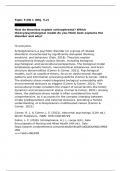
Topic 5 DQ 1 (Obj. 5.2)
Jul 29-31, 2024
How do theorists explain schizophrenia? Which
theory/psychological model do you think best explains the
disorder and why?
Hi everyone,
Schizophrenia is a psychotic disorder (or a group of related
disorders) characterized by significantly disrupted thinking,
emotions, and behaviors (Gale, 2018). Theorists explain
schizophrenia through various lenses, including biological,
psychological, and sociocultural perspectives. The biological model
emphasizes genetic factors, neurochemical imbalances, and brain
structure abnormalities (Comer & Comer, 2021). Psychological
models, such as cognitive theory, focus on dysfunctional thought
patterns and information processing deficits (Comer & Comer, 2021).
The diathesis-stress model integrates biological vulnerability with
environmental stressors as triggers (Comer & Comer, 2021). The
sociocultural model considers the impact of social factors like family
dynamics and socioeconomic status (Comer & Comer, 2021). Among
these, the diathesis-stress model is often considered the most
comprehensive, as it accounts for the complex interplay between
innate predispositions and external stressors, providing a holistic
understanding of schizophrenia's multifaceted nature (Comer &
Comer, 2021).
Comer, R. J., & Comer, J. S. (2021). Abnormal psychology (11th ed.).
Worth Publishers. ISBN: 9781319190729
Fallon, L. F. (2018). Schizophrenia. In J. L. Longe (Ed.), Gale
Encyclopedia of Nursing and Allied Health (4th ed.). Gale.
https://search.credoreference.com/articles/Qm9va0FydGljbGU6NDc3MDk
zNQ
==?aid=96349
Jul 29-31, 2024
How do theorists explain schizophrenia? Which
theory/psychological model do you think best explains the
disorder and why?
Hi everyone,
Schizophrenia is a psychotic disorder (or a group of related
disorders) characterized by significantly disrupted thinking,
emotions, and behaviors (Gale, 2018). Theorists explain
schizophrenia through various lenses, including biological,
psychological, and sociocultural perspectives. The biological model
emphasizes genetic factors, neurochemical imbalances, and brain
structure abnormalities (Comer & Comer, 2021). Psychological
models, such as cognitive theory, focus on dysfunctional thought
patterns and information processing deficits (Comer & Comer, 2021).
The diathesis-stress model integrates biological vulnerability with
environmental stressors as triggers (Comer & Comer, 2021). The
sociocultural model considers the impact of social factors like family
dynamics and socioeconomic status (Comer & Comer, 2021). Among
these, the diathesis-stress model is often considered the most
comprehensive, as it accounts for the complex interplay between
innate predispositions and external stressors, providing a holistic
understanding of schizophrenia's multifaceted nature (Comer &
Comer, 2021).
Comer, R. J., & Comer, J. S. (2021). Abnormal psychology (11th ed.).
Worth Publishers. ISBN: 9781319190729
Fallon, L. F. (2018). Schizophrenia. In J. L. Longe (Ed.), Gale
Encyclopedia of Nursing and Allied Health (4th ed.). Gale.
https://search.credoreference.com/articles/Qm9va0FydGljbGU6NDc3MDk
zNQ
==?aid=96349