100% tevredenheidsgarantie Direct beschikbaar na je betaling Lees online óf als PDF Geen vaste maandelijkse kosten 4.2 TrustPilot
logo-home
Tentamen (uitwerkingen)

HED4805 Assignment 2 (DETAILED ANSWERS) 2025 - DISTINCTION GUARANTEED

Beoordeling
-
Verkocht
1
Pagina's
17
Cijfer
A+
Geüpload op
31-03-2025
Geschreven in
2024/2025

HED4805 Assignment 2 (DETAILED ANSWERS) 2025 - DISTINCTION GUARANTEED - DISTINCTION GUARANTEED - DISTINCTION GUARANTEED Answers, guidelines, workings and references ,Question 1 (25) Section A of this question is based on the extract below from Chapter 2 of the prescribed textbook (Seroto, Davids & Wolhuter, 2020). Read the extract, and then answer the questions that follow. HED4805/101/0/2025 23 Geographical focus of research and of authorship Scholars, analysts, progressive scholars, and academics in all education sciences and beyond, have expressed concern that the corpus of scholarly publications is dominated by researchers. in the Global North, and that as a consequence their focus is lopsided in favour of the Global North or themes favoured by the interests of the Global North. In a content analysis of articles published in the first 50 years of the top journal in the field of Comparative and International Education, the Comparative Education Review, Wolhuter (2008:330-331) found that countries of the Global North dominate the geographical focus of research. In addition, where countries of the Global South are the subject of research, it is dominated by researchers from the Global North (cf Wolhuter, 2018). Of the 18 523 articles published in the total pool of the Thomson-Reuters indexed education journals for the year 2012, a mere 2.13% were authored by scholars in Africa (ibid). Depaepe and Simon (1996) do not include the geographical terrain of articles in their research, but they do provide an interesting analysis of author provenance. For the articles published between 1961 to 1989 in Paedagogica Historica, the rank-order of the national provenance of authors is illustrated in Table 2.2. The pattern for the period 1990 to 1995 does not differ much from what is illustrated in Table 2.2. However, in this period, the Global South fares worse with 1.6% of all authors being from the Global South (South Africa: 0.8% and Zaire: 0.8%) as shown in table 2.3. Table 2.2 National provenance of authors published in rank order, 1961 to 1989 National provenance of authors (Global North) 1961 to 1989 1. Germany: 22.7%; 2. US: 21.5%; 3. UK: 10.6%; 4. France: 7.4%; 5. Belgium: 6.5% National provenance of authors (Global South) 1961 to 1989 1. India: 1.2%; 2. Malaysia: 1.2%; 3. Nigeria: 0.6%; 4. Sri Lanka: 0.6%; 5. Argentina: 0.3%; 6. Oman: 0.3%; 7. Pakistan: 0.3%; 8. South Africa: 0.3%; 9. Thailand: 0.3%; 10. Zimbabwe: 0.3% (Source: Depaepe & Simon, 1996:426) Table 2.3 National provenance of authors published in rank order, 1990 to 1995 National provenance of authors (Global North) 1990 to 1995 1. Netherlands: 20.2%; 2. Germany: 17.8%; 3. Belgium: 14.0%; 4. France: 10.1%; 5. US: 7.0% National provenance of authors (Global South) 1990 to 1995 Only 1.6% of all authors in the Global South; 1. South Africa: 0.8%; 2. Zaire: 0.8% (Source: Depaepe & Simon, 1996) Freeman and Kirke (2017) deal with geographical foci in their analysis, although the 24 h limitation of their study is that it only covers English medium journals. Freeman and Kirke (2017:830) found that in geographical coverage, in the period 1952 to 2016, England and Great Britain dominated as the geographical terrain of study. During the decade 1980 to 1989, 43.9% of all published articles dealt with England and Great Britain; and in 2016, 25.7% of all published articles focused on England and Great Britain. While colonialism and colonial education policy remain an area of interest in the field, as do race and ethnicity, two provisos should be mentioned. When it comes to race and ethnicity, research has been spurred by events in the Global North, which is why this field is dominated by the Global North as terrain. These events include the 1960 Civil Rights Movement, the school desegregation movement and to the #BlackLivesMatter movement which all occurred in the United States of America (USA); and the immigration patterns and increasingly multicultural composition of the population of the United Kingdom (UK). In 2016, 14 out of the 19 articles in the “race and ethnicity” category identified by Freeman and Kirke (2017:843), were about the USA. On colonialism and colonial education, a proviso can be tabled that the current imperative for the decolonialisation of education makes the attention given to colonialism and the consequent neglect of decolonialisation skew research publications. While many historians eschew recent history, where the “fog of proximity” makes the true significance of events hard to see, and not entirely without merit, as it could be said that the Global South has had a long run of decolonialisation; it sub-Saharan Africa it is over 60 years; in the case of Latin America, it has already been more than two centuries. Therefore, its history merits attention, and this call for attention has also been made and elaborated upon by Davids (2013). The need to recentre History of Education in the Global South Most country states in the Global South have been subjected to European imperialism in one form or another and have been dominated by foreign histories. The need to retrieve new processes of producing and valorising legitimate epistemologies, whether scientific or non-scientific, is imperative for the Global South. The validation of such knowledges will only happen when historians of the Global South revisit spaces and practices that are characterised by systemic oppression, discrimination, capitalism, and colonialism. The Global South does not only refer to a geographical location; it also refers to the pain caused by capitalism and colonialism at different levels. In the Global South, the majority of people were silenced, marginalized, and unemployed; and were victims of sexism and racism because of colonialism. History of Education practitioners in the Global South should not only become “culturally sensitive” when they conduct research, but they also use approaches that form part of indigenous cultures. The time has come for the Global South to discontinue mimicking its counterparts in the North in knowledge production and pedagogy. Research conducted in the South should take cognisance of different worldviews, which are closely tied to people’s relationship with the environment (McKenzie & Morrissette, 2003). In the quotation below, Santos (2014) stresses the need to adopt “epistemologies of the South”’, which will capture: a set of inquiries into the construction and validation of knowledge born in struggle, of ways of knowing developed by social groups as part of their resistance against the systematic injustices and oppressions caused by capitalism, colonialism, and patriarchy (Santos, 2014). HED4805/101/0/2025 25 26 h Europe and its history have been the centre of attention for far too long. Asante (1998:1) argues that “to be centred is to be located as an agent, instead of as ‘the Other’. Taiwo (1993:895) observes that “colonialism, at least in Africa, is distinguished more by what it excluded from the colonies than what it included”. Africa was described in terms of Eurocentric contexts and very often indigenous perspectives and histories were ignored. Eurocentrism mediated the whole world in that any history that differed from Eurocentric thought was relegated to the periphery. and left unacknowledged (Blaut, 1993). Western educational thought has been promoted through the works of scholars such as Augustine, Socrates, and Luther. When the history of indigenous people is acknowledged, a Eurocentric lens is often used to assess the legitimacy of such knowledge systems. In the endeavour to recentre itself, the Global South must begin to unearth historical truths that have remained hidden for a long time, as these are fundamental for understanding where it comes from and its destination. These truths include: • the origins of the human race in Africa. This assertion is based on the discovery of the oldest known human skeletal remains at Omo, Ethiopia, dated at 195 000 years old, and which have proved to belong to anatomically modern humans or homo sapiens sapiens. • the earliest known fishing expeditions which were organised by the inhabitants of Africa a millennia ago. At Katanda, a region in north-eastern Zaïre (now Congo), an intricately crafted collection of harpoon points that are polished and barbed in detail, were discovered. On the Cape west coast, near Langebaan, the remains of “fish traps” used by the Khoi to catch fish can still be found. This Khoi fishing technique required a grasp of the functioning of high and low tides in order to trap fish inside the crevices created by rocks that were manually arranged into fish traps. • Africans being the first people to engage in mining minerals 43 000 years ago. Around 300 000 mining-related artefacts have been recovered, including thousands of mining tools made out of stone. • Africans pioneering basic arithmetic 25 000 years ago. The Ishango bone, found in the Ishango region of Zaïre (now called Congo) near Lake Edward, is the handle of a tool which has regular notches carved into it that were used for calculation. • evidence which suggests that African travellers may have landed in the Americas before Europeans. • a body of archaeological evidence that demonstrates that the first people to settle in South Africa (Cape of Good Hope) were indigenous people (the Khoi or Khoikhoi). The other challenge for History of Education researchers in the Global South is to reclaim their research spaces. With reference to the text provided, answer the following questions: 1.1 Explain how global schools spread in Global South and Global North. (10) HED4805/101/0/2025 27 1.2. Outline the state of research in the Global South, and suggest what can be done to improve or encourage research in the field of the History of Education. (15) Question 2 Analyse the importance of teaching the philosophy of Ubuntu as one of the values enshrined in the constitution of the Republic of South Africa. Question 3 [25] Elaborate on the historical “hidden truths” as mentioned in the text, and critically discuss how they are an important part of Global South history. [25] Question 4 [25] Evaluate the relevance of #FeesMustFall as one of the ways of decolonising the history of South African education. Question 1 (25) Section A of this question is based on the extract below from Chapter 2 of the prescribed textbook (Seroto, Davids & Wolhuter, 2020). Read the extract, and then answer the questions that follow. HED4805/101/0/2025 23 Geographical focus of research and of authorship Scholars, analysts, progressive scholars, and academics in all education sciences and beyond, have expressed concern that the corpus of scholarly publications is dominated by researchers. in the Global North, and that as a consequence their focus is lopsided in favour of the Global North or themes favoured by the interests of the Global North. In a content analysis of articles published in the first 50 years of the top journal in the field of Comparative and International Education, the Comparative Education Review, Wolhuter (2008:330-331) found that countries of the Global North dominate the geographical focus of research. In addition, where countries of the Global South are the subject of research, it is dominated by researchers from the Global North (cf Wolhuter, 2018). Of the 18 523 articles published in the total pool of the Thomson-Reuters indexed education journals for the year 2012, a mere 2.13% were authored by scholars in Africa (ibid). Depaepe and Simon (1996) do not include the geographical terrain of articles in their research, but they do provide an interesting analysis of author provenance. For the articles published between 1961 to 1989 in Paedagogica Historica, the rank-order of the national provenance of authors is illustrated in Table 2.2. The pattern for the period 1990 to 1995 does not differ much from what is illustrated in Table 2.2. However, in this period, the Global South fares worse with 1.6% of all authors being from the Global South (South Africa: 0.8% and Zaire: 0.8%) as shown in table 2.3. Table 2.2 National provenance of authors published in rank order, 1961 to 1989 National provenance of authors (Global North) 1961 to 1989 1. Germany: 22.7%; 2. US: 21.5%; 3. UK: 10.6%; 4. France: 7.4%; 5. Belgium: 6.5% National provenance of authors (Global South) 1961 to 1989 1. India: 1.2%; 2. Malaysia: 1.2%; 3. Nigeria: 0.6%; 4. Sri Lanka: 0.6%; 5. Argentina: 0.3%; 6. Oman: 0.3%; 7. Pakistan: 0.3%; 8. South Africa: 0.3%; 9. Thailand: 0.3%; 10. Zimbabwe: 0.3% (Source: Depaepe & Simon, 1996:426) Table 2.3 National provenance of authors published in rank order, 1990 to 1995 National provenance of authors (Global North) 1990 to 1995 1. Netherlands: 20.2%; 2. Germany: 17.8%; 3. Belgium: 14.0%; 4. France: 10.1%; 5. US: 7.0% National provenance of authors (Global South) 1990 to 1995 Only 1.6% of all authors in the Global South; 1. South Africa: 0.8%; 2. Zaire: 0.8% (Source: Depaepe & Simon, 1996) Freeman and Kirke (2017) deal with geographical foci in their analysis, although the 24 h limitation of their study is that it only covers English medium journals. Freeman and Kirke (2017:830) found that in geographical coverage, in the period 1952 to 2016, England and Great Britain dominated as the geographical terrain of study. During the decade 1980 to 1989, 43.9% of all published articles dealt with England and Great Britain; and in 2016, 25.7% of all published articles focused on England and Great Britain. While colonialism and colonial education policy remain an area of interest in the field, as do race and ethnicity, two provisos should be mentioned. When it comes to race and ethnicity, research has been spurred by events in the Global North, which is why this field is dominated by the Global North as terrain. These events include the 1960 Civil Rights Movement, the school desegregation movement and to the #BlackLivesMatter movement which all occurred in the United States of America (USA); and the immigration patterns and increasingly multicultural composition of the population of the United Kingdom (UK). In 2016, 14 out of the 19 articles in the “race and ethnicity” category identified by Freeman and Kirke (2017:843), were about the USA. On colonialism and colonial education, a proviso can be tabled that the current imperative for the decolonialisation of education makes the attention given to colonialism and the consequent neglect of decolonialisation skew research publications. While many historians eschew recent history, where the “fog of proximity” makes the true significance of events hard to see, and not entirely without merit, as it could be said that the Global South has had a long run of decolonialisation; it sub-Saharan Africa it is over 60 years; in the case of Latin America, it has already been more than two centuries. Therefore, its history merits attention, and this call for attention has also been made and elaborated upon by Davids (2013). The need to recentre History of Education in the Global South Most country states in the Global South have been subjected to European imperialism in one form or another and have been dominated by foreign histories. The need to retrieve new processes of producing and valorising legitimate epistemologies, whether scientific or non-scientific, is imperative for the Global South. The validation of such knowledges will only happen when historians of the Global South revisit spaces and practices that are characterised by systemic oppression, discrimination, capitalism, and colonialism. The Global South does not only refer to a geographical location; it also refers to the pain caused by capitalism and colonialism at different levels. In the Global South, the majority of people were silenced, marginalized, and unemployed; and were victims of sexism and racism because of colonialism. History of Education practitioners in the Global South should not only become “culturally sensitive” when they conduct research, but they also use approaches that form part of indigenous cultures. The time has come for the Global South to discontinue mimicking its counterparts in the North in knowledge production and pedagogy. Research conducted in the South should take cognisance of different worldviews, which are closely tied to people’s relationship with the environment (McKenzie & Morrissette, 2003). In the quotation below, Santos (2014) stresses the need to adopt “epistemologies of the South”’, which will capture: a set of inquiries into the construction and validation of knowledge born in struggle, of ways of knowing developed by social groups as part of their resistance against the systematic injustices and oppressions caused by capitalism, colonialism, and patriarchy (Santos, 2014). HED4805/101/0/2025 25 26 h Europe and its history have been the centre of attention for far too long. Asante (1998:1) argues that “to be centred is to be located as an agent, instead of as ‘the Other’. Taiwo (1993:895) observes that “colonialism, at least in Africa, is distinguished more by what it excluded from the colonies than what it included”. Africa was described in terms of Eurocentric contexts and very often indigenous perspectives and histories were ignored. Eurocentrism mediated the whole world in that any history that differed from Eurocentric thought was relegated to the periphery. and left unacknowledged (Blaut, 1993). Western educational thought has been promoted through the works of scholars such as Augustine, Socrates, and Luther. When the history of indigenous people is acknowledged, a Eurocentric lens is often used to assess the legitimacy of such knowledge systems. In the endeavour to recentre itself, the Global South must begin to unearth historical truths that have remained hidden for a long time, as these are fundamental for understanding where it comes from and its destination. These truths include: • the origins of the human race in Africa. This assertion is based on the discovery of the oldest known human skeletal remains at Omo, Ethiopia, dated at 195 000 years old, and which have proved to belong to anatomically modern humans or homo sapiens sapiens. • the earliest known fishing expeditions which were organised by the inhabitants of Africa a millennia ago. At Katanda, a region in north-eastern Zaïre (now Congo), an intricately crafted collection of harpoon points that are polished and barbed in detail, were discovered. On the Cape west coast, near Langebaan, the remains of “fish traps” used by the Khoi to catch fish can still be found. This Khoi fishing technique required a grasp of the functioning of high and low tides in order to trap fish inside the crevices created by rocks that were manually arranged into fish traps. • Africans being the first people to engage in mining minerals 43 000 years ago. Around 300 000 mining-related artefacts have been recovered, including thousands of mining tools made out of stone. • Africans pioneering basic arithmetic 25 000 years ago. The Ishango bone, found in the Ishango region of Zaïre (now called Congo) near Lake Edward, is the handle of a tool which has regular notches carved into it that were used for calculation. • evidence which suggests that African travellers may have landed in the Americas before Europeans. • a body of archaeological evidence that demonstrates that the first people to settle in South Africa (Cape of Good Hope) were indigenous people (the Khoi or Khoikhoi). The other challenge for History of Education researchers in the Global South is to reclaim their research spaces. With reference to the text provided, answer the following questions: 1.1 Explain how global schools spread in Global South and Global North. (10) HED4805/101/0/2025 27 1.2. Outline the state of research in the Global South, and suggest what can be done to improve or encourage research in the field of the History of Education. (15) Question 2 Analyse the importance of teaching the philosophy of Ubuntu as one of the values enshrined in the constitution of the Republic of South Africa. Question 3 [25] Elaborate on the historical “hidden truths” as mentioned in the text, and critically discuss how they are an important part of Global South history. [25] Question 4 [25] Evaluate the relevance of #FeesMustFall as one of the ways of decolonising the history of South African education. Question 1 (25) Section A of this question is based on the extract below from Chapter 2 of the prescribed textbook (Seroto, Davids & Wolhuter, 2020). Read the extract, and then answer the questions that follow. HED4805/101/0/2025 23 Geographical focus of research and of authorship Scholars, analysts, progressive scholars, and academics in all education sciences and beyond, have expressed concern that the corpus of scholarly publications is dominated by researchers. in the Global North, and that as a consequence their focus is lopsided in favour of the Global North or themes favoured by the interests of the Global North. In a content analysis of articles published in the first 50 years of the top journal in the field of Comparative and International Education, the Comparative Education Review, Wolhuter (2008:330-331) found that countries of the Global North dominate the geographical focus of research. In addition, where countries of the Global South are the subject of research, it is dominated by researchers from the Global North (cf Wolhuter, 2018). Of the 18 523 articles published in the total pool of the Thomson-Reuters indexed education journals for the year 2012, a mere 2.13% were authored by scholars in Africa (ibid). Depaepe and Simon (1996) do not include the geographical terrain of articles in their research, but they do provide an interesting analysis of author provenance. For the articles published between 1961 to 1989 in Paedagogica Historica, the rank-order of the national provenance of authors is illustrated in Table 2.2. The pattern for the period 1990 to 1995 does not differ much from what is illustrated in Table 2.2. However, in this period, the Global South fares worse with 1.6% of all authors being from the Global South (South Africa: 0.8% and Zaire: 0.8%) as shown in table 2.3. Table 2.2 National provenance of authors published in rank order, 1961 to 1989 National provenance of authors (Global North) 1961 to 1989 1. Germany: 22.7%; 2. US: 21.5%; 3. UK: 10.6%; 4. France: 7.4%; 5. Belgium: 6.5% National provenance of authors (Global South) 1961 to 1989 1. India: 1.2%; 2. Malaysia: 1.2%; 3. Nigeria: 0.6%; 4. Sri Lanka: 0.6%; 5. Argentina: 0.3%; 6. Oman: 0.3%; 7. Pakistan: 0.3%; 8. South Africa: 0.3%; 9. Thailand: 0.3%; 10. Zimbabwe: 0.3% (Source: Depaepe & Simon, 1996:426) Table 2.3 National provenance of authors published in rank order, 1990 to 1995 National provenance of authors (Global North) 1990 to 1995 1. Netherlands: 20.2%; 2. Germany: 17.8%; 3. Belgium: 14.0%; 4. France: 10.1%; 5. US: 7.0% National provenance of authors (Global South) 1990 to 1995 Only 1.6% of all authors in the Global South; 1. South Africa: 0.8%; 2. Zaire: 0.8% (Source: Depaepe & Simon, 1996) Freeman and Kirke (2017) deal with geographical foci in their analysis, although the 24 h limitation of their study is that it only covers English medium journals. Freeman and Kirke (2017:830) found that in geographical coverage, in the period 1952 to 2016, England and Great Britain dominated as the geographical terrain of study. During the decade 1980 to 1989, 43.9% of all published articles dealt with England and Great Britain; and in 2016, 25.7% of all published articles focused on England and Great Britain. While colonialism and colonial education policy remain an area of interest in the field, as do race and ethnicity, two provisos should be mentioned. When it comes to race and ethnicity, research has been spurred by events in the Global North, which is why this field is dominated by the Global North as terrain. These events include the 1960 Civil Rights Movement, the school desegregation movement and to the #BlackLivesMatter movement which all occurred in the United States of America (USA); and the immigration patterns and increasingly multicultural composition of the population of the United Kingdom (UK). In 2016, 14 out of the 19 articles in the “race and ethnicity” category identified by Freeman and Kirke (2017:843), were about the USA. On colonialism and colonial education, a proviso can be tabled that the current imperative for the decolonialisation of education makes the attention given to colonialism and the consequent neglect of decolonialisation skew research publications. While many historians eschew recent history, where the “fog of proximity” makes the true significance of events hard to see, and not entirely without merit, as it could be said that the Global South has had a long run of decolonialisation; it sub-Saharan Africa it is over 60 years; in the case of Latin America, it has already been more than two centuries. Therefore, its history merits attention, and this call for attention has also been made and elaborated upon by Davids (2013). The need to recentre History of Education in the Global South Most country states in the Global South have been subjected to European imperialism in one form or another and have been dominated by foreign histories. The need to retrieve new processes of producing and valorising legitimate epistemologies, whether scientific or non-scientific, is imperative for the Global South. The validation of such knowledges will only happen when historians of the Global South revisit spaces and practices that are characterised by systemic oppression, discrimination, capitalism, and colonialism. The Global South does not only refer to a geographical location; it also refers to the pain caused by capitalism and colonialism at different levels. In the Global South, the majority of people were silenced, marginalized, and unemployed; and were victims of sexism and racism because of colonialism. History of Education practitioners in the Global South should not only become “culturally sensitive” when they conduct research, but they also use approaches that form part of indigenous cultures. The time has come for the Global South to discontinue mimicking its counterparts in the North in knowledge production and pedagogy. Research conducted in the South should take cognisance of different worldviews, which are closely tied to people’s relationship with the environment (McKenzie & Morrissette, 2003). In the quotation below, Santos (2014) stresses the need to adopt “epistemologies of the South”’, which will capture: a set of inquiries into the construction and validation of knowledge born in struggle, of ways of knowing developed by social groups as part of their resistance against the systematic injustices and oppressions caused by capitalism, colonialism, and patriarchy (Santos, 2014). HED4805/101/0/2025 25 26 h Europe and its history have been the centre of attention for far too long. Asante (1998:1) argues that “to be centred is to be located as an agent, instead of as ‘the Other’. Taiwo (1993:895) observes that “colonialism, at least in Africa, is distinguished more by what it excluded from the colonies than what it included”. Africa was described in terms of Eurocentric contexts and very often indigenous perspectives and histories were ignored. Eurocentrism mediated the whole world in that any history that differed from Eurocentric thought was relegated to the periphery. and left unacknowledged (Blaut, 1993). Western educational thought has been promoted through the works of scholars such as Augustine, Socrates, and Luther. When the history of indigenous people is acknowledged, a Eurocentric lens is often used to assess the legitimacy of such knowledge systems. In the endeavour to recentre itself, the Global South must begin to unearth historical truths that have remained hidden for a long time, as these are fundamental for understanding where it comes from and its destination. These truths include: • the origins of the human race in Africa. This assertion is based on the discovery of the oldest known human skeletal remains at Omo, Ethiopia, dated at 195 000 years old, and which have proved to belong to anatomically modern humans or homo sapiens sapiens. • the earliest known fishing expeditions which were organised by the inhabitants of Africa a millennia ago. At Katanda, a region in north-eastern Zaïre (now Congo), an intricately crafted collection of harpoon points that are polished and barbed in detail, were discovered. On the Cape west coast, near Langebaan, the remains of “fish traps” used by the Khoi to catch fish can still be found. This Khoi fishing technique required a grasp of the functioning of high and low tides in order to trap fish inside the crevices created by rocks that were manually arranged into fish traps. • Africans being the first people to engage in mining minerals 43 000 years ago. Around 300 000 mining-related artefacts have been recovered, including thousands of mining tools made out of stone. • Africans pioneering basic arithmetic 25 000 years ago. The Ishango bone, found in the Ishango region of Zaïre (now called Congo) near Lake Edward, is the handle of a tool which has regular notches carved into it that were used for calculation. • evidence which suggests that African travellers may have landed in the Americas before Europeans. • a body of archaeological evidence that demonstrates that the first people to settle in South Africa (Cape of Good Hope) were indigenous people (the Khoi or Khoikhoi). The other challenge for History of Education researchers in the Global South is to reclaim their research spaces. With reference to the text provided, answer the following questions: 1.1 Explain how global schools spread in Global South and Global North. (10) HED4805/101/0/2025 27 1.2. Outline the state of research in the Global South, and suggest what can be done to improve or encourage research in the field of the History of Education. (15) Question 2 Analyse the importance of teaching the philosophy of Ubuntu as one of the values enshrined in the constitution of the Republic of South Africa. Question 3 [25] Elaborate on the historical “hidden truths” as mentioned in the text, and critically discuss how they are an important part of Global South history. [25] Question 4 [25] Evaluate the relevance of #FeesMustFall as one of the ways of decolonising the history of South African education.

Meer zien Lees minder
Instelling
Vak


Oeps! We kunnen je document nu niet laden. Probeer het nog eens of neem contact op met support.

Gekoppeld boek

Geschreven voor

Instelling
Vak

Documentinformatie

Geüpload op
31 maart 2025
Aantal pagina's
17
Geschreven in
2024/2025
Type
Tentamen (uitwerkingen)
Bevat
Vragen en antwoorden

Onderwerpen

Voorbeeld van de inhoud

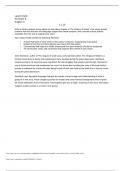
HED4805
Assignment 2 2025
Unique #: 173892

Due Date: 20 June 2025

Detailed solutions, explanations, workings
and references.

+27 81 278 3372

, QUESTION 1

1.1. HOW GLOBAL SCHOOLS SPREAD IN THE GLOBAL SOUTH AND
GLOBAL NORTH

Introduction

The spread of global schools and educational systems has not occurred evenly
across the world. Rather, it has been shaped by geopolitical power structures,
particularly favouring the Global North. The Global South, on the other hand, has
often been a passive recipient of imported educational models, influenced largely
by colonial histories and Eurocentric epistemologies. As the prescribed text by
Seroto, Davids and Wolhuter (2020) outlines, this imbalance in educational
development and scholarship continues to characterise both practice and
research in education.

Spread in the Global North: Self-Driven Development and Domination of
Discourse

In the Global North, schools and educational institutions developed through
internal philosophical, scientific, and political progress. Educational theories and
systems were formed around thinkers like Socrates, Augustine, and Luther,
whose works are still considered foundational in global education (Seroto et al.,
2020). This has allowed the Global North to define ―legitimate‖ knowledge and
educational practice. Furthermore, academic publishing remains dominated by
Northern scholars. For instance, Wolhuter (2008:330–331) found that most
education research focuses on the Global North and is authored by Northern
academics. As a result, Global North schools often act as global models,
influencing education systems around the world.

Spread in the Global South: Colonial Influence and Marginalisation

In the Global South, schools were mostly introduced through colonial expansion.
These systems were imposed to serve the interests of colonial governments,
often ignoring indigenous knowledge systems and educational practices. As
Asante (1998) and Taiwo (1993) argue, colonialism excluded local history and
promoted Eurocentric models of knowledge. According to Depaepe and Simon


Varsity Cube 2024 +27 81 278 3372

Maak kennis met de verkoper

Seller avatar
De reputatie van een verkoper is gebaseerd op het aantal documenten dat iemand tegen betaling verkocht heeft en de beoordelingen die voor die items ontvangen zijn. Er zijn drie niveau’s te onderscheiden: brons, zilver en goud. Hoe beter de reputatie, hoe meer de kwaliteit van zijn of haar werk te vertrouwen is.
VarsityC AAA School of Advertising
Volgen Je moet ingelogd zijn om studenten of vakken te kunnen volgen
Verkocht
28685
Lid sinds
8 jaar
Aantal volgers
13258
Documenten
3117
Laatst verkocht
8 uur geleden

4,1

2819 beoordelingen

5
1490
4
581
3
392
2
117
1
239

Recent door jou bekeken

Waarom studenten kiezen voor Stuvia

Gemaakt door medestudenten, geverifieerd door reviews

Kwaliteit die je kunt vertrouwen: geschreven door studenten die slaagden en beoordeeld door anderen die dit document gebruikten.

Niet tevreden? Kies een ander document

Geen zorgen! Je kunt voor hetzelfde geld direct een ander document kiezen dat beter past bij wat je zoekt.

Betaal zoals je wilt, start meteen met leren

Geen abonnement, geen verplichtingen. Betaal zoals je gewend bent via Bancontact, iDeal of creditcard en download je PDF-document meteen.

Student with book image

“Gekocht, gedownload en geslaagd. Zo eenvoudig kan het zijn.”

Alisha Student

Veelgestelde vragen