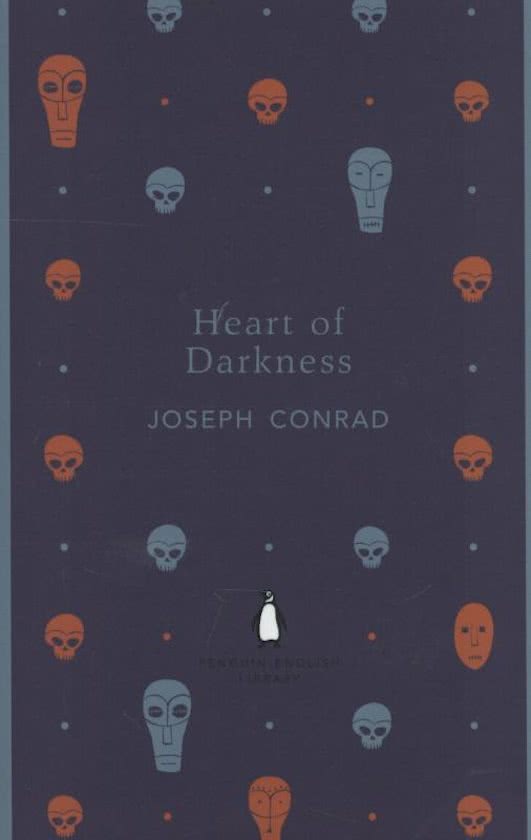
Heart of Darkness
Modernism Series
Literary-Historical Context
The Bildungsroman
• Bildungsroman – “novel of formation/education/culture”
o A novel of formation, novel of education, or a coming-of-age story
o Literary genre that focuses on the psychological and moral growth of the protagonist
from youth to adulthood, in which character change is extremely important
o Tracing a character through different times in their lives
• Heart of Darkness → elements of bildungsroman
o Two characters → one who is regressing somewhat, one who has already learnt his lesson
Modern period
• “Modern” is a highly variable term in its temporal reference → frequently applied to the
literature written since the beginning of WWI in 1914
o One of the most outstanding periods in English and American literature → marked by
persistent and multi-dimensioned experiments in subject matter and form, and has
produced major achievements in all the literary genres
• Dorothy Goldman → modernist writing suggests a cultural crisis: language awry, cultural
cohesion, perception fragmented and multiplied
o Language and experience do not always match up anymore
• D.H. Lawrence → never trust the teller, trust the tale
o The teller will die out and might be the opposite of the tale
o The tale is somewhat of a historical document
Modernity/Modernism
• Modernity – defined by many scholars as engaging the social changes implied in becoming
modern → urbanisation, industrialisation, wage labour, factory systems, etc.
o Modernity is always the current moment
• Claim to modernity is open and not necessarily limited to a universalised European construct
or monopoly
• Modernism → designates artistic practices associated with modernity
o Period roughly between 1910s and 1930s
o The artistic articulation of aspects of modernity
o 20th century vocabulary for the experience of modernity → but keeps on reproducing
itself
o The space of modernism is differential → the idea of modernism is dependent on the idea
of the closeness of modernity and revolution/sudden change
, o For Western modernism the revolutionary change was WWI → resulted in psychological
shift in self-perception
• Chronology of Western modernism across different countries → difficult to discern because
of the different time periods of their embryonic elements
o Prevalent trends began in France, Scandinavia, Germany, England, and North America
o Chronology of Western thinking → especially philosophical thinking
o Modernism outside of exact chronological placement → a compound of the futuristic and
the nihilistic, the revolutionary and the conservative, the naturalistic and the symbolistic,
the romantic and the classical
▪ A celebration of a technological age and a condemnation of it
o 1890s → fermenting decade
• Frank Kermode → sense of birth and apocalypse that occurs with the ending of one century
and the starting of another
o Often finds expression in modernist fiction → the artistic mood of the 1890s
• European modernism as an overarching phenomenon → located at the threshold of a not yet
fully modernised world
o Old and new were violently knocked against each other, striking the sparks of the
astounding eruption of creativity that much later came to be known as modernism
1840-1880: The literature of modernity
• Edgar Allen Poe – The Man of the Crowd, 1840 → capturing of modernity/proto-modernism
• Gustave Flaubert – Madame Bovary, 1857 → romantic-realism
• Charles Baudelaire – The Painter of Modern Life, 1863 → romantic-modernity
• Georg Eliot – Middlemarch, 1871-72 → realism
1910-1930: The literature of modernism
• Ezra Pound – Ripostes, 1921
o Imagism → break from Victorian writing
• James Joyce – Ulysses, 1922
o Psychoanalysis → stream-of-consciousness, classical mythology, expressionism
• T.S. Eliot – The Waste Land, 1923
o Time manipulation → classical mythology, fragmentation
• Virginia Woolf – Mrs Dalloway, 1925
o Narrative experimentation → stream-of-consciousness, realism, lack of true subjectivity
Between 1880 and 1910
• The colonial bildungsroman → reveals how late Victorian and (early) modernist novelists
upended and subverted the typical conventions of the rite of passage story
o Pre-empts the experimental that begins to describe modernism
▪ Olive Schreiner – The Story of an African Farm, 1883
▪ Joseph Conrad – Youth, 1898
▪ Rudyard Kipling – Kim, 1900
• Spoke of high imperialism/national capitalism being replaced by international capitalism as
a result of colonial industry
o 1870s-80s → increasing intensity and instability of speculative ad extractive modes of
wealth creation as measured against more traditional lines of industrialisation
o Discovery of minerals in South Africa → European capitalism could assume less
restrained trajectories without the borders of national politics
• Colonial bildungsroman → showed the uneven development between colonising and
colonised countries and how this upset 19th Century ideas of progress and evolution
, o The vision and the reality are not always the same → shape an entirely different world
and way of thinking
o One country impacts another country, but everything does not go to plan → something
changes, and something goes wrong
Colonialism
• The Scramble for Africa → 1880-1914
o Spain, Portugal, Italy, Germany, Great Britain, Holland, Belgium, France
• Berlin Conference → 1884-85
• Imperialism
King Leopold II of Belgium
• Atrocity
• Enrichment
• Slavery → even though it was abolished 70 years earlier
• Lies
o Refined society attaches a value to human life that is unknown to barbarous communities
o Ultimate end is a work of peace
o Negroes under sway of their traditions → victory only when the enemy is annihilated
o Example of white officer and wholesome military discipline → inspires a horror of human
trophies in the natives
o See in their ‘leaders’ the living evidence of higher principles → taught that the exercise of
authority is not at all to be confounded with cruelty but is indeed destroyed by it
Background to the Novella
• Western world simultaneously dizzy on its own sense of progress and the intertwining of
modernisations and colonialism
o Africa → primitive and largely romanticised in literatures as the setting for adventure
novels
• Berlin Conference → Scramble for Africa
o European powers carve up African countries for settlement → Belgium seized the Congo
▪ Leopold II → barbaric, primitive form of cruelty and violence forced on African
people deemed to be ‘primitive’ by colonial agents of modernity and commerce
• Joseph Conrad → experienced sailor and emerging writer
o Sailing journey up Congo River in 1890 → imbued Marlow with his own aspirations
o Conrad’s maritime sense of duty and obligation → worn down by growing dislike of other
Europeans while travelling up the Congo
▪ Many of these people would be fictionalised in the novella
• Conrad described the novella as a wild story of a journalist who becomes manager of a station
in the (African) interior and makes himself worshipped by a tribe of savages → subjects seems
comic, but is not
• Edward Said on Joseph Conrad → different from other contemporary colonial writers
Modernism Series
Literary-Historical Context
The Bildungsroman
• Bildungsroman – “novel of formation/education/culture”
o A novel of formation, novel of education, or a coming-of-age story
o Literary genre that focuses on the psychological and moral growth of the protagonist
from youth to adulthood, in which character change is extremely important
o Tracing a character through different times in their lives
• Heart of Darkness → elements of bildungsroman
o Two characters → one who is regressing somewhat, one who has already learnt his lesson
Modern period
• “Modern” is a highly variable term in its temporal reference → frequently applied to the
literature written since the beginning of WWI in 1914
o One of the most outstanding periods in English and American literature → marked by
persistent and multi-dimensioned experiments in subject matter and form, and has
produced major achievements in all the literary genres
• Dorothy Goldman → modernist writing suggests a cultural crisis: language awry, cultural
cohesion, perception fragmented and multiplied
o Language and experience do not always match up anymore
• D.H. Lawrence → never trust the teller, trust the tale
o The teller will die out and might be the opposite of the tale
o The tale is somewhat of a historical document
Modernity/Modernism
• Modernity – defined by many scholars as engaging the social changes implied in becoming
modern → urbanisation, industrialisation, wage labour, factory systems, etc.
o Modernity is always the current moment
• Claim to modernity is open and not necessarily limited to a universalised European construct
or monopoly
• Modernism → designates artistic practices associated with modernity
o Period roughly between 1910s and 1930s
o The artistic articulation of aspects of modernity
o 20th century vocabulary for the experience of modernity → but keeps on reproducing
itself
o The space of modernism is differential → the idea of modernism is dependent on the idea
of the closeness of modernity and revolution/sudden change
, o For Western modernism the revolutionary change was WWI → resulted in psychological
shift in self-perception
• Chronology of Western modernism across different countries → difficult to discern because
of the different time periods of their embryonic elements
o Prevalent trends began in France, Scandinavia, Germany, England, and North America
o Chronology of Western thinking → especially philosophical thinking
o Modernism outside of exact chronological placement → a compound of the futuristic and
the nihilistic, the revolutionary and the conservative, the naturalistic and the symbolistic,
the romantic and the classical
▪ A celebration of a technological age and a condemnation of it
o 1890s → fermenting decade
• Frank Kermode → sense of birth and apocalypse that occurs with the ending of one century
and the starting of another
o Often finds expression in modernist fiction → the artistic mood of the 1890s
• European modernism as an overarching phenomenon → located at the threshold of a not yet
fully modernised world
o Old and new were violently knocked against each other, striking the sparks of the
astounding eruption of creativity that much later came to be known as modernism
1840-1880: The literature of modernity
• Edgar Allen Poe – The Man of the Crowd, 1840 → capturing of modernity/proto-modernism
• Gustave Flaubert – Madame Bovary, 1857 → romantic-realism
• Charles Baudelaire – The Painter of Modern Life, 1863 → romantic-modernity
• Georg Eliot – Middlemarch, 1871-72 → realism
1910-1930: The literature of modernism
• Ezra Pound – Ripostes, 1921
o Imagism → break from Victorian writing
• James Joyce – Ulysses, 1922
o Psychoanalysis → stream-of-consciousness, classical mythology, expressionism
• T.S. Eliot – The Waste Land, 1923
o Time manipulation → classical mythology, fragmentation
• Virginia Woolf – Mrs Dalloway, 1925
o Narrative experimentation → stream-of-consciousness, realism, lack of true subjectivity
Between 1880 and 1910
• The colonial bildungsroman → reveals how late Victorian and (early) modernist novelists
upended and subverted the typical conventions of the rite of passage story
o Pre-empts the experimental that begins to describe modernism
▪ Olive Schreiner – The Story of an African Farm, 1883
▪ Joseph Conrad – Youth, 1898
▪ Rudyard Kipling – Kim, 1900
• Spoke of high imperialism/national capitalism being replaced by international capitalism as
a result of colonial industry
o 1870s-80s → increasing intensity and instability of speculative ad extractive modes of
wealth creation as measured against more traditional lines of industrialisation
o Discovery of minerals in South Africa → European capitalism could assume less
restrained trajectories without the borders of national politics
• Colonial bildungsroman → showed the uneven development between colonising and
colonised countries and how this upset 19th Century ideas of progress and evolution
, o The vision and the reality are not always the same → shape an entirely different world
and way of thinking
o One country impacts another country, but everything does not go to plan → something
changes, and something goes wrong
Colonialism
• The Scramble for Africa → 1880-1914
o Spain, Portugal, Italy, Germany, Great Britain, Holland, Belgium, France
• Berlin Conference → 1884-85
• Imperialism
King Leopold II of Belgium
• Atrocity
• Enrichment
• Slavery → even though it was abolished 70 years earlier
• Lies
o Refined society attaches a value to human life that is unknown to barbarous communities
o Ultimate end is a work of peace
o Negroes under sway of their traditions → victory only when the enemy is annihilated
o Example of white officer and wholesome military discipline → inspires a horror of human
trophies in the natives
o See in their ‘leaders’ the living evidence of higher principles → taught that the exercise of
authority is not at all to be confounded with cruelty but is indeed destroyed by it
Background to the Novella
• Western world simultaneously dizzy on its own sense of progress and the intertwining of
modernisations and colonialism
o Africa → primitive and largely romanticised in literatures as the setting for adventure
novels
• Berlin Conference → Scramble for Africa
o European powers carve up African countries for settlement → Belgium seized the Congo
▪ Leopold II → barbaric, primitive form of cruelty and violence forced on African
people deemed to be ‘primitive’ by colonial agents of modernity and commerce
• Joseph Conrad → experienced sailor and emerging writer
o Sailing journey up Congo River in 1890 → imbued Marlow with his own aspirations
o Conrad’s maritime sense of duty and obligation → worn down by growing dislike of other
Europeans while travelling up the Congo
▪ Many of these people would be fictionalised in the novella
• Conrad described the novella as a wild story of a journalist who becomes manager of a station
in the (African) interior and makes himself worshipped by a tribe of savages → subjects seems
comic, but is not
• Edward Said on Joseph Conrad → different from other contemporary colonial writers