ATI Fundamentals Exam Study Guide
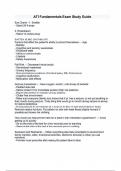
Eye Charts - 1. Snellen - Stand 20 ft away 2. Rosenbaum - Stand 14 inches away SAFTEY IS BIG ON THIS ATI! Factors that affect the patient's ability to protect themselves - - Age - Mobility - Cognitive and sensory awareness - Emotional state - Ability to communicate - Lifestyle - Safety Awareness Fall Risk - - Decreased visual acuity - Generalized weakness - Urinary frequency - Gait and balance problems (Cerebral palsy, MS, Parkinsons) - Cognitive dysfunction - Medication side effects Seizure precautions - - Have oxygen, suction, oral airway at bedside - Padded side rails - Saline locked IV for immediate access (High risk patients) - Rapid intervention to maintain airway patency. - Clutter free environment - Make sure everyone (family too) knows that if pt. has a seizure, to not put anything in their mouth during seizure. *Only thing that would go in mouth during seizure is airway for status epilepticus. - During seizure do not restrain pt. Lower pt. to floor or bed and protect pt. head. Remove nearby furniture. Put patient on side with head flexed slightly forward if possible and loosen his clothing. How would you help prevent falls for a patient with orthostatic hypotension? - - Avoid getting up to quickly - Sit on the side of the bed for a few seconds prior to standing - Stand at the side of the bed a few seconds prior to walking Seclusion and Restraints - - When everything else fails (orientation to environment, family member, sitter, diversional activities, electronic devices) is when you use restraints. - Provider must prescribe after seeing the patient face to face Provider prescription for restraints must include what? - - Reason for restraints - Type of restraints - Location of restraints - How long to use restraints - Type of behavior that warrants restraints - *Prescription only last 4 hours for an adult. Providers may renew these prescriptions with a maximum of 24 consecutive hours.* Restraints in an emergency situation - - When there is an immediate risk to the patient or others, nurses may place restraints on patient. - The nurse must then obtain a prescription from the provider ASAP, usually within 1 hour. Nursing Responsibilities for patients in restraints - - Explain the need for restraints to pt. and family. They are for safety and are temporary. - Ask pt. or guardian to sign consent form. - Assess skin integrity and provide skin care according to hospital protocol, usually Q2. - Offer fluid and food. - Provide means for hygiene and elimination. - Monitor Vitals - Offer range of motion exercises of extremities. - Pad bony prominences to prevent skin breakdown. - Use quick release knot to tie the restraints to the bed frame where they will not tighten when raising or lowering the bed. - Fit 2 fingers b/w restraints and patient. - Remove or replace restraints frequently to ensure good circulation to the area and allow for full range of motion to the limbs. - Never leave pt. alone without restraints. Fire Response - RACE - R - *Rescue* and protect patients close to fire by moving them to a safer location. Let patients who can walk, walk. A - *Alarm* Activate alarm C - *Contain* the fire by closing doors and windows and turning off any sources of oxygen and electrical devices. Vent. pts. who are on life support with a BVM. E - *Extinguish* fire How to use fire extinguisher - PASS - P - *Pull* the pin A - *Aim* at base of fire S - *Squeeze* handle S - *Sweep* extinguisher from side to side. State licensing boards - Ensure that health care providers and agencies comply with state regulations. The Joint Commission - Sets quality standards for accreditation of health care facilities. Medicare - For patients older than 65 or those with permanent disabilities. Medicaid - For patients who have low income. Preventative health care - Educates and equips patients to reduce and control risk factors for disease. Examples - Programs that promote immunizations - Stress management - Occupational health programs - Seat belt use Primary Health care - Emphasizes health promotion and includes prenatal and well-baby care, family planning, nutrition counseling, disease control. Sustained partnership between patient and provider. Directed toward promoting health and preventing development of disease process or injury Examples - Office/clinic visits - Community health centers - Scheduled school or work-centered screenings (vision, hearing, obesity) - Immunizations - Smoking cessation - Diet Secondary Healthcare - The diagnosis and treatment of acute illness and injury. Focus on screening for early detection of disease with prompt treatment of any found. Examples - Care in hospital settings (inpatient & ER) - Diagnostic Centers - Emergent Care Centers - Screenings - Well visits - Pap Smears Tertiary Healthcare - AKA acute care, involves the provision of specialized and highly technical care. Begins after the illness is diagnosed. Examples - ICU - Oncology - Burn Centers - PT - Rehab - Medication Ethics - The study of conduct and character Code of Ethics - A guide for the expectations and standards of a profession Ethical Principles - Standards of what is right or wrong with regard to important social values and norms Are for individuals, groups of individuals, and societies Bioethics - Applies ethics to health and life Includes dilemmas such as: - Stem cell research - Organ Transplant - Gender reassignment Values - Personal beliefs about ideas that determine standards that shape behavior. Morals - Personal values and beliefs about behavior and decision making. Basic Principles of Ethics - - Advocacy: Support patient - Responsibility: respect patient and follow through on promises - Accountability: Ability to answer for ones own actions - Confidentiality: Protection of privacy Ethical Dilemma - Problems that involve more than one choice and stem from differences in the values and beliefs of the decision makes. A problem is an ethical dilemma when... 1. A review of scientific data is not enough to solve it 2. It involves conflict between two moral imperatives 3. The answer will have a profound effect on the situation and the client. Example A doctor gives a nurse an order to give a pt meds. The pt does not want the meds, the doctor says give to her anyway. Ethical decision making - A process that has a balance between science and morality. Ethics Committees - Address unusual or complex ethical issues Example - If you meet challenges at work go to the EC. Autonomy - Patient's right to make their own medical decision, even when it might not be in their best interest. Beneficence - Action that promotes good for others without any self-interest Fidelity - Fulfillment of promises Justice - Fairness in care delivery and use of resources Nonmaleficence - Commitment to do no harm Veracity - Commitment to tell the truth Civil law Aka Private law - Protects individual rights Tort law relates to nursing Types of torts - 1. Unintentional Torts A. Negligence - A nurse fails to implement safety measures for a client who has fall risk. B. Malpractice - Unintentional. Give wrong med and patient dies. 2. Quasi-intentional torts C. Break HIPPA D. Defamation of character 3. Intentional Torts A. Assault - One person makes another person fearful. Then nurse says "Be quiet or I will hit you" B. Battery - Wrongful/intentional physical contact - The patient is still loud and you hit her. C. False imprisonment - holding patient against their will State Laws - Each state has enacted statutes that define the parameters of nursing practice and give the authority to regulate the practice of nursing to its state board of nursing. Boards have the right to ... - Adopt rules and regulations that assist nursing practice. - Issue and revoke nursing license. - Set standards for nursing programs and further delineate the scope of practice for, RNs, PNs, and advanced practice nurses. Nurses role in informed consent - Witness the clients signature on the informed consent form and ensure that the provider has obtained the IC responsibly. Nurses base practice on established standards of care or legal guidelines such as - 1. The Nurse Practice Act of each state. 2. Published standards of nursing practice from professional organizations. - ANA (American Nurses Association) - AACN (The American Association of critical care nurses) 3. Health care facilities policies and procedures. They establish detailed information about how the nurse should provide care/respond while performing patient care. Advance Directives - Communicates a patient's wishes regarding end-of-life care should the patient be unable to do so. 3 Types 1. Living Will - legal document that expresses the patients wishes regarding medical treatment in the even that the patient can't make those decisions. 2. Durable Power of Attorney for Health care - A document patients sign to have a proxy make the decisions for them if they are unable to. 3. Provider's Orders - Pt. gets CPR unless DNR or AND. Elements of Documentation - 1. Factual A. Subjective Data - Symptoms - Direct quotes - not measurable. Should be supported by objective data. B. Objective Data - Measurable. What the nurse sees, hears, smells. Labs 2. Accurate and Concise 3. Complete and Current - Don't pre chart 4. Organized Flow charts - Show trends in vital signs, blood glucose levels, pain level, and other frequent assessments. Narrative Documentation - Records information as a sequence of events in a story-like manner Charting by Exception - Standard forms that identify norms and allows selective documentation of deviations from those norms. Problem-oriented medical records - Organized by problem or diagnosis and consist of a database, problem list, care plan, and progress notes. Examples - SOAP, PIE, DAR The nursing process is - - Dynamic - Continuous - Patient-Centered - Problem solving - Decision making framework Nursing Process - A - Assessment/Data Collection D - Diagnosis P - Planning I - Implementation E - Evaluation Assessment - The systematic collection of information about clients present health status to identify needs and additional data to collect based on findings. Subjective (what pt tells nurse-symptoms) date collected during history. Objective data during (signs) during physical examination Diagnosis/Analysis/Data Collection - Use critical thinking skills (a diagnostic reasoning process) to identify pt health status or problems, interpret or monitor the collected database, reach an appropraite nursing judgement about health status and coping mechanisms, and provide direction for nursing care. Planning - Establish priorities and optimal outcomes of care they can readily measure and evaluate. Use guidelines such as Maslow hierarchy to figure out what is priority. End product of planning step is NCP (Nursing Care Plan) Implementation - Nurses base the care they provide on assessment data, analysis, and plan of care developed in the previous steps. Step where nursing action takes place Evaluation - Nurse evaluates patients response to nursing interventions and form a clinical judgement about the extent to which patients have met the goals and outcomes. Continuous, Modify or Stop A critical thinker..... - 1. Prioritizes 2. Explores various courses of action 3. Keeps ethics in mind 4. Determines appropriate outcomes When does discharge planning start? - Upon patient admission Chain of infection - Causative agent - Bacteria, virus, fungus, prion, parasite Reservoir - Human, animal, food, organic matter on inanimate surfaces, water, soil, insects Portal of exit - means for leaving host - Respiratory tract - Droplet, airbone - TB - GI - Hep. A, Shigella - Skin - Herpes, Varicella - Blood - HIV Mode of Transmission - Contact - Droplet - sneezing, coughing, talking - Airborne - Vector - through insects - lyme disease Portal of Entry - Entry to the host - Might be same as portal of exit Susceptible host - Compromised defense mechanisms (Immunocompromised, breaks in skin), no sleep, ect, leave host more susceptible to infections. Stages of infection - Incubation - Interval between pathogen entering the body and presentation of symptoms Prodromal Stage - Interval from onset on general symptoms to more distinct symptoms. - Pathogen is multiplying Illness Stage - Symptoms specific tot eh infection occur.. Convalescence -mAcute symptoms disappear. Total recovery could take days to months. Airborne precautions require - - Private room - Particulate Respirator (N-95) mask for caregivers and visitors - Negative pressure airflow - Full face (eyes, nose, mouth) if splashing is a possibility Droplet precautions require - - Private Room - Mask Contact precautions require - - Private room - Gown - Gloves In a primary survey and/or an emergency situation use ABCDE - A - Airway - Establish a patent airway and protect the cervical spine B - Breathing - After achieving patent airway, assess for presence and effectiveness of breathing C - Circulation - After ensuring adequate ventilation, assess circulation (Check pulse) D - Disability - Perform a quick assessment to determine the client LOC. E - Exposure - Quick physical assessment to determine the patients exposure to adverse elements such as heat or cold. *Always complete this before first aid Sprains - RICE - R - Refrain from weight bearing I - Ice C - Compression dressing (to decrease swelling) E - Elevate Heat stroke - symptoms and treatment - Symptoms - Hot - Dry skin - Hypotension - Tachypnea - Tachycardia - Anxiety, Confusion *The patient DOES NOT sweat Treatment - Remove pt. clothes - Place ice packs over major arteries (axillae, chest, groin, neck) - Immerse pt. in a cold-water bath - Wet body then fan with rapid movement of air - Do not allow pt. to shiver, if shiver, cover with a sheet Bed and Patient Positions - Semi-Fowler's - 15 to 45 degrees Fowler's - 45 to 60 degrees High Fowler's - 60 to 90 degrees Supine - On back Prone - On stomach Orthopneic - Pt. sits in the bed or at bedside with a pillow on over bed table, which is across patients lap. He rest his arms on the over bed table to allow for chest expansion. - pt. with COPD Trendelenburg - Entire bed is tilted with the HOB lower than the foot of bed - Facilitates postural drainage and venous return Reverse Trendelenburg - Bed tilted with foot of bed lower than HOB - Promotes gastric emptying and prevents esophageal reflux. Modified Trendelenburg - Pt. is flat with legs above level of heart - Helps prevent hypovolemia and facilitates venous return 3 Types of Prevention - 1. Primary - Addresses the needs of healthy patients to promote health and prevent disease with specific protections. It decreases the risk of exposure to disease Examples - Immunization programs - Child car seat education - Nutrition/Fitness Activities 2. Secondary - Focuses on identifying illness, providing treatment, and conducting activities that help prevent a worsening health status. Examples - Early Detection = treatment of DM 3. Tertiary - Aims to prevent the long-term consequences of chronic illness and to support optimal functioning - Begins after and injury or illness Examples - Prevention of pressure ulcers after a spinal injury - Promoting independence after TBI - Rehabilitation center - Referral to support groups Cognitive learning - Requires intellectual behaviors and focuses on thinking. It involves knowledge, comprehension, application, analysis and using that analysis (new info) for a new outcome. Affective learning - Involves feelings, beliefs and values. Hearing the instructors words, responding verbally and nonverbally ect. Ex. Patient learns about the life changes necessary for managing DM and then discusses their feelings about having diabetes. Psychomotor learning - Gaining skills Ex. Patient demonstrates how to prepare insulin injection. Erikson - Piaget - Therapeutic Communication - Helps develop rapport and patients feel comfortable telling their story. Begin with purpose of interview, gather information them conclude by summarizing findings. Active listening - Show patients that they have your undivided attention. Open ended questions - Used to encourage patients to tell story in their own way. Clarifying - Questioning patients about specific details in greater depth or direct them toward relevant part of their history. Back channeling - Use active listening phrases such as "Go on" and "tell me more" to convey interest and to prompt disclosure of the entire story. Probing - Ask more open ended questions such as "What else would you like to add to that?" to help obtain comprehensive information. Close ended questions - Ask question that require yes or no answers such as "Do you have pain when you sleep?" Summarizing - Validates the accuracy of the story What order do you do physical in? - 1. Inspect 2. Palpate 3. Percuss 4. Auscultate **Only exception is abdomen, you inspect, auscultate, percuss and palpate as to not alter bs. Percussion - The denser the tissue, the quieter the sound. It can help you locate organs or masses, find their edges and estimate their size. 1. Direct - Striking body to elicit sound 2. Indirect - Place your hand flat on the body, as the striking surface for sound production. 3. Fist - Helps identify tenderness over the kidneys, liver and gallbladder. Pulse provides information about ___________ - Circulatory status Blood Pressure - Reflects the force the blood exerts against the walls of the arteries during contraction (systole) and relaxation (diastole) of the heart. SBP occurs during ventricular systole of the heart, when the ventricles force blood into the aorta and pulmonary artery and it represent the maximum amount of pressure exerted on the arteries when ejection occurs. DBP occurs when ventricles relax and exert minimal pressure against arterial walls, and represents the min. amount of pressure exerted on the arteries. Pulse - Physiologic Responses - ANS - Controls heart rate PNS - Lowers heart rate SNS - Raises heart rate (Fight or flight) Factors leading to tachycardia (pulse over 100) - - Exercise - Fever - Meds - Epi, albuterol - Acute pain - Hyperthyroidism - Hypoxemia - Hypovolemia - Shock - Heart Failure - Hemorrhage What monitors carbon dioxide levels of the blood? - Chemoreceptors in the carotid arteries and aorta. Rising carbon dioxide levels trigger the respiratory center of the brain to increase the respiratory rate. Increased respiratory rate = rids the body of excess carbon dioxide. Ventilation - The exchange of oxygen and carbon dioxide in the lungs. Measure ventilation with respiratory rate, rhythm, and depth. Diffusion - The exchange of oxygen and carbon dioxide between the alveoli and the RBC. Measure with pulse ox Perfusion - The flow of RBC to and from the pulmonary capillaries (to alveoli where gas exchange happens) What determines your BP? - - Cardiac Output - Systemic (peripheral) Vascular Resistance (SVR) Cardiac Output is determined by - - Heart Rate - Contractility - Blood Volume - Venous Return *Increase in any of these = Increase in CO and BP *Decrease in any of these = Decrease in CO and BP Systemic Vascular Resistance - Reflects the amount of constriction or dilation of the arteries, and diameter of blood vessels. *Increase in SVR = Increase BP *Decrease in SVR = Decrease BP BP Classifications - Normal - 120/80 or less Pre-HTN - 120-139/80-89 Stage 1 HTN - 140-159/90-99 Stage 2 HTN - Greater than 160/Greater than 100 Hypotension (systolic less than 90) can be a result of what? - - Fluid depletion - HF - Vasodilation Health Assessment Steps A Delicious P I E - Assessment-collecting subjective (symptoms, how the persons feels, ect) and objective (facts, temp, BP, what you see) data Diagnosis - nursing diagnosis problem + etiology + manifestations Planning - Determine outcome criteria Implementation - Interventions, carry out plan Evaluation - Assess outcome criteria. Has it been met? COLDSPA - C-Character - How does pain feel? Sharp? Dull? O - Onset - When did pain start? L - Location D - Duration S - Severity - 1-10 P - Pattern - what makes it better or worse? A - Associated factors - Other symptoms it affect. Does it make it hard to sleep, walk, ADL? Factors that contribute to BP - 1. Cardiac output - The more blood the heart pumps, the greater the pressure in the blood vessels Ex. BP increases during exercise. 2. Peripheral vascular resistance - Pt with circulatory disorders have higher BP 3. Circulating Blood Volume - Increase in BV=Increase in BP -Sudden decrease in BP may indicate sudden blood loss, as with internal bleeding. 4. Viscosity - When blood becomes thicker, the pressure in blood vessel increases. 5. Elasticity of vessel walls - Increase in stiffness of vessel walls = increase in BP Blood flow through heart - Right Side Mission - To get blood to lungs (pulmonary) 1. Blood enters superior and inferior vena cava. This blood is unoxygenated because it is coming from the body. It needs oxygen. 2. Goes to the R. atrium. 3. The tricuspid valve (Tri before you bi) opens for blood to shoot through to the R. Ventricle. 4. Blood then in R. ventricle goes to pulmonary valve and shoots out pulmonary artery. Left Side Mission - To get blood to body bc it needs oxygenated blood. 5. Blood enters through pulmonary vein. 6. Blood is now in left atrium (A. always on top) 7. Blood crosses through the bicuspid valve 8. Blood now in L. ventricle. 9. L. ventricle contracts and shoots through aortic valve to body. Cranial Nerves - 1. Olfactory - one nose 2. Optic - two eyes 3. Oculomotor - test three things (1. Shine light 2. Move light towards pt Accommodation 3. 4. Trochlear 5. Trigeminal - try not ti bite my 5 caret ring 6. Abducens - 6 pack - need peripheral vision to look at 6 pack 7. facial - smile, frown 8. Acoustic - whisper into ear - Big 8 earrings 9. Glossopharyngeal - Fine-nine. A fine glossy hair makes me gag - testing gag reflex 10. Vagus - Vagus - X (10) rated. stick tongue out - Vegas = oh la la 11. Spinal Accessory - Raise shoulders. Stranger things = 11 12. Hypoglossal - pt sticks out tongue and moves it side to side Cranial Nerves - sensory, motor or both - Some Say Marry Money But My Brother Says Big Brains Matter Most S=Sensory M=Motor B=Both Rinne Test - Place a vibrating tuning fork firmly against the mastoid bone. Have the patient state when he can no longer hear the sound. Note the length of time that the patient heard the sound (Bone conduction) Then move the tuning fork in front of the ear canal. When the patient can no longer hear, note that (air conduction) *Air conduction should be longer than bone conduction (2:1) Weber Test - Place a vibrating tuning fork on top of the patients head. Ask whether the patient can hear the sound best in right ear, left ear, or equally in both. Expected Finding - Patient heard it equally in both = Negative Weber Test Auscultation Expected Sounds - Bronchial - Loud, high-pitched, hollow quality, expiration longer than inspiration over the trachea Bronchovesicular - Medium pitch, blowing sounds and intensity with equal inspiration and expiration times over the larger airways. Vesicular - Soft, low-pitched, breezy sounds, inspiration 3x longer than expiration. Unexpected Lung Sounds (5) - 1. Crackles - Fine to coarse bubbly sounds (that are not cleared with coughing) as air passes through fluid or re-expands collapsed small airways. 2. Wheezes - High-pitched whistling, music sounds as air passes through narrowed or obstructed airways. Usually louder on expiration. 3. Rhonchi - Coarse, loud, low-pitched rumbling sounds during inspiration or expiration resulting from fluid or mucus. It can clear with cough. 4. Pleural Friction Rub - Dry, grating, or rubbing sound as the inflamed visceral and parietal pleura rub against each other during inspiration and expiration. 5. Absence of breath sounds/Silent Lungs - From collapsed or surgically removed lobes. S1 - Closure of the mitral and tricuspid valves which signals the beginning of ventricular systole (contraction) and produces S1 (LUBB) sound. Lubb sound Closure of AV (Tri, Bi) valves and beg. of systole - heart contracts and shoots blood to lungs or systemic Hear S1 at apex of heart 5th ICS left mid-clavicular - Systolic murmurs heard here just after S1 S2 - Dubb Closure of semilunar (pulmonic and aortic) valves - end of systole and beg. of diastole. Hear at base of heart (aortic area) - Diastolic murmurs heard here just after S2 Thrills - Thrills you feel! Palpable vibration that can accompany murmurs or cardiac malformation Bruits - Bruits you hear Blowing or swishing sounds that indicate obstructed peripheral blood flow. Use bell of stethoscope Cardiac assessment points - Aortic - 2nd ICS on R. side Pulmonic - 2nd ICS on L. Side Erbs (rhymes with 3rd) - 3rd ICS Tricuspid (try not to cuss-cussing is a 4 letter word) - 4th ICS Mitral - AKA apical - 5th ICS at midclavicular line. Heaves/lifts - Abnormal Visible elevations of the chest wall that indicate HF Abdomen Assessment - - Have patient urinate before - Have patient lie supine with arms at side and knees slightly bent Right upper quadrant of abdomen - GLAD U PAK (starting tour of quadrants - going on a trip) Gallbladder Liver Ascending Transverse Colon Duodenum Ureter (Right) Pancreatic head Adrenal gland (right) Kidney (Right)

Geschreven voor
- Instelling
- Chamberlain College Of Nursng
- Vak
- ATI Fundamentals
Documentinformatie
- Geüpload op
- 23 februari 2025
- Aantal pagina's
- 33
- Geschreven in
- 2024/2025
- Type
- Tentamen (uitwerkingen)
- Bevat
- Vragen en antwoorden
Onderwerpen
-
ati
-
ati fundamentals

Ook beschikbaar in voordeelbundel