Summary #7 measurement, assessment, grading
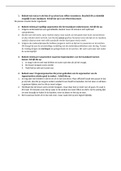
Measurement
= quantitative description of event/characteristic. Allows for a comparison (with standard or
other students).
Assessment
= qualitative process of gathering information about learning. Broader because it includes all
kinds of ways to assess skills, knowledge, abilities. (beyond pen-and-paper exercises)
Instructional objectives:
= statement of skills, objectives, concepts that students are expected to know after
instruction.
Performance: being able to do something (verb)
Condition: being able to perform under specific conditions of assessment
Criterion: how well something has to be done
Instructional objectives should be in line with assessment
clear overlap between
Taxonomy of instructional objectives (classification by Bloom)* = increasingly complex
1. Knowledge
= memorize and recall
2. Comprehension
= understand, use and make predictions
3. Application
= explain, solve novel authentic problems
4. Analysis
= see underlying structure of complex information (abstraction)
5. Synthesis
= create new products with new knowledge
6. Evaluation
= make value judgement agains a standard
Not one of these instructional objectives is superior
just appropriate for different purposes (shouldn’t ignore neither basics nor higher order
objectives)
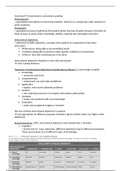
Revised taxonomy, 2001; instructional objectives were divided into 3 domains:
1. Cognitive
= involve the six* basic objectives. Different objectives require different procedures.
These six processes act on different types of knowledge.
, EXAMPLE
reflect and describe pros and cons of fastfood
2. Affective
= objectives in the domain of the emotional response.
a. Receiving: being aware/attending
b. Responding: new behavior as result of experience
c. Valuing: involvement/commitment
d. organizationL integrating value in set of values, rank in general priorities
e. characterization: acting in accordance with value
EXAMPLE of objective
at least 50% of class will commit to boycotting junkfood
3. Psychomotor
a. Voluntary muscle capabilities (endurance, strength, flexibility, speed)
b. Ability to perform a specific skill
EXAMPLE
ability to make a website on drawbacks of fastfood OR ability to demonstrate/strike
against fastfood for 2 days.
In real life, behaviors from these 3 domains occur simultaneously
e.g; write, reason and have an emotional response
Importance/purpose of evaluation
1. Feedback to students
= formative assessment is especially effective in promoting internal locus of control
and may improve performance
2. Feedback to teachers
= formative assessment indicate student’s progress guide reformation so to
address students misconceptions/knowledge gaps.
3. Communication with parents
= aware of shortcomings in performance/knowledge support/help
4. Incentives
= grades in itself are not reinforcing, but the value to the parents is reinforcing. May
also reinforcing if they are for a specific goal (e.g.; get into colleges)
5. Certification/selection
= sorting function in schools (may be norm or criterion) or qualification for promotion
6. Accountability
= hold schools accountable for good or bad results.
Assessments
Summative: final evaluation to see whether students achieved instructional objectives at the
end of instruction
Compare students
Measurement
= quantitative description of event/characteristic. Allows for a comparison (with standard or
other students).
Assessment
= qualitative process of gathering information about learning. Broader because it includes all
kinds of ways to assess skills, knowledge, abilities. (beyond pen-and-paper exercises)
Instructional objectives:
= statement of skills, objectives, concepts that students are expected to know after
instruction.
Performance: being able to do something (verb)
Condition: being able to perform under specific conditions of assessment
Criterion: how well something has to be done
Instructional objectives should be in line with assessment
clear overlap between
Taxonomy of instructional objectives (classification by Bloom)* = increasingly complex
1. Knowledge
= memorize and recall
2. Comprehension
= understand, use and make predictions
3. Application
= explain, solve novel authentic problems
4. Analysis
= see underlying structure of complex information (abstraction)
5. Synthesis
= create new products with new knowledge
6. Evaluation
= make value judgement agains a standard
Not one of these instructional objectives is superior
just appropriate for different purposes (shouldn’t ignore neither basics nor higher order
objectives)
Revised taxonomy, 2001; instructional objectives were divided into 3 domains:
1. Cognitive
= involve the six* basic objectives. Different objectives require different procedures.
These six processes act on different types of knowledge.
, EXAMPLE
reflect and describe pros and cons of fastfood
2. Affective
= objectives in the domain of the emotional response.
a. Receiving: being aware/attending
b. Responding: new behavior as result of experience
c. Valuing: involvement/commitment
d. organizationL integrating value in set of values, rank in general priorities
e. characterization: acting in accordance with value
EXAMPLE of objective
at least 50% of class will commit to boycotting junkfood
3. Psychomotor
a. Voluntary muscle capabilities (endurance, strength, flexibility, speed)
b. Ability to perform a specific skill
EXAMPLE
ability to make a website on drawbacks of fastfood OR ability to demonstrate/strike
against fastfood for 2 days.
In real life, behaviors from these 3 domains occur simultaneously
e.g; write, reason and have an emotional response
Importance/purpose of evaluation
1. Feedback to students
= formative assessment is especially effective in promoting internal locus of control
and may improve performance
2. Feedback to teachers
= formative assessment indicate student’s progress guide reformation so to
address students misconceptions/knowledge gaps.
3. Communication with parents
= aware of shortcomings in performance/knowledge support/help
4. Incentives
= grades in itself are not reinforcing, but the value to the parents is reinforcing. May
also reinforcing if they are for a specific goal (e.g.; get into colleges)
5. Certification/selection
= sorting function in schools (may be norm or criterion) or qualification for promotion
6. Accountability
= hold schools accountable for good or bad results.
Assessments
Summative: final evaluation to see whether students achieved instructional objectives at the
end of instruction
Compare students