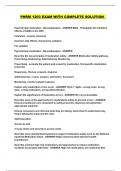
PHRM 1203 EXAM WITH COMPLETE SOLUTION
Psychotropic medication - Benzodiazepine - ANSWER MOA - Potentiates the inhibitory
effects of GABA in the CNS
Indication - anxiety, insomnia
Common side effects- drowsiness, sedation
For sedation
Psychotropic medication - Benzodiazepine - ANSWER
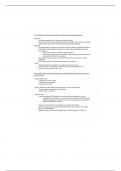
Describe the key principles of medication safety - ANSWER Medication Safety pathway -
Prescribing, Dispensing, Administering, Monitoring
Prescribing - evaluate the patient and a need for medication, find specific medication,
prescribe
Dispensing - Review, prepare, dispense
Administering - review, prepare, administer, document
Monitoring- monitor patient response
Explain why medication errors occur - ANSWER Think 7 rights - wrong route, wrong
dose, wrong medication, wrong administration
Explain the significance of medication errors - ANSWER 50% are preventable
Describe some of the approaches to medications safety to prevent errors - ANSWER
Ensure practitioners are competent to safely prescribe, dispense and administer
appropriate medicine.
Ensure consumers are informed what they are taking, allow them to understand why
theyre taking this meds and the risks
Staff education
Access to amh
2 nurse check and security to access meds
Describe some standardized systems to support medication safety such as the National
Inpatient Medication Chart - ANSWER Helps communication between health
practitioners
Describe common high risk medications and approaches to reduce medication
incidents associated with these - ANSWER High risk medications are medicines that
, present a high risk when administered via the wrong route or other medical
management errors. - due to narrow therapeutic range
Approaches to reduce include 2 nurses to check meds, EMM system, clear labelling
ADME - ANSWER Administration, Distribution, Metabolism, Excretion
Steady state concentrations are reached after how many half lives? - ANSWER 4-5 half
lives
What is TDM and its reason - ANSWER Therapeutic Drug Monitoring
Reason: to optimise drug therapy to enhance patient outcome to reduce potential for
toxicity and serious adverse effects
Type of Drugs suitable for TDM (CUNTH) - ANSWER Correlation between drug
concentration and drug effect
Unpredictable dose/response relationship
Narrow therapeutic range
Those able to be measured in blood or plasma
High risk of toxicity
Examples of TDM Drugs (CRAPAA) - ANSWER Antimicrobials ()- e.g. gentamicin,
vancomycin
Anti epilleptic agents
Cardiovascular agents e.g. digoxin
Anticoagulants e.g. warfarin, heparin
Psychotropic agents e.g. lithium
Respiratory agents e.g. caffeine
Pharmacodynamics - ANSWER what the drug does to the body
Pharmacokinetics - ANSWER what the body does to the drug (absorption, distribution,
metabolism, excretion)
half life of drugs means - ANSWER the time it takes for the amount of a drug's active
substance in your body to reduce by half.
ADME: Absorption (what effects it) - ANSWER - the movement of the drug from the
administrative site into the blood
- Food, Some medication, Acidity of the stomach, A Patient w nausea and vomiting,
Route of administration
Psychotropic medication - Benzodiazepine - ANSWER MOA - Potentiates the inhibitory
effects of GABA in the CNS
Indication - anxiety, insomnia
Common side effects- drowsiness, sedation
For sedation
Psychotropic medication - Benzodiazepine - ANSWER
Describe the key principles of medication safety - ANSWER Medication Safety pathway -
Prescribing, Dispensing, Administering, Monitoring
Prescribing - evaluate the patient and a need for medication, find specific medication,
prescribe
Dispensing - Review, prepare, dispense
Administering - review, prepare, administer, document
Monitoring- monitor patient response
Explain why medication errors occur - ANSWER Think 7 rights - wrong route, wrong
dose, wrong medication, wrong administration
Explain the significance of medication errors - ANSWER 50% are preventable
Describe some of the approaches to medications safety to prevent errors - ANSWER
Ensure practitioners are competent to safely prescribe, dispense and administer
appropriate medicine.
Ensure consumers are informed what they are taking, allow them to understand why
theyre taking this meds and the risks
Staff education
Access to amh
2 nurse check and security to access meds
Describe some standardized systems to support medication safety such as the National
Inpatient Medication Chart - ANSWER Helps communication between health
practitioners
Describe common high risk medications and approaches to reduce medication
incidents associated with these - ANSWER High risk medications are medicines that
, present a high risk when administered via the wrong route or other medical
management errors. - due to narrow therapeutic range
Approaches to reduce include 2 nurses to check meds, EMM system, clear labelling
ADME - ANSWER Administration, Distribution, Metabolism, Excretion
Steady state concentrations are reached after how many half lives? - ANSWER 4-5 half
lives
What is TDM and its reason - ANSWER Therapeutic Drug Monitoring
Reason: to optimise drug therapy to enhance patient outcome to reduce potential for
toxicity and serious adverse effects
Type of Drugs suitable for TDM (CUNTH) - ANSWER Correlation between drug
concentration and drug effect
Unpredictable dose/response relationship
Narrow therapeutic range
Those able to be measured in blood or plasma
High risk of toxicity
Examples of TDM Drugs (CRAPAA) - ANSWER Antimicrobials ()- e.g. gentamicin,
vancomycin
Anti epilleptic agents
Cardiovascular agents e.g. digoxin
Anticoagulants e.g. warfarin, heparin
Psychotropic agents e.g. lithium
Respiratory agents e.g. caffeine
Pharmacodynamics - ANSWER what the drug does to the body
Pharmacokinetics - ANSWER what the body does to the drug (absorption, distribution,
metabolism, excretion)
half life of drugs means - ANSWER the time it takes for the amount of a drug's active
substance in your body to reduce by half.
ADME: Absorption (what effects it) - ANSWER - the movement of the drug from the
administrative site into the blood
- Food, Some medication, Acidity of the stomach, A Patient w nausea and vomiting,
Route of administration