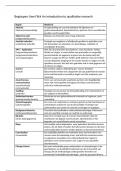
Lecture 1. Introduction
Paper 1. Beyond the (Family) Binary - Allen et al.
They conducted a study to identify different types of family environments experienced by
transgender adults and examine how these environments relate to mental and physical health
outcomes. They identified five different family environments: 1. Disengaged 2. Accepting and
affirming 3. Repudiating 4. Moderate family ambiguity & 5. High family ambiguity. Ambiguous
loss is thought to occur when one is lost and other remains, when a loved one is either
psychologically visible, but physically absent (unwilling to interact) or the other way around.
Trans people often navigate between inconsistent messages of psychological (i love you but not
your transgender status) and physical (allowed to live in family house, but not major events)
absence or presence. Over half of the respondents fell into one of the two ambiguity profiles,
indicating that ambiguity is prevalent in transgender people's families-of-origin. Therefore this
study rejects the notion of family environments being either ‘accepting’ or ‘rejecting’. Compared
to the accepting and affirming profile, membership in any of the other four profiles was
negatively associated with both mental and physical health. Importantly, participants in the
ambiguity profiles did not differ statistically in health outcomes when compared to those in the
repudiating profile, suggesting that family ambiguity may be as detrimental to transgender
adults' health as outright rejection.
Paper 2. Youth’s Sexual Relationships and Development - Van Den Bongardt.
This chapter discusses the evolving approach to research on youth sexuality, emphasizing the
importance of a dynamic systems (DS) perspective. From viewing youth sexuality as risky to
recognizing it as a normative aspect of adolescent development. Acknowledging that sexual
development occurs through interactions between individual characteristics and
socio-contextual factors. Studies now examine sexual development across different time scales:
- macro time: development over months or years - meso time: changes across days or weeks
(diaries) - micro time: real-time interactions over minutes or hours (observations). The chapter
emphasizes the importance of integrating micro, meso, and macro time studies to better
understand how real-time interactions relate to daily experiences and long-term sexual
development
From the previous course: Adolescent sexuality development interacts with other developmental
facets. It is shaped by complex interplay between environments. The role of social contexts is
multifaceted, complex and dynamic = Dynamic Systems Approach.
Paper 3. Peer Norms and Adolescence Sexual Behavior - Van den Bongardt et al.
This meta-analysis by van de Bongardt et al. examines the associations between three types of
peer norms and adolescent sexual behavior outcomes. Three types of peer norms were
investigated: 1. Descriptive norms (peer sexual behaviors) 2. Injunctive norms (peers' sexual
attitude, what adolescents think their peers are doing) & 3. Peer pressure. Two adolescent
sexual behaviors were examined, namely sexual activity (timing, incidence and intensity) and
, sexual risk behavior (teen pregnancy, unprotected sex). Adolescent sexual activity was most
strongly associated with descriptive norms, injunctive had a moderate association and peer
pressure a weak one. Age, gender, peer type, and socio-cultural context significantly moderated
these associations. Sexual risk was only associated with descriptive norms. Selection effects
(choosing peers with similar behaviors) were stronger than socialization effects (being
influenced by peers).
Paper 4. Parent-Based Interventions for Adolescents SH - Wildman et al.
This meta-analysis examined the effectiveness of parent-based interventions on adolescent
sexual health outcomes. Parent-based interventions were significantly associated with improved
condom use and parent-child sexual communication. There was no significant association found
between parent-based interventions and delaying sexual activity. The interventions were also
associated with improvements in secondary outcomes: sexual health knowledge, intentions to
delay sexual activity and safer sex self-efficacy. There was significant variability in the findings
regarding parent-based interventions and adolescents’ condom use: interventions were more
effective for younger adolescents than older ones, for predominantly Black or Hispanic
compared to mixed-race/ethnicity samples, programs involving both parents and teens equally
had a greater impact than only on parents and interventions with a higher dose more than
shorter ones. The results suggest that parent-based programs can promote safer sex behavior.
However, the findings were modest, and there are areas where future programs could improve
their effectiveness.
Lecture.
The Bronfenbrenner model is a descriptive model that displays all the different contexts that
might impact people. From your individual self moving more to macrosystems that might impact
how you behave. All the systems are interlinked and react to each other. However, one context
might also buffer one other impact or enhance it. This ecological model refers to continuous
interactions between individual characteristics and socio-contextual factors. It is seen as
multifaceted, complex and dynamic.
Study found that when there was more parent-child sexual communication, adolescents had a
higher sexual autonomy. A higher sexual autonomy leads to more positive and less negative
sexual emotions. This was stronger for girls or when discussed with mothers (Verbeek et al.).
Another study showed that having a better relationship with your parents showed children less
likely to have had sex or intend to have sex. Also that frequent sex communication with parents
buffered impact from peer pressure on intention to have sex. Three Ps are considered the most
important communicators: parents, peers and partners. If you have good communication with
parents, bad with friends, you are more likely to discuss it with your dating partner. Overall,
when you communicate with your partner more about sex, you have safer sex.
Paper 1. Beyond the (Family) Binary - Allen et al.
They conducted a study to identify different types of family environments experienced by
transgender adults and examine how these environments relate to mental and physical health
outcomes. They identified five different family environments: 1. Disengaged 2. Accepting and
affirming 3. Repudiating 4. Moderate family ambiguity & 5. High family ambiguity. Ambiguous
loss is thought to occur when one is lost and other remains, when a loved one is either
psychologically visible, but physically absent (unwilling to interact) or the other way around.
Trans people often navigate between inconsistent messages of psychological (i love you but not
your transgender status) and physical (allowed to live in family house, but not major events)
absence or presence. Over half of the respondents fell into one of the two ambiguity profiles,
indicating that ambiguity is prevalent in transgender people's families-of-origin. Therefore this
study rejects the notion of family environments being either ‘accepting’ or ‘rejecting’. Compared
to the accepting and affirming profile, membership in any of the other four profiles was
negatively associated with both mental and physical health. Importantly, participants in the
ambiguity profiles did not differ statistically in health outcomes when compared to those in the
repudiating profile, suggesting that family ambiguity may be as detrimental to transgender
adults' health as outright rejection.
Paper 2. Youth’s Sexual Relationships and Development - Van Den Bongardt.
This chapter discusses the evolving approach to research on youth sexuality, emphasizing the
importance of a dynamic systems (DS) perspective. From viewing youth sexuality as risky to
recognizing it as a normative aspect of adolescent development. Acknowledging that sexual
development occurs through interactions between individual characteristics and
socio-contextual factors. Studies now examine sexual development across different time scales:
- macro time: development over months or years - meso time: changes across days or weeks
(diaries) - micro time: real-time interactions over minutes or hours (observations). The chapter
emphasizes the importance of integrating micro, meso, and macro time studies to better
understand how real-time interactions relate to daily experiences and long-term sexual
development
From the previous course: Adolescent sexuality development interacts with other developmental
facets. It is shaped by complex interplay between environments. The role of social contexts is
multifaceted, complex and dynamic = Dynamic Systems Approach.
Paper 3. Peer Norms and Adolescence Sexual Behavior - Van den Bongardt et al.
This meta-analysis by van de Bongardt et al. examines the associations between three types of
peer norms and adolescent sexual behavior outcomes. Three types of peer norms were
investigated: 1. Descriptive norms (peer sexual behaviors) 2. Injunctive norms (peers' sexual
attitude, what adolescents think their peers are doing) & 3. Peer pressure. Two adolescent
sexual behaviors were examined, namely sexual activity (timing, incidence and intensity) and
, sexual risk behavior (teen pregnancy, unprotected sex). Adolescent sexual activity was most
strongly associated with descriptive norms, injunctive had a moderate association and peer
pressure a weak one. Age, gender, peer type, and socio-cultural context significantly moderated
these associations. Sexual risk was only associated with descriptive norms. Selection effects
(choosing peers with similar behaviors) were stronger than socialization effects (being
influenced by peers).
Paper 4. Parent-Based Interventions for Adolescents SH - Wildman et al.
This meta-analysis examined the effectiveness of parent-based interventions on adolescent
sexual health outcomes. Parent-based interventions were significantly associated with improved
condom use and parent-child sexual communication. There was no significant association found
between parent-based interventions and delaying sexual activity. The interventions were also
associated with improvements in secondary outcomes: sexual health knowledge, intentions to
delay sexual activity and safer sex self-efficacy. There was significant variability in the findings
regarding parent-based interventions and adolescents’ condom use: interventions were more
effective for younger adolescents than older ones, for predominantly Black or Hispanic
compared to mixed-race/ethnicity samples, programs involving both parents and teens equally
had a greater impact than only on parents and interventions with a higher dose more than
shorter ones. The results suggest that parent-based programs can promote safer sex behavior.
However, the findings were modest, and there are areas where future programs could improve
their effectiveness.
Lecture.
The Bronfenbrenner model is a descriptive model that displays all the different contexts that
might impact people. From your individual self moving more to macrosystems that might impact
how you behave. All the systems are interlinked and react to each other. However, one context
might also buffer one other impact or enhance it. This ecological model refers to continuous
interactions between individual characteristics and socio-contextual factors. It is seen as
multifaceted, complex and dynamic.
Study found that when there was more parent-child sexual communication, adolescents had a
higher sexual autonomy. A higher sexual autonomy leads to more positive and less negative
sexual emotions. This was stronger for girls or when discussed with mothers (Verbeek et al.).
Another study showed that having a better relationship with your parents showed children less
likely to have had sex or intend to have sex. Also that frequent sex communication with parents
buffered impact from peer pressure on intention to have sex. Three Ps are considered the most
important communicators: parents, peers and partners. If you have good communication with
parents, bad with friends, you are more likely to discuss it with your dating partner. Overall,
when you communicate with your partner more about sex, you have safer sex.