Module 1: European Integration history
Summary based on the books the unfinished history of European Integration 2nd ed.,
European Union politics 7th ed and the lectures.
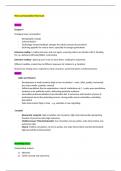
Key Concepts
Intergovernmentalism
● Definition: A system where different countries cooperate while maintaining their own
sovereignty.
● Characteristics:
○ Decisions are made by consensus among member states.
○ National governments retain control over their policies.
Federalism
● Definition: The idea of creating a European federal state with a supranational
government and parliament.
● Characteristics:
○ A central authority that can make decisions affecting all member states.
○ A shift of power from national governments to a European level.
Functionalism
● Definition: The pooling of sovereignty in specific, less controversial areas (like
economic sectors) that may lead to greater political cooperation in the future.
● Example: The Monnet-method, which focuses on cooperation in sectors like:
○ Coal and steel
○ Agricultural policy
● Characteristics:
○ Gradual integration through practical cooperation.
○ Aims to build trust and interdependence among countries.
Summary
European integration involves different approaches to cooperation among countries,
balancing national sovereignty with the need for collective action. Intergovernmentalism
emphasizes national control, federalism advocates for a unified government, and
functionalism promotes gradual cooperation in specific areas.
, Advantages and Challenges of
Intergovernmentalism and
Supranationalism
Intergovernmentalism
● Advantages
○ Respect for national sovereignty.
○ Flexibility and national control.
○ Prevents overreach by central authority.
● Challenges
○ Slow decision-making.
○ Limited depth of integration.
○ Veto power creates inefficiency.
Supranationalism
● Advantages
○ Efficiency in decision-making.
○ Promotes deep integration and cooperation.
○ Ability to tackle global challenges.
● Challenges
○ Loss of sovereignty.
○ Democratic deficit.
○ Conflict of national interests.
○ Over-centralization of power.
Plans for European Integration Before 1945
1. 1923 - Coudenhove-Kalergi's Pan-Europa Plan
○ Aimed at creating a united Europe but was never realized.
2. 1930 - Briand Plan
○ Proposed a federal Europe but also went unrealized.
3. 1940 - Nazi Funk Plan
○ Intended to integrate Europe under Nazi control but was never fully realized.
Summary based on the books the unfinished history of European Integration 2nd ed.,
European Union politics 7th ed and the lectures.
Key Concepts
Intergovernmentalism
● Definition: A system where different countries cooperate while maintaining their own
sovereignty.
● Characteristics:
○ Decisions are made by consensus among member states.
○ National governments retain control over their policies.
Federalism
● Definition: The idea of creating a European federal state with a supranational
government and parliament.
● Characteristics:
○ A central authority that can make decisions affecting all member states.
○ A shift of power from national governments to a European level.
Functionalism
● Definition: The pooling of sovereignty in specific, less controversial areas (like
economic sectors) that may lead to greater political cooperation in the future.
● Example: The Monnet-method, which focuses on cooperation in sectors like:
○ Coal and steel
○ Agricultural policy
● Characteristics:
○ Gradual integration through practical cooperation.
○ Aims to build trust and interdependence among countries.
Summary
European integration involves different approaches to cooperation among countries,
balancing national sovereignty with the need for collective action. Intergovernmentalism
emphasizes national control, federalism advocates for a unified government, and
functionalism promotes gradual cooperation in specific areas.
, Advantages and Challenges of
Intergovernmentalism and
Supranationalism
Intergovernmentalism
● Advantages
○ Respect for national sovereignty.
○ Flexibility and national control.
○ Prevents overreach by central authority.
● Challenges
○ Slow decision-making.
○ Limited depth of integration.
○ Veto power creates inefficiency.
Supranationalism
● Advantages
○ Efficiency in decision-making.
○ Promotes deep integration and cooperation.
○ Ability to tackle global challenges.
● Challenges
○ Loss of sovereignty.
○ Democratic deficit.
○ Conflict of national interests.
○ Over-centralization of power.
Plans for European Integration Before 1945
1. 1923 - Coudenhove-Kalergi's Pan-Europa Plan
○ Aimed at creating a united Europe but was never realized.
2. 1930 - Briand Plan
○ Proposed a federal Europe but also went unrealized.
3. 1940 - Nazi Funk Plan
○ Intended to integrate Europe under Nazi control but was never fully realized.