Summary Research Skills Book
Summarized and adapted for study purposes.
Date:
RS Syllabus 2024 - 2025
Purpose:
This document serves as a comprehensive summary of key chapters and sections from the Research
Methods in Business Studies textbook. It is designed to support efficient review and understanding of
core concepts in research methodology, including both qualitative and quantitative approaches.
Contents:
1. Chapter 2: Research in Business Studies
2. Chapter 3: The Research Process
3. Chapter 4: Research Problems
4. Chapter 5: Research Design
5. Chapter 6: Measurements
6. Chapter 7: Data Collection for Qualitative Research
7. Chapter 8: Qualitative Data Analysis
8. Chapter 9: Data Collection for Quantitative Research
9. Chapter 11: Multiple Regression
10. Chapter 14: Writing the Final Report
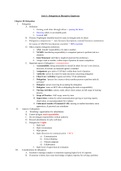
Summary of Chapter 2 (Sections 2.1–2.8)
2.1: The Nature of Knowledge Development
Key Concept: Epistemology is the study of knowledge—its sources, reliability, and limits.
Knowledge can be:
A priori: Derived from reasoning, independent of experience.
A posteriori: Based on experience and observation.
Researchers question assumptions to differentiate between knowledge and mere opinion.
2.2: Why We Do Research
Research is systematic, enabling critical analysis and decision-making.
Purpose:
Solve problems (e.g., market entry strategies, product launches).
Improve predictions and build tested theories.
Example: Identifying causes of declining sales by observing competitors and developing improved
products.
2.3: Research vs. Common Sense
Difference: Research relies on systematic methods and critical thinking, while common sense may
rely on biases or cultural beliefs.
Example: Businesses failing to research customer dissatisfaction often go bankrupt.
Key Insight: Research findings are arguable, systematic, and replicable.
,2.4: Different Research Orientations
Research orientation influences methods, data, and conclusions. Common orientations include:
Positivism: Objective, measurable facts.
Critical Realism: Explanatory, with methodological diversity.
Pragmatism: Practical problem-solving focus.
Interpretivism: Emphasis on context and subjective understanding.
Post-Modernism: Critical reflection on dominant ideologies.
2.5: Induction, Deduction, and Abduction
Induction: Observations → Theory.
Generalizes from specific observations.
Example: Observing that children’s psychological issues stem from childhood experiences.
Deduction: Theory → Observations.
Uses hypotheses from theory for empirical testing.
Example: "All metals expand when heated; therefore, rail tracks will expand in heat."
Abduction: Infers the best explanation from incomplete data.
2.6: What Comes First: Theory or Data?
The research process involves a continuous interplay between:
Data: Collected to build or validate theories.
Theory: Guides the collection and analysis of data.
Both theory-first (deductive) and data-first (inductive) approaches are valid, depending on the
research purpose.
2.7: Knowledge Skills and Research
Conducting research improves:
Analytical Skills: Ability to critically assess data and arguments.
Systematic Thinking: Approach problems methodically.
Key Takeaway: Developing these skills is essential for tackling complex business challenges.
2.8: Why Research Never Stops
Research is iterative:
New findings refine or challenge existing knowledge.
Theories evolve as more data is collected.
Ethics: Researchers have a moral responsibility to ensure transparency, accuracy, and respect for
participants.
Summary of Chapter 3 (Sections 3.1–3.5)
3.1: The Process Perspective
Research is a systematic process involving:
1. Problem Identification: Define a clear research question or problem.
2. Planning: Choose methods and designs.
3. Data Collection: Gather relevant data.
4. Analysis: Analyze data to draw conclusions.
5. Reporting: Present findings in a logical and convincing manner.
Research is iterative; findings may lead to new questions.
, 3.2: Levels of Research
Two Levels:
1. Practical Level: Focuses on solving specific problems (e.g., improving sales strategies).
2. Theoretical Level: Seeks to develop or refine theories for broader application.
Both levels complement each other and contribute to knowledge building.
3.3: Research and Knowledge
Research connects theory and practice.
Theoretical Knowledge: Enhances understanding of concepts.
Practical Knowledge: Applies theories to solve real-world problems.
Emphasizes creating actionable insights for businesses.
3.4: What Comes First: Theory or Research?
Research can be:
Theory-Driven (Deductive): Start with a theory, then test it through research.
Data-Driven (Inductive): Start with observations, then build a theory.
Both approaches are valid and often used together in a complementary manner.
3.5: Some Important Issues
Concepts: Clearly define the ideas being studied.
Definitions: Ensure terms are precise and consistent.
Theory: Framework that explains relationships between variables.
Methods: Tools and procedures for data collection and analysis.
Key Point: Clarity and precision in these areas are crucial for effective research.
Summary of Chapter 4 (Sections 4.1–4.5)
4.1: Research Ideas
Research begins with a broad idea, often inspired by:
Practical problems in business.
Gaps in existing literature.
Curiosity about a specific phenomenon.
Transform the idea into a specific research problem.
4.2: Wrestling with Research Problems
Key Challenges:
Narrowing the scope: Avoid overly broad or vague problems.
Ensuring relevance: The problem should be meaningful for both theory and practice.
Tip: Use brainstorming and discussions to refine the research problem.
4.3: Research Problem and Research Purpose
The research problem defines what you aim to investigate.
The research purpose explains why the investigation matters:
Contributes to knowledge.
Solves a practical issue.
Clear alignment between problem and purpose is essential.
Summarized and adapted for study purposes.
Date:
RS Syllabus 2024 - 2025
Purpose:
This document serves as a comprehensive summary of key chapters and sections from the Research
Methods in Business Studies textbook. It is designed to support efficient review and understanding of
core concepts in research methodology, including both qualitative and quantitative approaches.
Contents:
1. Chapter 2: Research in Business Studies
2. Chapter 3: The Research Process
3. Chapter 4: Research Problems
4. Chapter 5: Research Design
5. Chapter 6: Measurements
6. Chapter 7: Data Collection for Qualitative Research
7. Chapter 8: Qualitative Data Analysis
8. Chapter 9: Data Collection for Quantitative Research
9. Chapter 11: Multiple Regression
10. Chapter 14: Writing the Final Report
Summary of Chapter 2 (Sections 2.1–2.8)
2.1: The Nature of Knowledge Development
Key Concept: Epistemology is the study of knowledge—its sources, reliability, and limits.
Knowledge can be:
A priori: Derived from reasoning, independent of experience.
A posteriori: Based on experience and observation.
Researchers question assumptions to differentiate between knowledge and mere opinion.
2.2: Why We Do Research
Research is systematic, enabling critical analysis and decision-making.
Purpose:
Solve problems (e.g., market entry strategies, product launches).
Improve predictions and build tested theories.
Example: Identifying causes of declining sales by observing competitors and developing improved
products.
2.3: Research vs. Common Sense
Difference: Research relies on systematic methods and critical thinking, while common sense may
rely on biases or cultural beliefs.
Example: Businesses failing to research customer dissatisfaction often go bankrupt.
Key Insight: Research findings are arguable, systematic, and replicable.
,2.4: Different Research Orientations
Research orientation influences methods, data, and conclusions. Common orientations include:
Positivism: Objective, measurable facts.
Critical Realism: Explanatory, with methodological diversity.
Pragmatism: Practical problem-solving focus.
Interpretivism: Emphasis on context and subjective understanding.
Post-Modernism: Critical reflection on dominant ideologies.
2.5: Induction, Deduction, and Abduction
Induction: Observations → Theory.
Generalizes from specific observations.
Example: Observing that children’s psychological issues stem from childhood experiences.
Deduction: Theory → Observations.
Uses hypotheses from theory for empirical testing.
Example: "All metals expand when heated; therefore, rail tracks will expand in heat."
Abduction: Infers the best explanation from incomplete data.
2.6: What Comes First: Theory or Data?
The research process involves a continuous interplay between:
Data: Collected to build or validate theories.
Theory: Guides the collection and analysis of data.
Both theory-first (deductive) and data-first (inductive) approaches are valid, depending on the
research purpose.
2.7: Knowledge Skills and Research
Conducting research improves:
Analytical Skills: Ability to critically assess data and arguments.
Systematic Thinking: Approach problems methodically.
Key Takeaway: Developing these skills is essential for tackling complex business challenges.
2.8: Why Research Never Stops
Research is iterative:
New findings refine or challenge existing knowledge.
Theories evolve as more data is collected.
Ethics: Researchers have a moral responsibility to ensure transparency, accuracy, and respect for
participants.
Summary of Chapter 3 (Sections 3.1–3.5)
3.1: The Process Perspective
Research is a systematic process involving:
1. Problem Identification: Define a clear research question or problem.
2. Planning: Choose methods and designs.
3. Data Collection: Gather relevant data.
4. Analysis: Analyze data to draw conclusions.
5. Reporting: Present findings in a logical and convincing manner.
Research is iterative; findings may lead to new questions.
, 3.2: Levels of Research
Two Levels:
1. Practical Level: Focuses on solving specific problems (e.g., improving sales strategies).
2. Theoretical Level: Seeks to develop or refine theories for broader application.
Both levels complement each other and contribute to knowledge building.
3.3: Research and Knowledge
Research connects theory and practice.
Theoretical Knowledge: Enhances understanding of concepts.
Practical Knowledge: Applies theories to solve real-world problems.
Emphasizes creating actionable insights for businesses.
3.4: What Comes First: Theory or Research?
Research can be:
Theory-Driven (Deductive): Start with a theory, then test it through research.
Data-Driven (Inductive): Start with observations, then build a theory.
Both approaches are valid and often used together in a complementary manner.
3.5: Some Important Issues
Concepts: Clearly define the ideas being studied.
Definitions: Ensure terms are precise and consistent.
Theory: Framework that explains relationships between variables.
Methods: Tools and procedures for data collection and analysis.
Key Point: Clarity and precision in these areas are crucial for effective research.
Summary of Chapter 4 (Sections 4.1–4.5)
4.1: Research Ideas
Research begins with a broad idea, often inspired by:
Practical problems in business.
Gaps in existing literature.
Curiosity about a specific phenomenon.
Transform the idea into a specific research problem.
4.2: Wrestling with Research Problems
Key Challenges:
Narrowing the scope: Avoid overly broad or vague problems.
Ensuring relevance: The problem should be meaningful for both theory and practice.
Tip: Use brainstorming and discussions to refine the research problem.
4.3: Research Problem and Research Purpose
The research problem defines what you aim to investigate.
The research purpose explains why the investigation matters:
Contributes to knowledge.
Solves a practical issue.
Clear alignment between problem and purpose is essential.