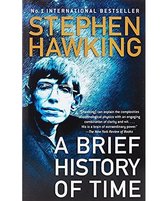
Stephen Hawking begins with the history of how cosmetology has evolved concerning space
and time. The first chapter recalls the historical journey of scientific thought, from early Greek
philosophers like Aristotle, who espoused a geocentric universe, to revolutionary ideas from
Copernicus, Galileo, and Newton. It is through these thinkers that the static, Earth-centered
cosmos became dismantled to provide a base for modern science.
Aristotle's geocentric view was logically based on observation, although incorrect, positing that
the celestial bodies moved in perfect circles around the Earth. It would remain dogma for many
centuries until Copernicus articulated the heliocentric model of the solar system in the 16th
century, with the Sun centrally located. The powerful observations of Galileo with his telescope-
for example, of moons around Jupiter-gave great credence to this model.
The next monumental jump in understanding the universe came with Isaac Newton's laws of
motion and universal gravitation. His work explained the universe as a predictable, clockwork
system that adhered to natural laws, hence founding classical mechanics. However, as
Hawking shows, it could not explain it all. Newton presumed time and space were absolute-a
precept later to be challenged by Albert Einstein's theory of relativity.
In the second chapter, Hawking speaks of the general theory of relativity proposed by Einstein,
a theory that reconstituted space and time as dynamic and interdependent. Space and time can
curve, bend, and stretch under the influence of mass and energy. This realization really
shattered the Newtonian view of a fixed stage on which events unfolded. It also led to
revolutionary predictions about general relativity, such as the bending of light by gravity and the
existence of black holes.
The "cosmic scale" he introduces at the beginning makes reference to the finiteness of the
speed of light. Since observing distant objects allows us to look back in time, a "cone of light"
shows the things we are able to perceive. These ideas introduce the basic conceptions
necessary for the understanding of the structure and evolution of the universe.
In the third chapter, Hawking speaks about the beginning of the universe in its generally
assumed form-the Big Bang. He says that the universe, according to most scientists, had at the
outset a singularity: a point of infinite density and heat roughly 13.8 billion years ago. This
expansion of the universe was first hypothesized by Edwin Hubble when he observed that
galaxies are moving away from us, their light being redshifted. Through this observation, not
only was the Big Bang theory confirmed, but it was also established that indeed there was a
beginning of the universe and disproved the hitherto held belief in an unchanged, infinite
cosmos.
and time. The first chapter recalls the historical journey of scientific thought, from early Greek
philosophers like Aristotle, who espoused a geocentric universe, to revolutionary ideas from
Copernicus, Galileo, and Newton. It is through these thinkers that the static, Earth-centered
cosmos became dismantled to provide a base for modern science.
Aristotle's geocentric view was logically based on observation, although incorrect, positing that
the celestial bodies moved in perfect circles around the Earth. It would remain dogma for many
centuries until Copernicus articulated the heliocentric model of the solar system in the 16th
century, with the Sun centrally located. The powerful observations of Galileo with his telescope-
for example, of moons around Jupiter-gave great credence to this model.
The next monumental jump in understanding the universe came with Isaac Newton's laws of
motion and universal gravitation. His work explained the universe as a predictable, clockwork
system that adhered to natural laws, hence founding classical mechanics. However, as
Hawking shows, it could not explain it all. Newton presumed time and space were absolute-a
precept later to be challenged by Albert Einstein's theory of relativity.
In the second chapter, Hawking speaks of the general theory of relativity proposed by Einstein,
a theory that reconstituted space and time as dynamic and interdependent. Space and time can
curve, bend, and stretch under the influence of mass and energy. This realization really
shattered the Newtonian view of a fixed stage on which events unfolded. It also led to
revolutionary predictions about general relativity, such as the bending of light by gravity and the
existence of black holes.
The "cosmic scale" he introduces at the beginning makes reference to the finiteness of the
speed of light. Since observing distant objects allows us to look back in time, a "cone of light"
shows the things we are able to perceive. These ideas introduce the basic conceptions
necessary for the understanding of the structure and evolution of the universe.
In the third chapter, Hawking speaks about the beginning of the universe in its generally
assumed form-the Big Bang. He says that the universe, according to most scientists, had at the
outset a singularity: a point of infinite density and heat roughly 13.8 billion years ago. This
expansion of the universe was first hypothesized by Edwin Hubble when he observed that
galaxies are moving away from us, their light being redshifted. Through this observation, not
only was the Big Bang theory confirmed, but it was also established that indeed there was a
beginning of the universe and disproved the hitherto held belief in an unchanged, infinite
cosmos.