Chapter 1
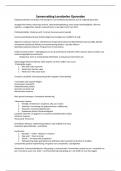
Learning about Behavior: 2 methods
1) Empirical(based on experience) -
a. intuition - a way of knowing based on instinct as opposed to logic or reasoning. Common
sense is a kind of intuition with the characteristic of emphasizing the agreement of a
person’s judgement with the shared attitudes and experiences of a larger group of
people. 2 problems with common sense- standards change from time to time and place
to place, and the fact that the only criterion for common sense for judging the truth of a
belief or practice is whether it works (pragmatic rather than theoretical) . As long as a
certain practice works than it is maintained and the theory behind it is considered true.
The absence of theory is one of the major limitations of this method. Therefore scientific
findings are often counterintuitive and seem to go against common sense. Scientists do
use common sense though when doing research, but they base it on their knowledge of
the topics.
b. scientific -
1.Science is Empirical -scientific attitude os to rely on experience more than
logic, authority and common sense. Important to note that the intuitive way of knowing is
empirical but not scientific.
2.Science is Objective - other people would see the same thing had they been
looking over the scientist shoulder when he made the observation. If people repeat the
experiments they would come out with the same conclusions. Objectivity is the most important
characteristic that sets science apart from what is not science because it eliminates anything
that cannot be agreed upon by everyone, thus making it a universal means of achieving
understanding.
3.Science is Self - Correcting - science allows new evidence to correct old
evidence.
4.Science is Progressive - Science moves forward towards truth adding more
and more info to what was previously known.
5. Science is Tentative - Science never claims to know the whole truth, rather it is
increasingly approaching the truth.
6. Science is Parsrimonious(stinginess) - a good scientist always prefers a
simpler explanation as opposed to more complex.
7.Science is Concerned with Theory- one of the major concerns of science is the
development of a theory of how something works.
2) Non- Empirical(not based on experience) -
a. logic- Often crucial in drawing correct conclusions about the world. It is important
but there is no replacement for empirical evidence.
b. authority- when you believe something because some respected person/source
told us it was true. We are inclined to reject authority. Authority is not always the
best source of information.
-what makes scientists different is their ability to change their beliefs based on empirical
evidence derived from their method of inquiry
, -authority is not as powerful in the scientific world
Basic Assumptions of Science-
1) The Reality of the World - Science holds to the doctrine of realism = objects in the world
of scientific study exist part from them being perceived by us. Also, science does not
follow “common sense realism” that things are the way they are simply because it is so.
2) Rationality - The world is understandable by way of logical thinking.
3) Regularity - The world follows the same laws and rules in all times and places. Nothing
falls put aside the laws of nature.
4) Discoverability - It is possible to find out how the world works without having a higher
being or book reveal it to us. Science treats the world as a gigantic puzzle and not a
mystery. This motivates people to keep going with their inquiry.
5) Causality - There is an assumption that events do not just happen by themselves for no
reason. Every event has a cause. The belief that every event has a cause is called
determinism. temporal precedence - cause has to happen before the event. co-variation
of cause and effect - when the cause is present the effect happens. probabilistic co-
variation - some events may be considered causes of other events even if the
relationship between them is less than constant. elimination of alternative explanation -
there is no other possible explanation for the event except the cause.
-people are scientists when they do science, and to do science you must use the assumptions
previously discussed
Goals of Science
1) understanding the world
a) discovering regularities - 1) description of behavior: must say what we are
studying and describe it. (difficult, ex:describing personality-so many theories). It defins AND
creates the subject matter. 2) discovering lawful relationships among aspects of behavior - a law
is a statement that certain events are regularly associated with each other. It is not necessary to
have a perfect relationship to have a law. It is not saying cause and effect and is often stated in
statistical form.3) Search for causes - very complicated. Everything else is a subsection of this.
We often overlook the real cause, some events are coincidences, sometimes the real cause is
another event that is correlated with the suspected event, causes cannot happen after their
events.
b) developing theories - the ultimate goal of science is to develop a theory that
explains the lawful relationship that exists somewhere. a theory is an explanation for a set of
facts- a set of statements that organize a large body of facts into a single explanatory system.
Or, a theory is a statement or set of statements about relationships among variables that
includes at least one concept that is not directly observed but is necessary to explain these
relationships. Theories must be falsifiable(capable of disproof) - a good theory can be tested
and proven right or wrong. A disconfirmation is productive!We gain more confidence in a theory
the more tests it provides.
Role Theories Play in the Development of Science
1) organizing knowledge and explaining laws - pulls things together into a unified
Learning about Behavior: 2 methods
1) Empirical(based on experience) -
a. intuition - a way of knowing based on instinct as opposed to logic or reasoning. Common
sense is a kind of intuition with the characteristic of emphasizing the agreement of a
person’s judgement with the shared attitudes and experiences of a larger group of
people. 2 problems with common sense- standards change from time to time and place
to place, and the fact that the only criterion for common sense for judging the truth of a
belief or practice is whether it works (pragmatic rather than theoretical) . As long as a
certain practice works than it is maintained and the theory behind it is considered true.
The absence of theory is one of the major limitations of this method. Therefore scientific
findings are often counterintuitive and seem to go against common sense. Scientists do
use common sense though when doing research, but they base it on their knowledge of
the topics.
b. scientific -
1.Science is Empirical -scientific attitude os to rely on experience more than
logic, authority and common sense. Important to note that the intuitive way of knowing is
empirical but not scientific.
2.Science is Objective - other people would see the same thing had they been
looking over the scientist shoulder when he made the observation. If people repeat the
experiments they would come out with the same conclusions. Objectivity is the most important
characteristic that sets science apart from what is not science because it eliminates anything
that cannot be agreed upon by everyone, thus making it a universal means of achieving
understanding.
3.Science is Self - Correcting - science allows new evidence to correct old
evidence.
4.Science is Progressive - Science moves forward towards truth adding more
and more info to what was previously known.
5. Science is Tentative - Science never claims to know the whole truth, rather it is
increasingly approaching the truth.
6. Science is Parsrimonious(stinginess) - a good scientist always prefers a
simpler explanation as opposed to more complex.
7.Science is Concerned with Theory- one of the major concerns of science is the
development of a theory of how something works.
2) Non- Empirical(not based on experience) -
a. logic- Often crucial in drawing correct conclusions about the world. It is important
but there is no replacement for empirical evidence.
b. authority- when you believe something because some respected person/source
told us it was true. We are inclined to reject authority. Authority is not always the
best source of information.
-what makes scientists different is their ability to change their beliefs based on empirical
evidence derived from their method of inquiry
, -authority is not as powerful in the scientific world
Basic Assumptions of Science-
1) The Reality of the World - Science holds to the doctrine of realism = objects in the world
of scientific study exist part from them being perceived by us. Also, science does not
follow “common sense realism” that things are the way they are simply because it is so.
2) Rationality - The world is understandable by way of logical thinking.
3) Regularity - The world follows the same laws and rules in all times and places. Nothing
falls put aside the laws of nature.
4) Discoverability - It is possible to find out how the world works without having a higher
being or book reveal it to us. Science treats the world as a gigantic puzzle and not a
mystery. This motivates people to keep going with their inquiry.
5) Causality - There is an assumption that events do not just happen by themselves for no
reason. Every event has a cause. The belief that every event has a cause is called
determinism. temporal precedence - cause has to happen before the event. co-variation
of cause and effect - when the cause is present the effect happens. probabilistic co-
variation - some events may be considered causes of other events even if the
relationship between them is less than constant. elimination of alternative explanation -
there is no other possible explanation for the event except the cause.
-people are scientists when they do science, and to do science you must use the assumptions
previously discussed
Goals of Science
1) understanding the world
a) discovering regularities - 1) description of behavior: must say what we are
studying and describe it. (difficult, ex:describing personality-so many theories). It defins AND
creates the subject matter. 2) discovering lawful relationships among aspects of behavior - a law
is a statement that certain events are regularly associated with each other. It is not necessary to
have a perfect relationship to have a law. It is not saying cause and effect and is often stated in
statistical form.3) Search for causes - very complicated. Everything else is a subsection of this.
We often overlook the real cause, some events are coincidences, sometimes the real cause is
another event that is correlated with the suspected event, causes cannot happen after their
events.
b) developing theories - the ultimate goal of science is to develop a theory that
explains the lawful relationship that exists somewhere. a theory is an explanation for a set of
facts- a set of statements that organize a large body of facts into a single explanatory system.
Or, a theory is a statement or set of statements about relationships among variables that
includes at least one concept that is not directly observed but is necessary to explain these
relationships. Theories must be falsifiable(capable of disproof) - a good theory can be tested
and proven right or wrong. A disconfirmation is productive!We gain more confidence in a theory
the more tests it provides.
Role Theories Play in the Development of Science
1) organizing knowledge and explaining laws - pulls things together into a unified