LSB 3213 Exam 1 Okstate
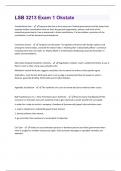
Constitutional Law - Supreme law that is the trump card. Federal government and the states have
separate written constitutions that set forth the general organization, powers, and limits of the
respective governments. Law as expressed in these constitutions. If a law violates a provision of the
constitution, it will be declared unconstitutional.
Commerce Clause - Congress has the power "to regulate commerce with foreign nations, and
among the several states, and with the Indian tribes." Anything that "substantially affects" commerce
involving more than one state. ex. Atlanta Motel v. United States disallowing racial discrimination in
public accommodations.
Alternative Dispute Resolution methods - Negotiation-simplist, reach a settlement before a case is
filed in court or after, many cases solved by this.
Mediation-neutral third part suggests resolution, but no power to enforce unless parties agree.
Arbitration- most formal, third party who is not a judge is involved and has the power to enter a
decision. generally binding. Historically used in labor disputes.
Appellate Jurisdiction - The authority of a court to review decisions made by lower courts
Bad Frog Brewery, Inc. v. New York State Liquor Authority - Brewery had a frog flipping off the
consumer on the label, new york authority tried to get it banned so youth wouldn't be corrupted.
In order for a state to restrict a company's freedom of (commercial) speech the restriction must:
1. seek to implement a substantial government interest.
2. directly advance that interest.
3. go no further than necessary to accomplish its objective.
Civil Law - relates to issues between persons or between persons and their government when
relief is sought for violation of personal rights. Only monetary damages or equitable remedies are
awarded.
, Common Law - Common law is defined as a body of legal rules that have been made by judges as
they issue rulings on cases, as opposed to rules and laws made by the legislature or in official statutes.
An example of common law is a rule that a judge made that says that people have a duty to read
contracts.
Concurrent Jurisdiction - when both federal and state courts have the power to hear a case
(diversity of citizenship)
Concurring Opinionn - separate opinion written by a justice on the winning side but which
outlines his or her legal reasoning which differs from the reasoning of the majority, reaches the same
conclusion nevertheless.
Corporate Contacts - Courts apply minimum contacts test to determine if they can exercise
jurisdiction over a corporation that is out of state. Minimum contacts requirement is usually met if the
corporation advertises or sells its products within the state or places its goods into the "stream of
commerce".
Court of General Jurisdiction - a court that can hear nearly any type of case
Court of Limited Jurisdiction - can only hear specific types of cases. (ex. Probate court regarding
personal assets after death, custody).
Criminal Law - wrongs committed against society as a whole. prosecuted by public officials on
behalf of the public as a whole, not just the victim. Only in criminal law will defendant ever face the
possibility of imprisonment. Plaintiff is an authority.
Defendant (or respondent) - the party against whom a lawsuit is brought. (lawsuits frequently
involve more than one plaintiff and/ or defendant.)
Dissenting Opinion - presents the views of one or more judges who disagree with the majority
view. they wish to leave their viewpoints on record for future lawyers or judges to argue for a change in
the precedent.
Constitutional Law - Supreme law that is the trump card. Federal government and the states have
separate written constitutions that set forth the general organization, powers, and limits of the
respective governments. Law as expressed in these constitutions. If a law violates a provision of the
constitution, it will be declared unconstitutional.
Commerce Clause - Congress has the power "to regulate commerce with foreign nations, and
among the several states, and with the Indian tribes." Anything that "substantially affects" commerce
involving more than one state. ex. Atlanta Motel v. United States disallowing racial discrimination in
public accommodations.
Alternative Dispute Resolution methods - Negotiation-simplist, reach a settlement before a case is
filed in court or after, many cases solved by this.
Mediation-neutral third part suggests resolution, but no power to enforce unless parties agree.
Arbitration- most formal, third party who is not a judge is involved and has the power to enter a
decision. generally binding. Historically used in labor disputes.
Appellate Jurisdiction - The authority of a court to review decisions made by lower courts
Bad Frog Brewery, Inc. v. New York State Liquor Authority - Brewery had a frog flipping off the
consumer on the label, new york authority tried to get it banned so youth wouldn't be corrupted.
In order for a state to restrict a company's freedom of (commercial) speech the restriction must:
1. seek to implement a substantial government interest.
2. directly advance that interest.
3. go no further than necessary to accomplish its objective.
Civil Law - relates to issues between persons or between persons and their government when
relief is sought for violation of personal rights. Only monetary damages or equitable remedies are
awarded.
, Common Law - Common law is defined as a body of legal rules that have been made by judges as
they issue rulings on cases, as opposed to rules and laws made by the legislature or in official statutes.
An example of common law is a rule that a judge made that says that people have a duty to read
contracts.
Concurrent Jurisdiction - when both federal and state courts have the power to hear a case
(diversity of citizenship)
Concurring Opinionn - separate opinion written by a justice on the winning side but which
outlines his or her legal reasoning which differs from the reasoning of the majority, reaches the same
conclusion nevertheless.
Corporate Contacts - Courts apply minimum contacts test to determine if they can exercise
jurisdiction over a corporation that is out of state. Minimum contacts requirement is usually met if the
corporation advertises or sells its products within the state or places its goods into the "stream of
commerce".
Court of General Jurisdiction - a court that can hear nearly any type of case
Court of Limited Jurisdiction - can only hear specific types of cases. (ex. Probate court regarding
personal assets after death, custody).
Criminal Law - wrongs committed against society as a whole. prosecuted by public officials on
behalf of the public as a whole, not just the victim. Only in criminal law will defendant ever face the
possibility of imprisonment. Plaintiff is an authority.
Defendant (or respondent) - the party against whom a lawsuit is brought. (lawsuits frequently
involve more than one plaintiff and/ or defendant.)
Dissenting Opinion - presents the views of one or more judges who disagree with the majority
view. they wish to leave their viewpoints on record for future lawyers or judges to argue for a change in
the precedent.