k±÷÷nY
{
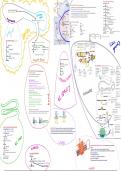
DE NOVO BIOSYNTHESIS PURINE NUCLEOTIDES:
Phosphoribosylamine + Glycine
NUCLEAR HORMONE RECEPTOR: (located in the cell)
s
Glycinamide ribonucleotide
my
1. Lipophilic hormones come from the blood stream (attached to globolins) and are released from transporting protein. Vitamin B9 (brings aldehyde group)
s
2. Hormone travels via the membrane to the cytoplasm. Formylglycinamide ribonucleotide
THYROID HORMONES SYNTHESIS
W
(ammonia binds)
3. Hormone attaches to receptor, causing a change in the confirmation of the receptor.
s
TRF (produced by hypothalamus) 5-aminoimidazole ribonucleotide
4. 2 Hormone receptor complexes bind in the nucleus to the structure of DNA in the hormone response element. ATP (adding carboxyl group)
ETE
÷
s
5. This activates RNA polymerase, which will synthesize a messenger RNA.
:
Unstable molecule
6. mRNA exits nucleus, traveling to ribosomes where protein synthesis occurs. (Carboxyl group is switched for carbon atom)
s
Carboxyaminoimidazole Ribonucleotide
ATP (Aspartate is attached, fumarate is removed)
TSH (activates iodine pump) (produced by anterior pituitary)
s
5-aminoimidayole-4-carboxamide-ribonucleotide
H2O2 DEGRADATION OF PURINE & PYRIMIDINES
Vitamin B9 (brings an aldehyde group)
s
AMP. GMP
5-formaminoimidazole-4-carboxamide nucleotide
5-nucleotidase (removes phosphate group) 5-nucleotidase
(- H2O removed)
>
s
>
Adenosine. Guanosine
Inosinate (IMP)
Adenosine deaminase
GTP (Aspartate is added) +H2O & NAD+
s
s
.
¥np
Inosine Guanine
>
Adenylosuccinate Xenthylate
(Hydrolyzed) (Amino group removed)
y
(Fumarate is removed) (Amino group from glutamine-> gultamate added)
s
s
Hypoxanthine. D-ribose Xanthine
.
s
(Oxidized).
Adenylate (AMP) Guanylate (GMP)
Xanthine oxidase
s
s
SALVAGE PATHWAY (PURINE NUCLEOTIDE SYNTHESIS)
Xanthine Uric Acid
,
.
Hypoxanthine Guanine Adenine
Xanthine oxidase
>
HGPRT (binding with PRPP) HGPRT (binding with PRPP) Adenine phosphoribosyltransferase (binding with PRPP)
Uric Acid
.
>
'
IMP. GMP. AMP
:/
MELATONIN SYNTHESIS (pineal gland) GMP. AMP
.
J
E
I
oxidized Iodine (taken up into thyroid cell via iodine pump)
Trp
±
2. Helicase breaks the hydrogen bonds 3. SSB Proteins bind to newley 4. DNA Polymerase III adds
1. Gyrase
between bases, seperating two strands seperated strand, preventing them deoxyribonucleoside triphosphates
(Hydroxylation)
.
B
untwists the
Thyroglobulin + Iodine (colloid) (only a single strand of DNA can fit from reforming hydrogen bonds. with complementary base pairs in a
.
DNA
5-OH-Trp (Iodinated with 1 iodine residue.) (Iodinated with 2 iodine residue) through the center of the helicase ring) 5' - 3' direction (creating a new
f
.
strand)
(Decarboxylation) Monoiod-tyr (MIT). + DIT Diiod-tyr (DIT) (2 connect)
¥
Serotonin
E
.
.
T3. T4.
serotonin-N-acetyl transferase (Acetylation)
-
Proteolysis (Released from Thyroglobulin)
-
Acetyl-serotonin
(Methylation) + SAM
:÷
.
E
CATECHOLAMINES SYNTHESIS
E
Melatonin
Tyr
(Hydroxylated)
'
DOPA (3,4-dihydroxy-1-phenylalanine) 4. DNA
(Decarboxylated) Primase adds a DNA TRANSCRIPTION 2. RNA Polymerase seperates 2 strands
4. Introns (non
'
✓
and builds a strand of pre mRNA
.
RNA primer 7. Ligase joins
Dopamine 1. Transcription factor coding regions) are
using the "back the okazaki complimentary to anti sense strand (5' -
I
5. DNA 6. DNA 3. When a certain DNA
(+ OH) stitching" binds to promoter
3') via a phosphodiester bond. (Requires
removed by
.
fragments together
-
'
B-ADRENERGIC RECEPTOR:(G Protein-Coupled Receptor.) Polymerase III Polymerase I sequence is encountered,
Norepinephrine technique (part of DNA). RNA splisosomes. The
r
adds short segments removes the primer with a ATP, GTP, UTP, CTP and Mg2+)
1. Hormone binds to the receptor. polymerase binds RNA synthesis stops. = exons (coding regions)
(+ methyl)
-
via hydrolysis and phosphodiester = ELONGATION
of nucleotides in
TERMINATION
'
2. G protein exchanges GDP for GTP and splits beta and next to it. are then glued together.
÷
Epinephrine replaces it with the bond.
okazaki fragments
=INITIATION = SPLICING
gamma protein units off of it, activating protein G. correct nucleotide
E
5. A cap (residue of
.÷%
7methylguanosine) is
Adenylate cyclase scenario:
added to the 5' end
3. Active protein Gs activates adenylate cyclase
and a poly A tail to
4. Adenylate cyclase catalyzes the process in which cAMP
the 3' end creating
T
is produced from ATP (inside the cell).
¥-¥ ÷
mature mRNA.
↳ ooo
:±±±⇐÷÷
5. cAMP splits 2 active catalytic subunits off of regulatory subunits of protein
Kinase A, activating protein kinase A, leading to phosphorylation of an enzyme TRANSLATION:
§
(making active or inactive).
Phosphatidylinositol system scenario: 6. An amino acid and
S
Z
↳
ATP bind to an
3. Active Protein Gq activates phospholipase C (enzyme)
,
4. Phospholipase C produced DAG & IP3 (secondary messengers)
Abdy enzyme, following with
a change in active site.
EE
EE
by splitting PIP2.
7. tRNA binds to active site of the
5. IP3 releases calcium from the deposits in the endoplasmic amino acid, activating carboxyl group,
reticulum causingCalcium to bind to Calmodulin, which activates catalyzed by aminoacyl-tRNA
myosin light chain kinase enzyme for muscle contraction. synthetase
→ §
8. MRNA travels to the
5. DAG activates protein kinase C, which phosphorylates proteins ribosome. (ribosome binds to
to maintain contracticle response. initiation factors preventing the
two subunits from combining.
6. Special reaction occurs, releasing the hormone. 9. tRNA with the correct anti
7. GTP is hydrolyzed to GDP by GTP-ase activity of alpha subunits & the beta and gamma protein codon binds to the codon (on
subunits return to make the G-protein inactive. (In order for another process of stimulation) mRNA) at the A site on the
ribosome.
÷J÷ *÷ ÷
10. tRNA moves to the P site while a
i÷⇐:÷
-
ii.
ii.
new tRNA binds at the A site,
.
forming a peptide bond between the
←
,
EE
Protects mRNA from ribonucleases
amino acids.
u
Binding site of proteins (for protection
or to be able to exit nucleus)
.
11. Once a stop codon shows
up under the A site (release
DE NOVO SYNTHESIS PYRIMIDINE NUCLEOTIDES
INSULIN RECEPTOR (Enzyme receptor) Two parts: one in and one outside of the cell. (Located in membrane) factor, which doesn't carry an
Carbamoyl Phosphate (reacts with aspartate) amino acid), the ribosome
1. Insulin binds to the 2 alpha subunit of the receptor on the outside of the cell, bringing them together.
Aspartate transcarbamoylase 2. The 2 beta subunits of the receptor on the inside of the cell work together to phosphorylate thyrosine residues.
seperates and releases the
>
mRNA and polypeptide chain.
N-Carbamoylaspartate 3. This leads to processes favouring the transport of glucose, fatty acids and amino acids into the cell.
Dihydroorotase (-H2O)
s
¥
L-dihydroorotate
:
I
(Oxidized)
guy
s
Orotate (attached to PRPP chain)
E
or
s
Orotidylate
Nicotinic Acetylcholine Receptor: (ligand-gated receptor in post synaptic motor neuron membrane =
÷
(Decarboxylated)
muscles)
s
Uridylate (UMP)
.
3
1. Acetylcholine attaches to receptor, leading to an opening of the ion channel.
(Phosphorylated)
2. Either Na + or Ca 2+ will enter the cell, equalizing the difference of potential between outside and
s
UTP. (Carboxyl group is replaced with amino group from
inside of cell = depolarization.
glutamine) ESTROGENS SYNTHESIS
3. This triggers muscle contraction.
s
Cytidine triphosphate Cholesterol 4. Acetylcholine is removed from receptor and the ion gate
Cytidine triphosphate
(Lysosome) closes, in order to be restimulated.
.
5. Sodium potassium ATPase will reestablish the membrane potential.
Free cholesterol (travels to mitochondria via StAR)
Cholesterol desmolase + O2 + NADPH
.
Pregnenolone Isocaproaldehyde
n
J
N
E
{
DE NOVO BIOSYNTHESIS PURINE NUCLEOTIDES:
Phosphoribosylamine + Glycine
NUCLEAR HORMONE RECEPTOR: (located in the cell)
s
Glycinamide ribonucleotide
my
1. Lipophilic hormones come from the blood stream (attached to globolins) and are released from transporting protein. Vitamin B9 (brings aldehyde group)
s
2. Hormone travels via the membrane to the cytoplasm. Formylglycinamide ribonucleotide
THYROID HORMONES SYNTHESIS
W
(ammonia binds)
3. Hormone attaches to receptor, causing a change in the confirmation of the receptor.
s
TRF (produced by hypothalamus) 5-aminoimidazole ribonucleotide
4. 2 Hormone receptor complexes bind in the nucleus to the structure of DNA in the hormone response element. ATP (adding carboxyl group)
ETE
÷
s
5. This activates RNA polymerase, which will synthesize a messenger RNA.
:
Unstable molecule
6. mRNA exits nucleus, traveling to ribosomes where protein synthesis occurs. (Carboxyl group is switched for carbon atom)
s
Carboxyaminoimidazole Ribonucleotide
ATP (Aspartate is attached, fumarate is removed)
TSH (activates iodine pump) (produced by anterior pituitary)
s
5-aminoimidayole-4-carboxamide-ribonucleotide
H2O2 DEGRADATION OF PURINE & PYRIMIDINES
Vitamin B9 (brings an aldehyde group)
s
AMP. GMP
5-formaminoimidazole-4-carboxamide nucleotide
5-nucleotidase (removes phosphate group) 5-nucleotidase
(- H2O removed)
>
s
>
Adenosine. Guanosine
Inosinate (IMP)
Adenosine deaminase
GTP (Aspartate is added) +H2O & NAD+
s
s
.
¥np
Inosine Guanine
>
Adenylosuccinate Xenthylate
(Hydrolyzed) (Amino group removed)
y
(Fumarate is removed) (Amino group from glutamine-> gultamate added)
s
s
Hypoxanthine. D-ribose Xanthine
.
s
(Oxidized).
Adenylate (AMP) Guanylate (GMP)
Xanthine oxidase
s
s
SALVAGE PATHWAY (PURINE NUCLEOTIDE SYNTHESIS)
Xanthine Uric Acid
,
.
Hypoxanthine Guanine Adenine
Xanthine oxidase
>
HGPRT (binding with PRPP) HGPRT (binding with PRPP) Adenine phosphoribosyltransferase (binding with PRPP)
Uric Acid
.
>
'
IMP. GMP. AMP
:/
MELATONIN SYNTHESIS (pineal gland) GMP. AMP
.
J
E
I
oxidized Iodine (taken up into thyroid cell via iodine pump)
Trp
±
2. Helicase breaks the hydrogen bonds 3. SSB Proteins bind to newley 4. DNA Polymerase III adds
1. Gyrase
between bases, seperating two strands seperated strand, preventing them deoxyribonucleoside triphosphates
(Hydroxylation)
.
B
untwists the
Thyroglobulin + Iodine (colloid) (only a single strand of DNA can fit from reforming hydrogen bonds. with complementary base pairs in a
.
DNA
5-OH-Trp (Iodinated with 1 iodine residue.) (Iodinated with 2 iodine residue) through the center of the helicase ring) 5' - 3' direction (creating a new
f
.
strand)
(Decarboxylation) Monoiod-tyr (MIT). + DIT Diiod-tyr (DIT) (2 connect)
¥
Serotonin
E
.
.
T3. T4.
serotonin-N-acetyl transferase (Acetylation)
-
Proteolysis (Released from Thyroglobulin)
-
Acetyl-serotonin
(Methylation) + SAM
:÷
.
E
CATECHOLAMINES SYNTHESIS
E
Melatonin
Tyr
(Hydroxylated)
'
DOPA (3,4-dihydroxy-1-phenylalanine) 4. DNA
(Decarboxylated) Primase adds a DNA TRANSCRIPTION 2. RNA Polymerase seperates 2 strands
4. Introns (non
'
✓
and builds a strand of pre mRNA
.
RNA primer 7. Ligase joins
Dopamine 1. Transcription factor coding regions) are
using the "back the okazaki complimentary to anti sense strand (5' -
I
5. DNA 6. DNA 3. When a certain DNA
(+ OH) stitching" binds to promoter
3') via a phosphodiester bond. (Requires
removed by
.
fragments together
-
'
B-ADRENERGIC RECEPTOR:(G Protein-Coupled Receptor.) Polymerase III Polymerase I sequence is encountered,
Norepinephrine technique (part of DNA). RNA splisosomes. The
r
adds short segments removes the primer with a ATP, GTP, UTP, CTP and Mg2+)
1. Hormone binds to the receptor. polymerase binds RNA synthesis stops. = exons (coding regions)
(+ methyl)
-
via hydrolysis and phosphodiester = ELONGATION
of nucleotides in
TERMINATION
'
2. G protein exchanges GDP for GTP and splits beta and next to it. are then glued together.
÷
Epinephrine replaces it with the bond.
okazaki fragments
=INITIATION = SPLICING
gamma protein units off of it, activating protein G. correct nucleotide
E
5. A cap (residue of
.÷%
7methylguanosine) is
Adenylate cyclase scenario:
added to the 5' end
3. Active protein Gs activates adenylate cyclase
and a poly A tail to
4. Adenylate cyclase catalyzes the process in which cAMP
the 3' end creating
T
is produced from ATP (inside the cell).
¥-¥ ÷
mature mRNA.
↳ ooo
:±±±⇐÷÷
5. cAMP splits 2 active catalytic subunits off of regulatory subunits of protein
Kinase A, activating protein kinase A, leading to phosphorylation of an enzyme TRANSLATION:
§
(making active or inactive).
Phosphatidylinositol system scenario: 6. An amino acid and
S
Z
↳
ATP bind to an
3. Active Protein Gq activates phospholipase C (enzyme)
,
4. Phospholipase C produced DAG & IP3 (secondary messengers)
Abdy enzyme, following with
a change in active site.
EE
EE
by splitting PIP2.
7. tRNA binds to active site of the
5. IP3 releases calcium from the deposits in the endoplasmic amino acid, activating carboxyl group,
reticulum causingCalcium to bind to Calmodulin, which activates catalyzed by aminoacyl-tRNA
myosin light chain kinase enzyme for muscle contraction. synthetase
→ §
8. MRNA travels to the
5. DAG activates protein kinase C, which phosphorylates proteins ribosome. (ribosome binds to
to maintain contracticle response. initiation factors preventing the
two subunits from combining.
6. Special reaction occurs, releasing the hormone. 9. tRNA with the correct anti
7. GTP is hydrolyzed to GDP by GTP-ase activity of alpha subunits & the beta and gamma protein codon binds to the codon (on
subunits return to make the G-protein inactive. (In order for another process of stimulation) mRNA) at the A site on the
ribosome.
÷J÷ *÷ ÷
10. tRNA moves to the P site while a
i÷⇐:÷
-
ii.
ii.
new tRNA binds at the A site,
.
forming a peptide bond between the
←
,
EE
Protects mRNA from ribonucleases
amino acids.
u
Binding site of proteins (for protection
or to be able to exit nucleus)
.
11. Once a stop codon shows
up under the A site (release
DE NOVO SYNTHESIS PYRIMIDINE NUCLEOTIDES
INSULIN RECEPTOR (Enzyme receptor) Two parts: one in and one outside of the cell. (Located in membrane) factor, which doesn't carry an
Carbamoyl Phosphate (reacts with aspartate) amino acid), the ribosome
1. Insulin binds to the 2 alpha subunit of the receptor on the outside of the cell, bringing them together.
Aspartate transcarbamoylase 2. The 2 beta subunits of the receptor on the inside of the cell work together to phosphorylate thyrosine residues.
seperates and releases the
>
mRNA and polypeptide chain.
N-Carbamoylaspartate 3. This leads to processes favouring the transport of glucose, fatty acids and amino acids into the cell.
Dihydroorotase (-H2O)
s
¥
L-dihydroorotate
:
I
(Oxidized)
guy
s
Orotate (attached to PRPP chain)
E
or
s
Orotidylate
Nicotinic Acetylcholine Receptor: (ligand-gated receptor in post synaptic motor neuron membrane =
÷
(Decarboxylated)
muscles)
s
Uridylate (UMP)
.
3
1. Acetylcholine attaches to receptor, leading to an opening of the ion channel.
(Phosphorylated)
2. Either Na + or Ca 2+ will enter the cell, equalizing the difference of potential between outside and
s
UTP. (Carboxyl group is replaced with amino group from
inside of cell = depolarization.
glutamine) ESTROGENS SYNTHESIS
3. This triggers muscle contraction.
s
Cytidine triphosphate Cholesterol 4. Acetylcholine is removed from receptor and the ion gate
Cytidine triphosphate
(Lysosome) closes, in order to be restimulated.
.
5. Sodium potassium ATPase will reestablish the membrane potential.
Free cholesterol (travels to mitochondria via StAR)
Cholesterol desmolase + O2 + NADPH
.
Pregnenolone Isocaproaldehyde
n
J
N
E