LECTURE 1: SETTING THE SCENE
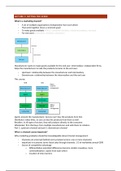
What is a marketing channel?
- A set of multiple organizations (independent from each other)
- That work together (have a comment goal)
- To make goods available (FMCG, consumer durables, industrial products, services)
- For end users (consumers, business customers)
Manufacturer wants to make goods available for the end user. Intermediary: independent firms,
helps the manufacturer to take the products/services to the end user.
- Upstream: relationship between the manufacturer and intermediary
- Downstream: relationship between the intermediary and the end user
This course:
Agent: present the manufacturer, but you can’t buy the products from him.
Distributor: takes titles, so you can buy the products from them as well.
Retailers: in all types of sectors, they sell products directly to the consumer.
Wholesaler: firm that buys from multiple manufacturers and sells them to retailers.
Part 1: upstream channel and part 2: downstream channel
Why is a channel course important?
Why marketing graduates should be knowledgeable about channel management:
- Channels are universal (behind every product/service: one or more channels)
- Important in economic terms (total sales through channels: 1/3 of worldwide annual GDP)
- Source of competitive advantage
o Differentiation potential (differences become smaller nowadays, more
commoditization: copies from each other)
o Creation of entry barriers
,What is the single largest company in the world? Walmart.
Why marketing graduates should be knowledgeable about retail management:
1. Growing retailer scale (power shift from manufacturers to retailers)
o Mergers and acquisitions
o Buying groups
2. Growing retailer sophistication
o Multi-channel operations (pick-up points, pop-up store, collection lockers)
o Retailers becoming brands: private labels
Better availability of consumer data. Retailers have more data than brand manufacturers. This helps
them in the battle with brand manufacturers. AH bonuskaart, shopping cards, customer cards etc.
Retailers definitely win from brand manufacturers. But some shifts giving retailers a hard time
- Price: better prices online, people search online for cheaper prices
- Showrooming: go to a store, get advice from sales people, check online where you can buy it
cheaper and buy it online huge issue for retailers (investing in giving service but people
are buying elsewhere)
Which marketing decision makers are leading the shift to modern marketing? Retail marketeers.
LECTURE 2: CHANNEL DESIGN
When is a channel design needed?
- When starting a new company
- When launching an existing product on a new market
o New geographical market
o New end-user segment
- When launching a new product (line)
- When changing another element of the marketing mix
- When intermediaries change their strategy
- When the environment changes
Three strategic channel design decisions:
Design decision 1: Channel length
- Why use intermediaries at all?
- Shorter versus longer channel?
Why use intermediaries at all?
Disintermediation: not using intermediaries in channel. Manufacturer directly sells to the end user.
,Double marginalization: twice the margin, brand manufacturer and wholesaler both have margins.
No double marginalization higher gross profit per unit sold when selling directly. Even with a
lower consumer price, the manufacturer still makes a higher gross profit per unit sold without using
intermediaries. He may sell more because the consumer price is lower.
Use of intermediaries: lower gross profit per unit sold for the manufacturer. But how about the
manufacturer’s total net profit? Can be lower OR higher.
- Also depends on quantity sold (provision of service outputs by intermediaries)
- Also depends on distribution cost (number and costs of contact lines)
Also depends on quantity sold (reasons why consumers buy more through intermediaries):
- Bulk breaking: allow the end user to buy in small lots
- Assortment convenience: offer a wide (# of product categories) and/or deep assortment (# of
brands or models within a product category) to the end user
- Time convenience: reduce time end user must wait between ordering and receiving goods
- Spatial convenience: reduce transportation costs and search costs
Also depends on distribution cost:
- Number of contact lines: less costly for the brand manufacturer when there are
intermediaries, intermediaries have to provide information to the end user
- Costs of contact lines:
o Purchase transaction is no routine for end users higher cost for manufacturer
o Purchase transaction is routine for intermediaries lower cost for manufacturer,
manufacturer sells more products to the intermediaries in one time, less costs/time,
brand manufacturer only has to deal with a few intermediaries instead of many
customers
Shorter versus longer channel?
General rules of thumb for deciding the channel length:
Lower perishability
Delivery speed less
Products with a higher perishability: longer channel. Products with a lower perishability: shorter
channel.
Rules of thumb may point in different directions:
- The vast majority will typically point in the same direction
- Never base your decision on just one rule of thumb
- Always consider all rules of thumb
Design decision 2: Distribution intensity
Distribution intensity: in how many stores will you sell your product?
, Exclusive: Bijenkorf. Selective: consumer durables (car, furnutire) Intensive: supermarket products.
Less versus more intensive distribution:
- More intensive distribution
o Easier for consumers to find the brand (higher sales)
Higher market coverage
o Lower reseller motivation (lost sales)
Resellers support the brand less vigorously
Resellers drop the brand
- Less intensive distribution
o More difficult for consumers to find the brand (lost sales)
Lower market coverage
o Higher reseller motivation (higher sales)
Resellers support the brand more vigorously
Optimal distribution intensity depends on (1) product characteristics:
Optimal distribution intensity depends on (2) manufacturer’s brand strategy:
Why are not all convenience goods distributed intensively? Shampoo sold by every supermarket
(Dove) shampoo sold exclusively by hairdressing salons (L’Oreal).
How is distribution intensity specified in contracts with independent resellers? Exclusive or selective
distribution clauses:
- ‘Location clause’: specification of the location of the reseller’s business
- ‘Area of primary responsibility’: reseller has to realize a pre-specified sales level (= fill quota)
What is a marketing channel?
- A set of multiple organizations (independent from each other)
- That work together (have a comment goal)
- To make goods available (FMCG, consumer durables, industrial products, services)
- For end users (consumers, business customers)
Manufacturer wants to make goods available for the end user. Intermediary: independent firms,
helps the manufacturer to take the products/services to the end user.
- Upstream: relationship between the manufacturer and intermediary
- Downstream: relationship between the intermediary and the end user
This course:
Agent: present the manufacturer, but you can’t buy the products from him.
Distributor: takes titles, so you can buy the products from them as well.
Retailers: in all types of sectors, they sell products directly to the consumer.
Wholesaler: firm that buys from multiple manufacturers and sells them to retailers.
Part 1: upstream channel and part 2: downstream channel
Why is a channel course important?
Why marketing graduates should be knowledgeable about channel management:
- Channels are universal (behind every product/service: one or more channels)
- Important in economic terms (total sales through channels: 1/3 of worldwide annual GDP)
- Source of competitive advantage
o Differentiation potential (differences become smaller nowadays, more
commoditization: copies from each other)
o Creation of entry barriers
,What is the single largest company in the world? Walmart.
Why marketing graduates should be knowledgeable about retail management:
1. Growing retailer scale (power shift from manufacturers to retailers)
o Mergers and acquisitions
o Buying groups
2. Growing retailer sophistication
o Multi-channel operations (pick-up points, pop-up store, collection lockers)
o Retailers becoming brands: private labels
Better availability of consumer data. Retailers have more data than brand manufacturers. This helps
them in the battle with brand manufacturers. AH bonuskaart, shopping cards, customer cards etc.
Retailers definitely win from brand manufacturers. But some shifts giving retailers a hard time
- Price: better prices online, people search online for cheaper prices
- Showrooming: go to a store, get advice from sales people, check online where you can buy it
cheaper and buy it online huge issue for retailers (investing in giving service but people
are buying elsewhere)
Which marketing decision makers are leading the shift to modern marketing? Retail marketeers.
LECTURE 2: CHANNEL DESIGN
When is a channel design needed?
- When starting a new company
- When launching an existing product on a new market
o New geographical market
o New end-user segment
- When launching a new product (line)
- When changing another element of the marketing mix
- When intermediaries change their strategy
- When the environment changes
Three strategic channel design decisions:
Design decision 1: Channel length
- Why use intermediaries at all?
- Shorter versus longer channel?
Why use intermediaries at all?
Disintermediation: not using intermediaries in channel. Manufacturer directly sells to the end user.
,Double marginalization: twice the margin, brand manufacturer and wholesaler both have margins.
No double marginalization higher gross profit per unit sold when selling directly. Even with a
lower consumer price, the manufacturer still makes a higher gross profit per unit sold without using
intermediaries. He may sell more because the consumer price is lower.
Use of intermediaries: lower gross profit per unit sold for the manufacturer. But how about the
manufacturer’s total net profit? Can be lower OR higher.
- Also depends on quantity sold (provision of service outputs by intermediaries)
- Also depends on distribution cost (number and costs of contact lines)
Also depends on quantity sold (reasons why consumers buy more through intermediaries):
- Bulk breaking: allow the end user to buy in small lots
- Assortment convenience: offer a wide (# of product categories) and/or deep assortment (# of
brands or models within a product category) to the end user
- Time convenience: reduce time end user must wait between ordering and receiving goods
- Spatial convenience: reduce transportation costs and search costs
Also depends on distribution cost:
- Number of contact lines: less costly for the brand manufacturer when there are
intermediaries, intermediaries have to provide information to the end user
- Costs of contact lines:
o Purchase transaction is no routine for end users higher cost for manufacturer
o Purchase transaction is routine for intermediaries lower cost for manufacturer,
manufacturer sells more products to the intermediaries in one time, less costs/time,
brand manufacturer only has to deal with a few intermediaries instead of many
customers
Shorter versus longer channel?
General rules of thumb for deciding the channel length:
Lower perishability
Delivery speed less
Products with a higher perishability: longer channel. Products with a lower perishability: shorter
channel.
Rules of thumb may point in different directions:
- The vast majority will typically point in the same direction
- Never base your decision on just one rule of thumb
- Always consider all rules of thumb
Design decision 2: Distribution intensity
Distribution intensity: in how many stores will you sell your product?
, Exclusive: Bijenkorf. Selective: consumer durables (car, furnutire) Intensive: supermarket products.
Less versus more intensive distribution:
- More intensive distribution
o Easier for consumers to find the brand (higher sales)
Higher market coverage
o Lower reseller motivation (lost sales)
Resellers support the brand less vigorously
Resellers drop the brand
- Less intensive distribution
o More difficult for consumers to find the brand (lost sales)
Lower market coverage
o Higher reseller motivation (higher sales)
Resellers support the brand more vigorously
Optimal distribution intensity depends on (1) product characteristics:
Optimal distribution intensity depends on (2) manufacturer’s brand strategy:
Why are not all convenience goods distributed intensively? Shampoo sold by every supermarket
(Dove) shampoo sold exclusively by hairdressing salons (L’Oreal).
How is distribution intensity specified in contracts with independent resellers? Exclusive or selective
distribution clauses:
- ‘Location clause’: specification of the location of the reseller’s business
- ‘Area of primary responsibility’: reseller has to realize a pre-specified sales level (= fill quota)