Chemistry – Key Topic 5
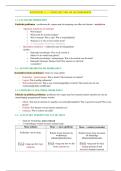
4.5 Energy changes
4.5.1 Exothermic and endothermic reactions
4.5.1.1 Energy transfer during exothermic and endothermic reactions
Energy is conserved in chemical reactions. The amount of energy in the universe at
the end of a chemical reaction is the same as before the reaction takes place. If a
reaction transfers energy to the surroundings the product molecules must have less
energy than the reactants, by the amount transferred
An exothermic reaction is one that transfers energy to the surroundings so the
temperature of the surroundings increases
- Exothermic reactions include combustion, many oxidation reactions and
neutralisation
- Everyday uses of exothermic reactions include self-heating cans(reactions
between chemicals and their bases) and hand warmers(oxidation of iron in air to
release energy)
- The energy released from forming new bonds is greater than the energy needed
to break existing bonds
- E.g. combustion and oxidation
An endothermic reaction is one that takes in energy from the surroundings so the
temperature of the surroundings decreases
- Endothermic reactions include thermal decompositions and the reaction of citric
acid and sodium hydrogencarbonate. Some sports injury packs are based on
endothermic reactions (the chemical reaction allows the pack to instantly become
cooler without having to put it in the freezer)
- the energy needed to break existing bonds is greater than the energy released from
forming new bonds
e.g. photosynthesis
4.5.1.2 Reaction profiles
Chemical reactions can occur only when reacting particles collide with each other and
with sufficient energy. The minimum amount of energy that particles must have to
react is called the activation energy
, Reaction profiles can be used to show the relative energies of reactants and products,
the activation energy and the overall energy change of a reaction
Energy level diagrams
These show the reactants and products at different energy levels (they have different
energies because they have different chemical bonds)
Exothermic Endothermic
Draw w activation energy
Activation energy is usually provided by a flame e.g. burning a fuel
Show ea w catalyst
4.5.1.3 The energy change of reactions
During a chemical reaction:
- Energy must be supplied to break bonds in the reactants
- Energy is released when bonds in the products are formed
The energy needed to break bonds and the energy released when bonds are formed
can be calculated from bond energies
4.5 Energy changes
4.5.1 Exothermic and endothermic reactions
4.5.1.1 Energy transfer during exothermic and endothermic reactions
Energy is conserved in chemical reactions. The amount of energy in the universe at
the end of a chemical reaction is the same as before the reaction takes place. If a
reaction transfers energy to the surroundings the product molecules must have less
energy than the reactants, by the amount transferred
An exothermic reaction is one that transfers energy to the surroundings so the
temperature of the surroundings increases
- Exothermic reactions include combustion, many oxidation reactions and
neutralisation
- Everyday uses of exothermic reactions include self-heating cans(reactions
between chemicals and their bases) and hand warmers(oxidation of iron in air to
release energy)
- The energy released from forming new bonds is greater than the energy needed
to break existing bonds
- E.g. combustion and oxidation
An endothermic reaction is one that takes in energy from the surroundings so the
temperature of the surroundings decreases
- Endothermic reactions include thermal decompositions and the reaction of citric
acid and sodium hydrogencarbonate. Some sports injury packs are based on
endothermic reactions (the chemical reaction allows the pack to instantly become
cooler without having to put it in the freezer)
- the energy needed to break existing bonds is greater than the energy released from
forming new bonds
e.g. photosynthesis
4.5.1.2 Reaction profiles
Chemical reactions can occur only when reacting particles collide with each other and
with sufficient energy. The minimum amount of energy that particles must have to
react is called the activation energy
, Reaction profiles can be used to show the relative energies of reactants and products,
the activation energy and the overall energy change of a reaction
Energy level diagrams
These show the reactants and products at different energy levels (they have different
energies because they have different chemical bonds)
Exothermic Endothermic
Draw w activation energy
Activation energy is usually provided by a flame e.g. burning a fuel
Show ea w catalyst
4.5.1.3 The energy change of reactions
During a chemical reaction:
- Energy must be supplied to break bonds in the reactants
- Energy is released when bonds in the products are formed
The energy needed to break bonds and the energy released when bonds are formed
can be calculated from bond energies