Caregiver Infant Interaction
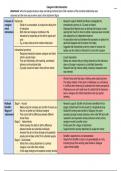
Attachment: when two people develop a deep and lasting emotional bond. Both members of this emotional relationship seek
closeness and feel more secure when close to their attachment figure
Features of Reciprocity: - Research support: Meltzoff and Moore investigated the
caregiver - Similar to a conversation, its mutual turn taking form interactional synchrony in 2-3 week old infants
infant of interaction - Displayed facial features such as sticking their tongue out and
interactions - Both infant and caregiver contribute to the opening their mouth in shock to infants, responses were recorded
interaction by responding to the other’s signals and and analysed by an independent observer
cues - An association was found between the expression or gesture the
- E.g. a baby smiles and her mother smiles back adult had displayed and the actions of the baby
- Suggests that interactional synchrony innate in humans and
Interactional synchrony: babies use this method of interaction to bond with caregiver
- Reciprocal interaction between caregiver and infant
which is synchronised - Covert observation
- They act rhythmically, with matching, coordinated - Babies are unaware they are being observed so their behaviour
behaviour and emotional state does not change in response to a controlled observation
- E.g baby moved her head in time with her mother - Research has high internal validity, meaning it measured what
was intended
- We don't know what the baby is thinking when observing them
- The babies imitation of the adult is it deliberate or a coincidence,
it is difficult when observing to understand the infants perspective
- Weakness as we can’t really know for certain that the behaviour
seen in caregiver and infant interactions have any special
meaning
Rudloph Stage 1 - Asocial: - Research support: Schaffer and Emerson identified the four
Schaffer: - Babies enjoy the company and comfort of anyone as stages of attachment from the results of a longitudinal study
Stages of they do not prefer any individual caregiver - Studied 60 working class families in Glasgow, they were
`attachment - They cannot tell the difference between different assessing stranger anxiety (behaviour when infant left alone with
human faces researcher) and separation anxiety (behaviour when primary
Stage 2 - Indiscriminate caregiver moved to another room)
- Infants develop the ability to tell the difference - Finding were the 4 stages of attachment
between familiar and unfamiliar individuals - Supports that the primary attachment is usually the mother
- However they do not show stranger and separation
anxiety and will take comfort from unfamiliar people - Schaffer’s experiment is not representative
Stage 3 - Discriminate: - Sample from Schaffer’s study is not generalisable as it only
- Infants form a strong attachment to a primary included groups from working class families in Glasgow
caregiver, most often their mothers - Lacks internal validity
- At this stage stranger and separation anxiety develop
, Stage 4 - Multiple attachments: - Research has high mundane realism
- Infants start forming attachments to other familiar - Families and infants were observed in their own home (natural
faces (secondary attachments) i.e father, setting), making the experience for the infant normal
grandparents, siblings - Research had high ecological validity and behaviour recorded is
- Stranger anxiety starts to decrease valid
The role of - Schaffer found that infants’ primary giver 65% of the time is the mother, 30% both parents and only 3% the father
the father - At 18 months 75% of infants have formed an attachment with their father, showing separation anxiety, suggesting father play an
important role in the infants’ lives
Importance of active play:
- Mothers and fathers play different roles
- Mother take the caregiving and nurturing role, whereas father is seen as a playmate who provides more physical and exciting
play
- Infants prefer contact with their father when they are feeling happy and want to play but prefer contact with their mother when
they are upset and want comforting
As a primary caregiver:
- In modern society, mothers go to work, meaning men now are expected a bigger role in parenting than before
- It is increasingly common for men to be the primary caregiver, meaning their interactional style changes to be more like mothers
Attachment: when two people develop a deep and lasting emotional bond. Both members of this emotional relationship seek
closeness and feel more secure when close to their attachment figure
Features of Reciprocity: - Research support: Meltzoff and Moore investigated the
caregiver - Similar to a conversation, its mutual turn taking form interactional synchrony in 2-3 week old infants
infant of interaction - Displayed facial features such as sticking their tongue out and
interactions - Both infant and caregiver contribute to the opening their mouth in shock to infants, responses were recorded
interaction by responding to the other’s signals and and analysed by an independent observer
cues - An association was found between the expression or gesture the
- E.g. a baby smiles and her mother smiles back adult had displayed and the actions of the baby
- Suggests that interactional synchrony innate in humans and
Interactional synchrony: babies use this method of interaction to bond with caregiver
- Reciprocal interaction between caregiver and infant
which is synchronised - Covert observation
- They act rhythmically, with matching, coordinated - Babies are unaware they are being observed so their behaviour
behaviour and emotional state does not change in response to a controlled observation
- E.g baby moved her head in time with her mother - Research has high internal validity, meaning it measured what
was intended
- We don't know what the baby is thinking when observing them
- The babies imitation of the adult is it deliberate or a coincidence,
it is difficult when observing to understand the infants perspective
- Weakness as we can’t really know for certain that the behaviour
seen in caregiver and infant interactions have any special
meaning
Rudloph Stage 1 - Asocial: - Research support: Schaffer and Emerson identified the four
Schaffer: - Babies enjoy the company and comfort of anyone as stages of attachment from the results of a longitudinal study
Stages of they do not prefer any individual caregiver - Studied 60 working class families in Glasgow, they were
`attachment - They cannot tell the difference between different assessing stranger anxiety (behaviour when infant left alone with
human faces researcher) and separation anxiety (behaviour when primary
Stage 2 - Indiscriminate caregiver moved to another room)
- Infants develop the ability to tell the difference - Finding were the 4 stages of attachment
between familiar and unfamiliar individuals - Supports that the primary attachment is usually the mother
- However they do not show stranger and separation
anxiety and will take comfort from unfamiliar people - Schaffer’s experiment is not representative
Stage 3 - Discriminate: - Sample from Schaffer’s study is not generalisable as it only
- Infants form a strong attachment to a primary included groups from working class families in Glasgow
caregiver, most often their mothers - Lacks internal validity
- At this stage stranger and separation anxiety develop
, Stage 4 - Multiple attachments: - Research has high mundane realism
- Infants start forming attachments to other familiar - Families and infants were observed in their own home (natural
faces (secondary attachments) i.e father, setting), making the experience for the infant normal
grandparents, siblings - Research had high ecological validity and behaviour recorded is
- Stranger anxiety starts to decrease valid
The role of - Schaffer found that infants’ primary giver 65% of the time is the mother, 30% both parents and only 3% the father
the father - At 18 months 75% of infants have formed an attachment with their father, showing separation anxiety, suggesting father play an
important role in the infants’ lives
Importance of active play:
- Mothers and fathers play different roles
- Mother take the caregiving and nurturing role, whereas father is seen as a playmate who provides more physical and exciting
play
- Infants prefer contact with their father when they are feeling happy and want to play but prefer contact with their mother when
they are upset and want comforting
As a primary caregiver:
- In modern society, mothers go to work, meaning men now are expected a bigger role in parenting than before
- It is increasingly common for men to be the primary caregiver, meaning their interactional style changes to be more like mothers