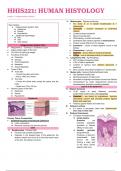
HHIS221: HUMAN HISTOLOGY
Lesson 7 | Integumentary System
B. Melanocytes - Pigment producing
● For every 5 or 6 basale keratinocytes is 1
Topic Outline:
● Integumentary System: Skin melanocytes
➔ Epidermis ● Tyrosinase – enzyme necessary to synthesize
➔ Dermis melanin
➔ Hypodermis ● Located at basal epidermis
● Epidermal Appendages ● Neural Crest Derived
➔ Nail ● Pale-staining, rounded cell bodies
➔ Hair
● Synthesize dark melanin pigment in melanosomes
➔ Skin Glands
● Protect nuclear DNA from UV damage.
Integumentary System: Skin ● Eumelanin – brown or black pigment; found in hair
● Integument (L. “Covering”) / Cutaneous Layer follicles
● largest single organ of the body ● Pheomelanin – red hair
● 15%-20% of total body weight ● Albinism – due to defect in enzyme tyrosinase
● Functions of the Skin ● Vitiligo – loss or decrease activity of melanocytes
➔ Protection C. Langerhans cells - Ag-Presenting
➔ Sensory ● APC (Antigen Presenting Cells)
➔ Thermoregulatory ● 2-8% of cells in epidermis
➔ Metabolic ● Located at spinous layer (stratum spinosum) of
➔ Sexual Signaling epidermis
● Types of Skin ● Bind, process and present antigens to T-lymphocytes
➔ Thick Skin D. Merkel cells - Sensory(Tactile Epithelial Cells)
– Covers the palms and soles ● Aka Epithelial Tactile Cells
– 400 to 1400 um(1.4mm) ● Mechanoreceptors for light touch
➔ Thin Skin ● Abundant in fingertips and bases of some hair follicles
– Covers the whole body except the palms and the ● Characterized by small, Golgi-derived dense-core
soles. neurosecretory granules containing peptides.
– Varies from 75 to 150 um Layers of the Epidermis
● General Layers of the Skin 1) Stratum Corneum
1) Epidermis ● 15-20 layers of dead, flattened, anucleate,
2) Dermis keratin-filled keratinocytes called squames
3) Hypodermis ● Squames – are bound by hydrophobic lipid-rich
Epidermis intercellular cement that provides protects against
friction and water loss
● Protects against friction and water loss
2) Stratum Lucidum
● 2-3 layers of anucleate, dead cells, keratinocytes;
seen only in thick skin
3) Stratum Granulosum
● 3-5 layers of keratinocytes.
Primary Tissue Composition: ➔ kerato-hyaline
● Stratified Squamous Keratinized Epithelium Granules - are
➔ Lacks vasculature intensely basophilic
➔ Receives nutrients only from the dermis (increase or intense
Cells affinity in basic dye)
A. Keratinocytes - Primary Cells ➔ lamellar granules
● Primary Cells located at Epidermis (Golgi-derived),
● Originate in the deepest layer of the epidermis, the Produces a lipid-rich,
stratum basale and move up to the final barrier layer impermeable layer
of the skin, the stratum corneum. around the cells
forming a major part
of the skin’s barrier
against water loss.
1
Lesson 7 | Integumentary System
B. Melanocytes - Pigment producing
● For every 5 or 6 basale keratinocytes is 1
Topic Outline:
● Integumentary System: Skin melanocytes
➔ Epidermis ● Tyrosinase – enzyme necessary to synthesize
➔ Dermis melanin
➔ Hypodermis ● Located at basal epidermis
● Epidermal Appendages ● Neural Crest Derived
➔ Nail ● Pale-staining, rounded cell bodies
➔ Hair
● Synthesize dark melanin pigment in melanosomes
➔ Skin Glands
● Protect nuclear DNA from UV damage.
Integumentary System: Skin ● Eumelanin – brown or black pigment; found in hair
● Integument (L. “Covering”) / Cutaneous Layer follicles
● largest single organ of the body ● Pheomelanin – red hair
● 15%-20% of total body weight ● Albinism – due to defect in enzyme tyrosinase
● Functions of the Skin ● Vitiligo – loss or decrease activity of melanocytes
➔ Protection C. Langerhans cells - Ag-Presenting
➔ Sensory ● APC (Antigen Presenting Cells)
➔ Thermoregulatory ● 2-8% of cells in epidermis
➔ Metabolic ● Located at spinous layer (stratum spinosum) of
➔ Sexual Signaling epidermis
● Types of Skin ● Bind, process and present antigens to T-lymphocytes
➔ Thick Skin D. Merkel cells - Sensory(Tactile Epithelial Cells)
– Covers the palms and soles ● Aka Epithelial Tactile Cells
– 400 to 1400 um(1.4mm) ● Mechanoreceptors for light touch
➔ Thin Skin ● Abundant in fingertips and bases of some hair follicles
– Covers the whole body except the palms and the ● Characterized by small, Golgi-derived dense-core
soles. neurosecretory granules containing peptides.
– Varies from 75 to 150 um Layers of the Epidermis
● General Layers of the Skin 1) Stratum Corneum
1) Epidermis ● 15-20 layers of dead, flattened, anucleate,
2) Dermis keratin-filled keratinocytes called squames
3) Hypodermis ● Squames – are bound by hydrophobic lipid-rich
Epidermis intercellular cement that provides protects against
friction and water loss
● Protects against friction and water loss
2) Stratum Lucidum
● 2-3 layers of anucleate, dead cells, keratinocytes;
seen only in thick skin
3) Stratum Granulosum
● 3-5 layers of keratinocytes.
Primary Tissue Composition: ➔ kerato-hyaline
● Stratified Squamous Keratinized Epithelium Granules - are
➔ Lacks vasculature intensely basophilic
➔ Receives nutrients only from the dermis (increase or intense
Cells affinity in basic dye)
A. Keratinocytes - Primary Cells ➔ lamellar granules
● Primary Cells located at Epidermis (Golgi-derived),
● Originate in the deepest layer of the epidermis, the Produces a lipid-rich,
stratum basale and move up to the final barrier layer impermeable layer
of the skin, the stratum corneum. around the cells
forming a major part
of the skin’s barrier
against water loss.
1