HHIS221: HUMAN HISTOLOGY
Lesson 11 | Digestive System
INTRODUCTION
● Structures within the digestive tract allow the following:
➔ Ingestion
➔ Mastication
➔ Motility
➔ Secretion of lubricating and protective mucus, digestive
enzymes, acidic and alkaline fluids, and bile
➔ Hormone release
➔ Chemical digestion
➔ Absorption of the small molecules and water into the
blood and lymph
➔ Elimination of indigestible, unabsorbed components of
food
ORAL CAVITY
● Lined by the oral mucosa region exposed to considerable
friction and shearing forces are partly or fully keratinized.
● Associated with salivary glands which release enzymes.
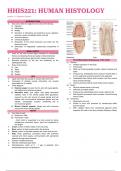
● Bounded anteriorly by the lips and posteriorly by the Three Mineralized Substances of the Teeth
palatoglossal folds. (1) Enamel
● Parts of Oral Cavity: ● Hardest substance in the body
(1) Lips ● Translucent
(2) Teeth ● Made up of hydroxyapatite crystals, organic minerals and
(3) Palate water
(4) Tongue ● Produced by ameloblasts which produce enamel daily in
LIPS 4-8 um segments producing enamel root segments
● Upper and lower lips usually in contact with each other ● Ameloblasts dies before tooth eruption and thus cannot
● Composed of skeletal muscle (orbicularis oris muscle) repair enamel damage
responsible for its mobility ● Lined by primary enamel cuticle before tooth eruption
● Three Regions: (2) Dentin
(1) External aspect covered by thin skin with sweat glands, ● Second hardest tissue in the body
hair follicles and sebaceous glands ● Yellowish and highly elastic
(2) Vermillion zone: pink region, with highly developed ● Produced by odontoblasts which remain viable for life
capillary roots in the dermal papilla (rete apparatus); ● With dendritic processes which occupies a tunnel forming
covered by thin skin devoid of sweat glands and hair lines of Owen
follicles with non-functional sebaceous glands and hair (3) Cementum
follicles; necessitates occasion moistening due to ● Restricted to the root
non-functional glands ● Similar to bone and produced by cemetocytes within
(3) Mucus/ Internal aspects: always wet with numerous lacunar spaces
mucus and minor salivary glands ● With collagen fibers from periodontal ligament which
TEETH suspends the tooth in the bony sockets (Sharpey's fibers)
● Two Sets of teeth
(1) Deciduous / Milk
(2) Permanent / Adult
– Each tooth is suspended in a bony socket by dense
collagenous connective tissue, lined and supported by
the gingiva
● Crown: portion of teeth visible in the oral cavity
● Root: portion of teeth housed within the alveolus
● Cervix: portion of the teeth between the crown and the root
● Pulp: loose, gelatinous connective tissue with extensive
vascular and nerve supply; communicates with periodontal
ligament through apical foramen
● Contains calcified elements
● With thin myelinated pain fibers
● Odontogenesis: starts at 6 - 7 age of gestation from
ectodermally derived oral epithelium
1
, V-shaped groove whose apex is a deep concavity
➔ The posterior 1/3 is uneven due to the presence of
numerous lingual tonsils
The anterior 2/3 lined with lingual papilla:
(a) Filiform: most numerous, slender, gives a velvety
appearance to the tongue.
(b) Fungiform: resembles a mushroom, vascular, and appears
PALATE like red dots amidst the filiform papillae
(a) Anterior hard palate (c) Foliate: located in the posterior-lateral aspect of the tongue,
● immovable with bony shelf appears like vertical furrows and leaflike; contains ducts of
● lined by stratified squamous partially keratinized minor salivary glands of Von Ebner located in the core of the
epithelium with clusters of adipose cells and posteriorly tongue.
with acini of mucus and minor salivary glands (d) Circumvallate: 8-12 large, papillae along the sulcus
● nasal aspect covered by respiratory epithelium with terminalis, also with glands of Von Ebner
patches of nonkeratinized epithelium
(b) Posterior soft palate
● movable with skeletal muscular attachment
● lined by stratified squamous non-keratinized epithelium
with minor salivary glands
● nasal aspect lined with columnar ciliated epithelium
● posterior-most extension is the uvula
Taste Buds
● Intra-epithelial sensory organ that functions in the perception
of taste
● There are about 3000 taste buds present on the surface of
the tongue and posterior aspect of the oral cavity
● Each taste buds is composed of 60-80 spindle shaped cells
TONGUE in an oval structure with thin ends opening at the taste pore.
● Extremely movable because ● With 4 types of cells:
of intrinsic muscle and (1) Basal cells (Type IV cells): functions as reserve cells
extrinsic muscles and regenerate other cell
● The dorsal surface delineates (2) Dark cells (Type I cells): young taste bud cells from
the tongue into 2 unequal basal cells
surfaces: (3) Light cells (Type II cells): mature taste buds cells
➔ the anterior 2/3 and the (4) Intermediate cells (Type III cells): old or senescent
posterior 1/3, divided by a taste buds
2
Lesson 11 | Digestive System
INTRODUCTION
● Structures within the digestive tract allow the following:
➔ Ingestion
➔ Mastication
➔ Motility
➔ Secretion of lubricating and protective mucus, digestive
enzymes, acidic and alkaline fluids, and bile
➔ Hormone release
➔ Chemical digestion
➔ Absorption of the small molecules and water into the
blood and lymph
➔ Elimination of indigestible, unabsorbed components of
food
ORAL CAVITY
● Lined by the oral mucosa region exposed to considerable
friction and shearing forces are partly or fully keratinized.
● Associated with salivary glands which release enzymes.
● Bounded anteriorly by the lips and posteriorly by the Three Mineralized Substances of the Teeth
palatoglossal folds. (1) Enamel
● Parts of Oral Cavity: ● Hardest substance in the body
(1) Lips ● Translucent
(2) Teeth ● Made up of hydroxyapatite crystals, organic minerals and
(3) Palate water
(4) Tongue ● Produced by ameloblasts which produce enamel daily in
LIPS 4-8 um segments producing enamel root segments
● Upper and lower lips usually in contact with each other ● Ameloblasts dies before tooth eruption and thus cannot
● Composed of skeletal muscle (orbicularis oris muscle) repair enamel damage
responsible for its mobility ● Lined by primary enamel cuticle before tooth eruption
● Three Regions: (2) Dentin
(1) External aspect covered by thin skin with sweat glands, ● Second hardest tissue in the body
hair follicles and sebaceous glands ● Yellowish and highly elastic
(2) Vermillion zone: pink region, with highly developed ● Produced by odontoblasts which remain viable for life
capillary roots in the dermal papilla (rete apparatus); ● With dendritic processes which occupies a tunnel forming
covered by thin skin devoid of sweat glands and hair lines of Owen
follicles with non-functional sebaceous glands and hair (3) Cementum
follicles; necessitates occasion moistening due to ● Restricted to the root
non-functional glands ● Similar to bone and produced by cemetocytes within
(3) Mucus/ Internal aspects: always wet with numerous lacunar spaces
mucus and minor salivary glands ● With collagen fibers from periodontal ligament which
TEETH suspends the tooth in the bony sockets (Sharpey's fibers)
● Two Sets of teeth
(1) Deciduous / Milk
(2) Permanent / Adult
– Each tooth is suspended in a bony socket by dense
collagenous connective tissue, lined and supported by
the gingiva
● Crown: portion of teeth visible in the oral cavity
● Root: portion of teeth housed within the alveolus
● Cervix: portion of the teeth between the crown and the root
● Pulp: loose, gelatinous connective tissue with extensive
vascular and nerve supply; communicates with periodontal
ligament through apical foramen
● Contains calcified elements
● With thin myelinated pain fibers
● Odontogenesis: starts at 6 - 7 age of gestation from
ectodermally derived oral epithelium
1
, V-shaped groove whose apex is a deep concavity
➔ The posterior 1/3 is uneven due to the presence of
numerous lingual tonsils
The anterior 2/3 lined with lingual papilla:
(a) Filiform: most numerous, slender, gives a velvety
appearance to the tongue.
(b) Fungiform: resembles a mushroom, vascular, and appears
PALATE like red dots amidst the filiform papillae
(a) Anterior hard palate (c) Foliate: located in the posterior-lateral aspect of the tongue,
● immovable with bony shelf appears like vertical furrows and leaflike; contains ducts of
● lined by stratified squamous partially keratinized minor salivary glands of Von Ebner located in the core of the
epithelium with clusters of adipose cells and posteriorly tongue.
with acini of mucus and minor salivary glands (d) Circumvallate: 8-12 large, papillae along the sulcus
● nasal aspect covered by respiratory epithelium with terminalis, also with glands of Von Ebner
patches of nonkeratinized epithelium
(b) Posterior soft palate
● movable with skeletal muscular attachment
● lined by stratified squamous non-keratinized epithelium
with minor salivary glands
● nasal aspect lined with columnar ciliated epithelium
● posterior-most extension is the uvula
Taste Buds
● Intra-epithelial sensory organ that functions in the perception
of taste
● There are about 3000 taste buds present on the surface of
the tongue and posterior aspect of the oral cavity
● Each taste buds is composed of 60-80 spindle shaped cells
TONGUE in an oval structure with thin ends opening at the taste pore.
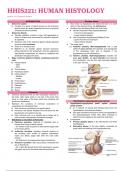
● Extremely movable because ● With 4 types of cells:
of intrinsic muscle and (1) Basal cells (Type IV cells): functions as reserve cells
extrinsic muscles and regenerate other cell
● The dorsal surface delineates (2) Dark cells (Type I cells): young taste bud cells from
the tongue into 2 unequal basal cells
surfaces: (3) Light cells (Type II cells): mature taste buds cells
➔ the anterior 2/3 and the (4) Intermediate cells (Type III cells): old or senescent
posterior 1/3, divided by a taste buds
2