Water and carbon cycles as natural systems
System
● Inputs: when matter or energy enters the system
● Outputs: when matter or energy exits the system
● Stores: where matter or energy builds up
● Flows: when matter or energy moves from one store to another
● Boundaries: the limits of the system
3 types:
- Open system: both energy and matter can enter and leave an open system (has
inputs and outputs) - e.g. drainage basins are open systems as there are inputs of
energy from the sun and water from precipitation, as well as outputs of water from
the river discharge into the sea
- Closed systems: matter can’t enter or leave a closed system, only flow between
stores, but energy can - e.g. carbon cycle as amount of carbon on Earth stays the
same due to no inputs or outputs
- Isolated systems: neither matter nor energy enter or leave the system
Dynamic Equilibrium and feedbacks
Dynamic equilibrium is where all the inputs and outputs of a system are balanced so the
flows and processes continue to happen in the same way constantly and therefore there are
no overall changes to the system.
Large, long-term changes to the balance of inputs, outputs or processes causes the dynamic
equilibrium to change (natural processes and human activities can upset the equilibrium),
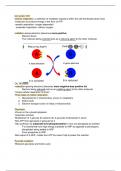
triggering feedback systems. Feedbacks are a series of events that are caused by an initial
change in the system; can be either positive or negative:
● Positive feedback is where an initial change is amplified by the subsequent events,
causing the system to change and move further away from its previous state.
● Negative feedback is where an initial change is nullified by the subsequent events,
causing the system to return back to its initial equilibrium state.
Subsystems
● Cryosphere includes all frozen water - e.g. glacial landscapes
● Hydrosphere includes all water - may be in liquid form (e.g. oceans), solid (e.g. ice in
cryosphere) and gaseous (e.g. water vapour in atmosphere)
● Biosphere includes all living things - e.g. humans, animals, plants and bacteria
● Atmosphere includes the gases between the Earth’s surface and space that are held
in place by gravity - e.g. greenhouse gases
● Lithosphere is the outermost part of the Earth comprising of the upper rigid layer of
the mantle and the crust
The water cycle
, The global water cycle is a closed system whereby water is continually transferred through
various processes, such as precipitation, evapotranspiration and infiltration, amongst several
stores, like the atmosphere, lithosphere and hydrosphere, in a long-term cycle.
Global distribution and size of major stores of water
Most of water is saline water in oceans; less than 3% is freshwater:
● Cryosphere: 69% frozen - e.g. permafrost
● Lithosphere: 30% in groundwater - e.g. aquifers
● Hydrosphere: 0.3% in water bodies - e.g. lakes and rivers
● Atmosphere: 0.04% is water vapour
Can change between solid, liquid and gas - can gain energy (e.g. from sun) to evaporate or
melt, and lose energy to condense or freeze
Processes driving change in the magnitude of stores over time and space
Evaporation is the process by which water is heated by solar energy, which causes it to
change to a gaseous state to water vapour, which is less dense than cold air so it rises,
increasing the water content of the atmosphere and reducing the water on land, such as in
water bodies.
● Magnitude varies by season (e.g. evaporation is likely to be higher in summer) and
location (e.g. evaporation likely to be higher at the tropics than at the poles) -
requires lots of solar energy, low water content of the atmosphere and lots of warm
water
● Has minimal impact on a global scale (e.g. evaporation from large oceans) but large
impact on a regional scale (e.g. loss of water from surface stores like lakes)
Condensation is the process by which warm saturated water air that has risen high into the
atmosphere cools as temperatures drop, causing water vapour to change to a liquid state to
water droplets - can remain in the atmosphere (cloud formation) or flow into other
subsystems (precipitation), reducing the water content of the atmosphere
● Magnitude depends on amount of water vapour in atmosphere and temperature - lots
of water vapour and drop in temperatures = high condensation.
● Occurs globally but may reduce as temperatures increase
Cloud formation is where water vapour condenses to form water droplets that gather and
suspend as clouds in the atmosphere.
Precipitation occurs when the water droplets within clouds develop in size and become too
heavy to be suspended so they fall to the ground. Causes:
- Frontal precipitation: warm air rises above cooler air as it is less dense, causing it to
cool and condense
- Orographic precipitation: warm air forced to rise as it meets with mountainous
terrains, causing it to cool and condense
- Convective precipitation is where moisture on the ground is heated and evaporated,
causing it to rise, cool and condense
● Magnitude varies by season (e.g. UK precipitation typically higher in winter than in
summer), and by location (e.g. precipitation higher at the tropics that at the poles)
System
● Inputs: when matter or energy enters the system
● Outputs: when matter or energy exits the system
● Stores: where matter or energy builds up
● Flows: when matter or energy moves from one store to another
● Boundaries: the limits of the system
3 types:
- Open system: both energy and matter can enter and leave an open system (has
inputs and outputs) - e.g. drainage basins are open systems as there are inputs of
energy from the sun and water from precipitation, as well as outputs of water from
the river discharge into the sea
- Closed systems: matter can’t enter or leave a closed system, only flow between
stores, but energy can - e.g. carbon cycle as amount of carbon on Earth stays the
same due to no inputs or outputs
- Isolated systems: neither matter nor energy enter or leave the system
Dynamic Equilibrium and feedbacks
Dynamic equilibrium is where all the inputs and outputs of a system are balanced so the
flows and processes continue to happen in the same way constantly and therefore there are
no overall changes to the system.
Large, long-term changes to the balance of inputs, outputs or processes causes the dynamic
equilibrium to change (natural processes and human activities can upset the equilibrium),
triggering feedback systems. Feedbacks are a series of events that are caused by an initial
change in the system; can be either positive or negative:
● Positive feedback is where an initial change is amplified by the subsequent events,
causing the system to change and move further away from its previous state.
● Negative feedback is where an initial change is nullified by the subsequent events,
causing the system to return back to its initial equilibrium state.
Subsystems
● Cryosphere includes all frozen water - e.g. glacial landscapes
● Hydrosphere includes all water - may be in liquid form (e.g. oceans), solid (e.g. ice in
cryosphere) and gaseous (e.g. water vapour in atmosphere)
● Biosphere includes all living things - e.g. humans, animals, plants and bacteria
● Atmosphere includes the gases between the Earth’s surface and space that are held
in place by gravity - e.g. greenhouse gases
● Lithosphere is the outermost part of the Earth comprising of the upper rigid layer of
the mantle and the crust
The water cycle
, The global water cycle is a closed system whereby water is continually transferred through
various processes, such as precipitation, evapotranspiration and infiltration, amongst several
stores, like the atmosphere, lithosphere and hydrosphere, in a long-term cycle.
Global distribution and size of major stores of water
Most of water is saline water in oceans; less than 3% is freshwater:
● Cryosphere: 69% frozen - e.g. permafrost
● Lithosphere: 30% in groundwater - e.g. aquifers
● Hydrosphere: 0.3% in water bodies - e.g. lakes and rivers
● Atmosphere: 0.04% is water vapour
Can change between solid, liquid and gas - can gain energy (e.g. from sun) to evaporate or
melt, and lose energy to condense or freeze
Processes driving change in the magnitude of stores over time and space
Evaporation is the process by which water is heated by solar energy, which causes it to
change to a gaseous state to water vapour, which is less dense than cold air so it rises,
increasing the water content of the atmosphere and reducing the water on land, such as in
water bodies.
● Magnitude varies by season (e.g. evaporation is likely to be higher in summer) and
location (e.g. evaporation likely to be higher at the tropics than at the poles) -
requires lots of solar energy, low water content of the atmosphere and lots of warm
water
● Has minimal impact on a global scale (e.g. evaporation from large oceans) but large
impact on a regional scale (e.g. loss of water from surface stores like lakes)
Condensation is the process by which warm saturated water air that has risen high into the
atmosphere cools as temperatures drop, causing water vapour to change to a liquid state to
water droplets - can remain in the atmosphere (cloud formation) or flow into other
subsystems (precipitation), reducing the water content of the atmosphere
● Magnitude depends on amount of water vapour in atmosphere and temperature - lots
of water vapour and drop in temperatures = high condensation.
● Occurs globally but may reduce as temperatures increase
Cloud formation is where water vapour condenses to form water droplets that gather and
suspend as clouds in the atmosphere.
Precipitation occurs when the water droplets within clouds develop in size and become too
heavy to be suspended so they fall to the ground. Causes:
- Frontal precipitation: warm air rises above cooler air as it is less dense, causing it to
cool and condense
- Orographic precipitation: warm air forced to rise as it meets with mountainous
terrains, causing it to cool and condense
- Convective precipitation is where moisture on the ground is heated and evaporated,
causing it to rise, cool and condense
● Magnitude varies by season (e.g. UK precipitation typically higher in winter than in
summer), and by location (e.g. precipitation higher at the tropics that at the poles)