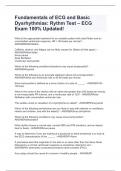
Fundamentals of ECG and Basic Dysrhythmias: Rythm Test – ECG Exam 100% Updated!
What is the appropriate treatment for an unstable patient with atrial flutter and an uncontrolled ventricular response; HR >150 beats per minute? - ANSWERDefibrillation Caffeine, alcohol, and fatigue can be likely causes for (Select all that apply.) - ANSWERAtrial flutter Sinus pause Atrial fibrillation Ventricular tachycardia Which of the following conditions/situations may cause bradycardia? - ANSWERHypoxia Which of the following is an accurate statement about sinus bradycardia? - ANSWERAtrial and ventricular rate is 40-60 beats per minute Sinus tachycardia is defined as a sinus rhythm at a rate of _____. - ANSWER100-150 bpm What is the name of the rhythm with an atrial rate greater than 250 beats per minute, a non-measurable PR interval, and a ventricular rate of 120? - ANSWERAtrial fibrillation with uncontrolled ventricular rate The sudden onset or cessation of a dysrhythmia is called? - ANSWERParoxysmal Which of the following arrhythmias are you likely to see with patients on ventilators, infants and children, and with the elderly? - ANSWERSinus arrhythmia Which of the following conditions may cause sinus tachycardia? - ANSWERdehydration What rhythm shows a normal rate, normal QRS and PRI durations, and an absent beat or beats - ANSWERSinus pause

Geschreven voor
- Instelling
- Fundamentals of ECG
- Vak
- Fundamentals of ECG
Documentinformatie
- Geüpload op
- 9 juni 2024
- Aantal pagina's
- 3
- Geschreven in
- 2023/2024
- Type
- Tentamen (uitwerkingen)
- Bevat
- Vragen en antwoorden
Onderwerpen
-
fundamentals of ecg and basic dysrhythmias rythm
-
fundamentals of ecg and basic dysrhythmiasstuvia
-
what is the appropriate treatment for an unstable
-
caffeine alcohol and fatigue can be likely cause

Ook beschikbaar in voordeelbundel