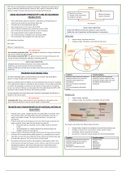
NPP is the rate at which plants accumulate new biomass. It represents the actual store of
Producers
energy contained in potential food for consumers. NPP is easier to calculate than GPP as
biomass is simpler to measure than the amount of energy fixed into glucose.
Elements (e.g. carbon,
GROSS SECONDARY PRODUCTIVITY AND NET SECONDARY nitrogen) in the environment
Elements in biomass
(organic molecules)
PRODUCTIVITY (inorganic molecules)
Much of the biomass eaten by consumers is absorbed (e.g. through the guts of
animals) and converted into new biomass within cells. Decomposers
Consumers do not use all the biomass they eat.
Some energy passes out in in faeces and excretion.
QUICK CHECK QUESTIONS
Only the biomass remaining can be used by the consumer (GSP).
Some of the biomass absorbed by animals is used in respiration. -Explain the differences between producers and consumers.
The energy released is used to support life processes. -Explain the role of producers and decomposers in ecosystems.
The remaining energy is available to form new biomass (NSP).
This new biomass is then available to the next tropic level. Carbon cycle
Organic storage- organisms and forests
GSP= food eaten- faecal loss
Inorganic storage- atmosphere, soil, fossil fuels and oceans
NSP= GSP-R
(Where R = respiratory loss)
KEY DEFINITIONS
Gross secondary productivity (GSP) - The total gain by consumers in energy or biomass per
unit area per unit time through absorption.
Net secondary productivity (NSP) –The gain by consumers in energy or biomass per unit
area per unit time remaining after allowing for respiratory losses (R).
QUICK CHECK QUESTIONS
-Distinguish between primary productivity and secondary productivity.
-Outline how you would calculate net primary productivity.
-Explain the differences between gross secondary productivity and net secondary
productivity.
MAXIMUM SUSTAINABLE YIELD
Transfers Transformations
The annual sustainable yield for a natural resource such as forest is the annual gain in Feeding on plant material by herbivores Photosynthesis (CO2 into glucose)
biomass or energy through growth and recruitment. Feeding on herbivores by carnivores Respiration (organic matter into CO2)
Feeding on dead organisms by Combustion (organic matter into CO2)
Maximum sustainable yield is the highest rate of harvesting that does not lead to a reduction decomposers Incomplete decomposition and
in the original natural capital. It is equivalent to the net primary or net secondary productivity CO2 from atmosphere dissolving in fossilisation
of a system. Net productivity is measured as the amount of energy stored as new biomass rainwater
per year- any removal of biomass as a rate greater than this would indicate that NPP or NSP CO2 from atmosphere dissolving in
oceans
would not be able to replace the biomass that had been extracted.
Any harvesting that occurs above these levels is therefore unsustainable and will lead to a
reduction in the natural capital. Nitrogen cycle
KEY DEFINITION Organic storage- organisms
Sustainable yield- When a natural resource can be harvested at a rate equal to or less Inorganic storage- soil, fossil fuels, atmosphere and water bodies
than its natural productivity so that the natural capital is not diminished.
TRANSFER AND TRANSFORMATION OF MATERIALS WITHIN AN
ECOSYSTEM
Materials such as carbon, nitrogen and water are cycled within an ecosystem. These
cycles involve transfer and transformation processes including the conversion of
organic and inorganic storages. The cycles involve producers, consumers and
decomposers.
Producers make their own food (glucose) and convert (fix) inorganic molecules into
organic molecules. Plants, algae and some bacteria are producers:
Photoautotrophs (e.g. all plants) convert sunlight energy into chemical The nitrogen cycle involves four different types of bacteria:
energy.
Nitrogen fixing- nitrogen from atmosphere converted into ammonium ions.
Chemoautotrophs (e.g. nitrifying bacteria) use chemical energy from
Nitrifying- ammonium ions converted into nitriate and then nitriate.
oxidation reactions to create glucose.
Producers support all ecosystems through constant input of energy and new biomass. Denitrifying- nitrates converted into nitrogen.
Consumers do not contain photosynthetic pigments (e.g. chlorophyll) and so cannot Decomposers- break down organic nitrogen into ammonia (deamination).
make their own food. They must obtain the energy, minerals and nutrients they need
by eating other organisms. They are also known as heterotrophs Transfers Transformations
Feeding on plant material by herbivores Nitrogen fixation
Decomposers obtain their food from the breakdown of dead organic matter. They Feeding on herbivores by carnivores Lighning
include bacteria and fungi. Decomposers release nutrients ready nutrients ready for Feeding on dead organisms by Nitrification
absorption by producers. They feed at each tropic level of a food chain and are decomposers Denitrification
essential for recycling matter, including elements such as carbon and nitrogen, in Absorption of nitrogen by plants Deamination
ecosystems. Assimilation
Producers
energy contained in potential food for consumers. NPP is easier to calculate than GPP as
biomass is simpler to measure than the amount of energy fixed into glucose.
Elements (e.g. carbon,
GROSS SECONDARY PRODUCTIVITY AND NET SECONDARY nitrogen) in the environment
Elements in biomass
(organic molecules)
PRODUCTIVITY (inorganic molecules)
Much of the biomass eaten by consumers is absorbed (e.g. through the guts of
animals) and converted into new biomass within cells. Decomposers
Consumers do not use all the biomass they eat.
Some energy passes out in in faeces and excretion.
QUICK CHECK QUESTIONS
Only the biomass remaining can be used by the consumer (GSP).
Some of the biomass absorbed by animals is used in respiration. -Explain the differences between producers and consumers.
The energy released is used to support life processes. -Explain the role of producers and decomposers in ecosystems.
The remaining energy is available to form new biomass (NSP).
This new biomass is then available to the next tropic level. Carbon cycle
Organic storage- organisms and forests
GSP= food eaten- faecal loss
Inorganic storage- atmosphere, soil, fossil fuels and oceans
NSP= GSP-R
(Where R = respiratory loss)
KEY DEFINITIONS
Gross secondary productivity (GSP) - The total gain by consumers in energy or biomass per
unit area per unit time through absorption.
Net secondary productivity (NSP) –The gain by consumers in energy or biomass per unit
area per unit time remaining after allowing for respiratory losses (R).
QUICK CHECK QUESTIONS
-Distinguish between primary productivity and secondary productivity.
-Outline how you would calculate net primary productivity.
-Explain the differences between gross secondary productivity and net secondary
productivity.
MAXIMUM SUSTAINABLE YIELD
Transfers Transformations
The annual sustainable yield for a natural resource such as forest is the annual gain in Feeding on plant material by herbivores Photosynthesis (CO2 into glucose)
biomass or energy through growth and recruitment. Feeding on herbivores by carnivores Respiration (organic matter into CO2)
Feeding on dead organisms by Combustion (organic matter into CO2)
Maximum sustainable yield is the highest rate of harvesting that does not lead to a reduction decomposers Incomplete decomposition and
in the original natural capital. It is equivalent to the net primary or net secondary productivity CO2 from atmosphere dissolving in fossilisation
of a system. Net productivity is measured as the amount of energy stored as new biomass rainwater
per year- any removal of biomass as a rate greater than this would indicate that NPP or NSP CO2 from atmosphere dissolving in
oceans
would not be able to replace the biomass that had been extracted.
Any harvesting that occurs above these levels is therefore unsustainable and will lead to a
reduction in the natural capital. Nitrogen cycle
KEY DEFINITION Organic storage- organisms
Sustainable yield- When a natural resource can be harvested at a rate equal to or less Inorganic storage- soil, fossil fuels, atmosphere and water bodies
than its natural productivity so that the natural capital is not diminished.
TRANSFER AND TRANSFORMATION OF MATERIALS WITHIN AN
ECOSYSTEM
Materials such as carbon, nitrogen and water are cycled within an ecosystem. These
cycles involve transfer and transformation processes including the conversion of
organic and inorganic storages. The cycles involve producers, consumers and
decomposers.
Producers make their own food (glucose) and convert (fix) inorganic molecules into
organic molecules. Plants, algae and some bacteria are producers:
Photoautotrophs (e.g. all plants) convert sunlight energy into chemical The nitrogen cycle involves four different types of bacteria:
energy.
Nitrogen fixing- nitrogen from atmosphere converted into ammonium ions.
Chemoautotrophs (e.g. nitrifying bacteria) use chemical energy from
Nitrifying- ammonium ions converted into nitriate and then nitriate.
oxidation reactions to create glucose.
Producers support all ecosystems through constant input of energy and new biomass. Denitrifying- nitrates converted into nitrogen.
Consumers do not contain photosynthetic pigments (e.g. chlorophyll) and so cannot Decomposers- break down organic nitrogen into ammonia (deamination).
make their own food. They must obtain the energy, minerals and nutrients they need
by eating other organisms. They are also known as heterotrophs Transfers Transformations
Feeding on plant material by herbivores Nitrogen fixation
Decomposers obtain their food from the breakdown of dead organic matter. They Feeding on herbivores by carnivores Lighning
include bacteria and fungi. Decomposers release nutrients ready nutrients ready for Feeding on dead organisms by Nitrification
absorption by producers. They feed at each tropic level of a food chain and are decomposers Denitrification
essential for recycling matter, including elements such as carbon and nitrogen, in Absorption of nitrogen by plants Deamination
ecosystems. Assimilation