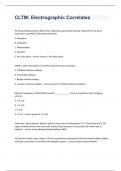
CLTM Electrographic Correlates Question and answers already passed 2024
CLTM Electrographic Correlates Question and answers already passed 2024 This drug initially produces diffuse beta, followed by generalized slowing, followed then by burst-suppression and finally (if titrated further) ECS: A. Diazepam B. Lorazepam C. Phenobarbital D. Propofol E. All of the above - correct answer E. All of the above OIRDA is often associated (i.e. 20-40%) with which type of epilepsy? A. Childhood absence epilepsy B. Frontal lobe epilepsy C. Benign rolandic epilepsy D. Juvenile myoclonic epilepsy. - correct answer A. Childhood absence epilepsy When the frequency of LPDs/PLEDs exceeds _____________, there is a significant risk of ongoing seizures. A. 0.5-1 Hz B. 1.5-2 Hz C. 4-5 Hz D. 5-7 Hz - correct answer B. 1.5-2 Hz Distinctive, high amplitude, diphasic spike or sharp wave in Midtemporal (T3, T4) and Central (C3, C4) regions with prominent slow wave with marked sleep activation is associated with which type of epilepsy? - correct answer Benign Rolandic Epilepsy (BRE)
Geschreven voor
- Instelling
- CLTM
- Vak
- CLTM
Documentinformatie
- Geüpload op
- 19 april 2024
- Aantal pagina's
- 3
- Geschreven in
- 2023/2024
- Type
- Tentamen (uitwerkingen)
- Bevat
- Vragen en antwoorden
Onderwerpen
-
cltm electrographic correlates
-
cltm electrographic correlates question and answer

Ook beschikbaar in voordeelbundel