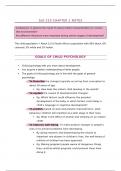
SLK 210 CHAPTER 1 NOTES
Is behaviour in general the result of nature (Inborn characteristics) or nurture
(the environment)?
Are different influences more important during certain stages of development?
The child population = About 1/3 of South Africa’s population with 85% black, 8%
coloured, 5% white and 2% Indian.
GOALS OF CHILD PSYCHOLOGY
Child psychology tells you more about development.
You acquire a better understanding of other people.
The goals of child psychology are in line with the goals of general
psychology:
o To Describe the changes typically occurring from conception to
about 18 years of age.
Eg. How does the unborn child develop in the womb?
o To explain the causes of developmental changes.
Eg. Which factors could influence the prenatal
development of the baby or which factors could delay a
child’s language or cognitive development?
o To predict, based on past and present characteristics, what
behaviour children will manifest at a later stage in their lives.
Eg. What is the effect of alcohol and smoking on an unborn
child?
o To improve well-being: To make positive changes in people’s
lives or to prevent problems from developing.
By doing research and disseminating the results to
important role players in children's lives, the well-being of
millions of children has been approved.
Eg. Making pregnant people aware of dangerous things
they could do whilst pregnant could prevent them from
doing it.
, VIEWS ON CHILDREN: A HISTORICAL OVERVIEW
The common belief of most ancient cultures was that children were the
property of their parents.
o They could treat them however they pleased.
Atrocities towards children were common without having any
consequences.
o Infanticide was often committed especially when the child was
the wrong gender (usually female).
o Twins were also largely victims of infanticide as in some cultural
beliefs they are condemned or rejected.
In the Middle Ages (500-1500 A.D.) children from ages 3 or 4 were
regarded as miniature adults.
o Had to accept certain responsibility.
o These responsibilities started as basic chores and as the child
aged the workload became larger and more difficult.
The 17 th century in Europe changed the attitude of children.
o John Locke (1632-1704) played an important role in the changing
of opinion.
o Tabula Rasa (‘blank slate’) on which experience writes.
This experience then shapes the child’s personality.
17th century Africa had a major atrocity against children which was
slavery.
o During inter-tribal raids, children would be taken and used as
slaves.
They were often trafficked and sold into slavery.
In the 20 th
century, children were still seen as the property of the
parent/guardian.
o The State is regarded as the upper guardian of the child and
determines if their home is fit for them to live in.
, o There was a larger number of adults who were advocating for
children’s rights.
1931: The first conference on African children was held in
Geneva, Switzerland.
Here the well-being of African children was
discussed.
o During the apartheid era, there were large inequalities between
black and white children.
Eg. Schooling was compulsory for white children but not
for black children.
Black children had a much higher mortality rate due to
inferior medical care and infrastructure.
o When the ANC won the elections, they endorsed the United
Nations Convention on the Rights of the Child.
Current day, South Africa has identified the main areas of children
suffering although there is a long way to go.
o The circumstances in which children grow up are not ideal and
result in long-term negative effects.
DEVELOPMENTAL STAGES AND DOMAINS OF
DEVELOPMENT
Advantages of the stage approach:
o It offers an indication of when children are ready for school and then
they should be allowed to make their own decisions on important
matters.
o It provides a signal of whether a child’s development is below or
above the average.
Developmental stages:
1. Prenatal stage: Subdivided into germinal, the embryonic and
the foetal periods.
2. The neonatal stage (First 2-4 weeks of life) and Infancy (2
years) and grouped.
3. Early childhood: Ages 2-6 years old.
4. Middle Childhood: Ages 6 to early puberty (+- 12).
, 5. Adolescence: From puberty to 18 years old.
In psychology, there is a distinction is made between a child and an
adolescent.
o Adolescence is viewed as more than just childhood.
It is a phase of transition from childhood to adulthood and,
therefore has its own identity.
Areas of development:
1. Physical Development: Not only biological factors can influence
the physical development and well-being of a person, but
psychological factors also have a significant effect.
Eg. Physical changes in a child’s body, the brain, motor
development
2. Cognitive Development: Cognitive development refers to how
children come to know and understand their world and includes
perception, learning, memory, thinking, decision-making,
imagination, creativity, language and intelligence.
Cognition refers to how one acquires information about the
world using one’s senses and, how one processes and
interprets such information, and how one, stores, retrieves,
and uses this knowledge to direct one’s behaviour.
3. Personality Development: Personality is the totality of a person’s
enduring pattern of both inherited and acquired psychological,
social, moral, and physical characteristics.
Important aspects of personality include temperament,
personality traits, self-concept, self-esteem, identity, and
emotional experience and expression.
4. Social Development: Involves the development of the individual's
abilities, attitudes, relationships, and behaviour that enable them to
interact with others and to function as members of society.
Refers to the influence of society and significant other
persons on an individual.
Includes aspects such as the development of attachment
between a caregiver and a child, the expansion of a
person’s interpersonal relationships, the modelling of
behaviour and the development of relationships between
the sexes.
Is behaviour in general the result of nature (Inborn characteristics) or nurture
(the environment)?
Are different influences more important during certain stages of development?
The child population = About 1/3 of South Africa’s population with 85% black, 8%
coloured, 5% white and 2% Indian.
GOALS OF CHILD PSYCHOLOGY
Child psychology tells you more about development.
You acquire a better understanding of other people.
The goals of child psychology are in line with the goals of general
psychology:
o To Describe the changes typically occurring from conception to
about 18 years of age.
Eg. How does the unborn child develop in the womb?
o To explain the causes of developmental changes.
Eg. Which factors could influence the prenatal
development of the baby or which factors could delay a
child’s language or cognitive development?
o To predict, based on past and present characteristics, what
behaviour children will manifest at a later stage in their lives.
Eg. What is the effect of alcohol and smoking on an unborn
child?
o To improve well-being: To make positive changes in people’s
lives or to prevent problems from developing.
By doing research and disseminating the results to
important role players in children's lives, the well-being of
millions of children has been approved.
Eg. Making pregnant people aware of dangerous things
they could do whilst pregnant could prevent them from
doing it.
, VIEWS ON CHILDREN: A HISTORICAL OVERVIEW
The common belief of most ancient cultures was that children were the
property of their parents.
o They could treat them however they pleased.
Atrocities towards children were common without having any
consequences.
o Infanticide was often committed especially when the child was
the wrong gender (usually female).
o Twins were also largely victims of infanticide as in some cultural
beliefs they are condemned or rejected.
In the Middle Ages (500-1500 A.D.) children from ages 3 or 4 were
regarded as miniature adults.
o Had to accept certain responsibility.
o These responsibilities started as basic chores and as the child
aged the workload became larger and more difficult.
The 17 th century in Europe changed the attitude of children.
o John Locke (1632-1704) played an important role in the changing
of opinion.
o Tabula Rasa (‘blank slate’) on which experience writes.
This experience then shapes the child’s personality.
17th century Africa had a major atrocity against children which was
slavery.
o During inter-tribal raids, children would be taken and used as
slaves.
They were often trafficked and sold into slavery.
In the 20 th
century, children were still seen as the property of the
parent/guardian.
o The State is regarded as the upper guardian of the child and
determines if their home is fit for them to live in.
, o There was a larger number of adults who were advocating for
children’s rights.
1931: The first conference on African children was held in
Geneva, Switzerland.
Here the well-being of African children was
discussed.
o During the apartheid era, there were large inequalities between
black and white children.
Eg. Schooling was compulsory for white children but not
for black children.
Black children had a much higher mortality rate due to
inferior medical care and infrastructure.
o When the ANC won the elections, they endorsed the United
Nations Convention on the Rights of the Child.
Current day, South Africa has identified the main areas of children
suffering although there is a long way to go.
o The circumstances in which children grow up are not ideal and
result in long-term negative effects.
DEVELOPMENTAL STAGES AND DOMAINS OF
DEVELOPMENT
Advantages of the stage approach:
o It offers an indication of when children are ready for school and then
they should be allowed to make their own decisions on important
matters.
o It provides a signal of whether a child’s development is below or
above the average.
Developmental stages:
1. Prenatal stage: Subdivided into germinal, the embryonic and
the foetal periods.
2. The neonatal stage (First 2-4 weeks of life) and Infancy (2
years) and grouped.
3. Early childhood: Ages 2-6 years old.
4. Middle Childhood: Ages 6 to early puberty (+- 12).
, 5. Adolescence: From puberty to 18 years old.
In psychology, there is a distinction is made between a child and an
adolescent.
o Adolescence is viewed as more than just childhood.
It is a phase of transition from childhood to adulthood and,
therefore has its own identity.
Areas of development:
1. Physical Development: Not only biological factors can influence
the physical development and well-being of a person, but
psychological factors also have a significant effect.
Eg. Physical changes in a child’s body, the brain, motor
development
2. Cognitive Development: Cognitive development refers to how
children come to know and understand their world and includes
perception, learning, memory, thinking, decision-making,
imagination, creativity, language and intelligence.
Cognition refers to how one acquires information about the
world using one’s senses and, how one processes and
interprets such information, and how one, stores, retrieves,
and uses this knowledge to direct one’s behaviour.
3. Personality Development: Personality is the totality of a person’s
enduring pattern of both inherited and acquired psychological,
social, moral, and physical characteristics.
Important aspects of personality include temperament,
personality traits, self-concept, self-esteem, identity, and
emotional experience and expression.
4. Social Development: Involves the development of the individual's
abilities, attitudes, relationships, and behaviour that enable them to
interact with others and to function as members of society.
Refers to the influence of society and significant other
persons on an individual.
Includes aspects such as the development of attachment
between a caregiver and a child, the expansion of a
person’s interpersonal relationships, the modelling of
behaviour and the development of relationships between
the sexes.