SUMMARY OF PAPERS
Brand Management
2017-2018
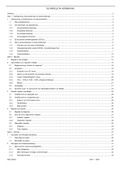
CONCEPTUALISING, MEASURING, AND MANAGING CUSTOMER-BASED BRAND EQUITY (KELLER, 1993) .............. 2
WHAT MAKES A BRAND MANAGER EFFECTIVE? (CIU ET AL., 2012) .............................................................................. 7
REVIVING SLEEPING BEAUTY BRANDS BY REARTICULATING BRAND HERITAGE (DION & GÉRALD MAZZALOVO,
2016) ......................................................................................................................................................................................... 9
THE INDUSTRIAL BRAND PERSONALITY SCALE: BUILDING STRONG BUSINESS-TO-BUSINESS BRANDS (HERBST
& MERZ, 2011) ....................................................................................................................................................................... 11
BRAND ARCHITECTURE STRATEGY AND FIRM VALUE: HOW LEVERAGING, SEPARATING, AND DISTANCING THE
CORPORATE BRAND AFFECTS RISK AND RETURNS (HSU ET AL., 2016) .................................................................... 15
HARMFUL UPWARD LINE EXTENSIONS: CAN THE LAUNCH OF PREMIUM PRODUCTS RESULT IN COMPETITIVE
DISADVANTAGES? (CALDIERARO ET AL., 2015) ............................................................................................................. 19
FROM “WHERE” TO “WHAT”: DISTRIBUTED REPRESENTATIONS OF BRAND ASSOCIATIONS IN THE HUMAN
BRAIN (CHEN ET AL., 2015) ................................................................................................................................................. 22
VALUES ASSOCIATED WITH LUXURY BRAND CONSUMPTION AND THE ROLE OF GENDER (ROUX ET AL.,
2017) ....................................................................................................................................................................................... 27
MULTI-METHOD RESEARCH ON CONSUMER–BRAND ASSOCIATIONS: COMPARING FREE ASSOCIATIONS,
STORYTELLING, AND COLLAGES (KOLL ET AL., 2010)................................................................................................... 31
EXPLORING CONSUMER KNOWLEDGE STRUCTURES USING ASSOCIATIVE NETWORK ANALYSIS (TEICHERT &
SCHÖNTAG, 2010) ................................................................................................................................................................ 35
UNDERSTANDING CUSTOMER EXPERIENCE THROUGHOUT THE CUSTOMER JOURNEY (LEMON & VERHOEF,
2016) ....................................................................................................................................................................................... 41
THE IMPACT OF BRAND RATING DISPERSION ON FIRM VALUE (LUO ET AL, 2013) ................................................... 47
(1)
, Lecture 1
CONCEPTUALISING, MEASURING, AND MANAGING CUSTOMER-
BASED BRAND EQUITY (KELLER, 1993)
Abstract
The author presents a conceptual model of brand equity from the perspective of the individual consumer. Customer-based brand equity is defined as
the differential effect of brand knowledge on consumer response to the marketing of the brand. A brand is said to have positive (negative) customer-
based brand equity when consumers react more (less) favourably to an element of the marketing mix for the brand than they do to the same marketing
mix element when it is attributed to a fictitiously named or unnamed version of the product or service. Brand knowledge is conceptualised according to
an associative network memory model in terms of two components, brand awareness and brand image (i.e., a set of brand associations). Customer-
based brand equity occurs when the consumer is familiar with the brand and holds some favourable, strong, and unique brand associations in memory.
Issues in building, measuring, and managing customer-based brand equity are discussed, as well as areas for future research.
Introduction
Brand equity is defined as the marketing effects uniquely attributable to the brand (i.e., certain outcomes result from the
marketing of a product because of the brand name, and they would not occur if the same product did not have that name).
There are two motivations to study brand equity: (1) financially-based motivations—to estimate the value of a brand, e.g. for
accounting purposes, or mergers/acquisitions—and (2) strategy-based motivations—to improve marketing productivity, both
at strategic as well as at tactical level.
Customer-based brand equity is defined as the effect of brand knowledge on consumer response to the marketing of the
brand. Hence, it involves consumers’ reactions to an element of the marketing mix for the brand in comparison with their
reactions to the same marketing mix element attributed to a fictitiously named or unnamed version the product or service. It
occurs when the customer is familiar with the brand, and holds favourable, strong and unique brand associations in memory.
Conceptualisation of Brand Knowledge
In general, a brand is a name, term, sign, symbol, or design, or combination of them which is intended to identify the goods
and services of one seller, and to differentiate them from those of competitors. In order to understand knowledge about the
brand, basic memory principles can be used (e.g., the associative network memory model, where knowledge is viewed to be
consisting of nodes and links). Nodes are stored information connected by links, which vary in strength. A node can activate
other nodes either when external information is being encoded, or when internal information is retrieved from long-term
memory.
Brand knowledge is conceptualised as consisting of a brand node in memory to which a variety of associations are linked.
The relevant dimensions are (1) brand awareness and (2) brand image.
(1) Brand Awareness:
Brand awareness is related to the strength of the brand node or trace in memory, as reflected by consumers’ ability to identify
the brand under different conditions. In other words: how well do the brand-identities serve their function? It can further be
distinguished into (a) brand recognition—the consumers’ ability to discriminate the brand as having been seen or heard
previously—and (b) brand recall—the ability to retrieve the brand when given the product category. The relative importance
of brand recall vs. brand recognition depends on the extent to which consumers make decisions in the store vs. outside the
store.
There are three major reasons why brand awareness plays an important role in consumer decision making:
1.) Raising brand awareness increases the likelihood that the brand will be part of the consideration set
2.) Brand awareness can affect which brand in the consideration set will be chosen
In low-involvement decision situations, a minimum level of brand awareness may be sufficient for product choice, even in the
absence of a well-formed attitude
3.) It influences the formation and strength of brand associations in the brand image
A prerequisite for brand image creation is that a brand node has been established in memory
(2) Brand Image:
Brand image is defined as perceptions about a brand, i.e. the brand associations held in consumer memory. Brand
associations are the other informational nodes linked to the brand node in memory; in essence, these contain the meaning of
the brand for the consumer. The favourability, strength, and uniqueness of these associations are the dimensions
distinguishing brand knowledge (i.e., they play an important role in determining customers’ responses and, hence, make up
brand equity).
(2)
Brand Management
2017-2018
CONCEPTUALISING, MEASURING, AND MANAGING CUSTOMER-BASED BRAND EQUITY (KELLER, 1993) .............. 2
WHAT MAKES A BRAND MANAGER EFFECTIVE? (CIU ET AL., 2012) .............................................................................. 7
REVIVING SLEEPING BEAUTY BRANDS BY REARTICULATING BRAND HERITAGE (DION & GÉRALD MAZZALOVO,
2016) ......................................................................................................................................................................................... 9
THE INDUSTRIAL BRAND PERSONALITY SCALE: BUILDING STRONG BUSINESS-TO-BUSINESS BRANDS (HERBST
& MERZ, 2011) ....................................................................................................................................................................... 11
BRAND ARCHITECTURE STRATEGY AND FIRM VALUE: HOW LEVERAGING, SEPARATING, AND DISTANCING THE
CORPORATE BRAND AFFECTS RISK AND RETURNS (HSU ET AL., 2016) .................................................................... 15
HARMFUL UPWARD LINE EXTENSIONS: CAN THE LAUNCH OF PREMIUM PRODUCTS RESULT IN COMPETITIVE
DISADVANTAGES? (CALDIERARO ET AL., 2015) ............................................................................................................. 19
FROM “WHERE” TO “WHAT”: DISTRIBUTED REPRESENTATIONS OF BRAND ASSOCIATIONS IN THE HUMAN
BRAIN (CHEN ET AL., 2015) ................................................................................................................................................. 22
VALUES ASSOCIATED WITH LUXURY BRAND CONSUMPTION AND THE ROLE OF GENDER (ROUX ET AL.,
2017) ....................................................................................................................................................................................... 27
MULTI-METHOD RESEARCH ON CONSUMER–BRAND ASSOCIATIONS: COMPARING FREE ASSOCIATIONS,
STORYTELLING, AND COLLAGES (KOLL ET AL., 2010)................................................................................................... 31
EXPLORING CONSUMER KNOWLEDGE STRUCTURES USING ASSOCIATIVE NETWORK ANALYSIS (TEICHERT &
SCHÖNTAG, 2010) ................................................................................................................................................................ 35
UNDERSTANDING CUSTOMER EXPERIENCE THROUGHOUT THE CUSTOMER JOURNEY (LEMON & VERHOEF,
2016) ....................................................................................................................................................................................... 41
THE IMPACT OF BRAND RATING DISPERSION ON FIRM VALUE (LUO ET AL, 2013) ................................................... 47
(1)
, Lecture 1
CONCEPTUALISING, MEASURING, AND MANAGING CUSTOMER-
BASED BRAND EQUITY (KELLER, 1993)
Abstract
The author presents a conceptual model of brand equity from the perspective of the individual consumer. Customer-based brand equity is defined as
the differential effect of brand knowledge on consumer response to the marketing of the brand. A brand is said to have positive (negative) customer-
based brand equity when consumers react more (less) favourably to an element of the marketing mix for the brand than they do to the same marketing
mix element when it is attributed to a fictitiously named or unnamed version of the product or service. Brand knowledge is conceptualised according to
an associative network memory model in terms of two components, brand awareness and brand image (i.e., a set of brand associations). Customer-
based brand equity occurs when the consumer is familiar with the brand and holds some favourable, strong, and unique brand associations in memory.
Issues in building, measuring, and managing customer-based brand equity are discussed, as well as areas for future research.
Introduction
Brand equity is defined as the marketing effects uniquely attributable to the brand (i.e., certain outcomes result from the
marketing of a product because of the brand name, and they would not occur if the same product did not have that name).
There are two motivations to study brand equity: (1) financially-based motivations—to estimate the value of a brand, e.g. for
accounting purposes, or mergers/acquisitions—and (2) strategy-based motivations—to improve marketing productivity, both
at strategic as well as at tactical level.
Customer-based brand equity is defined as the effect of brand knowledge on consumer response to the marketing of the
brand. Hence, it involves consumers’ reactions to an element of the marketing mix for the brand in comparison with their
reactions to the same marketing mix element attributed to a fictitiously named or unnamed version the product or service. It
occurs when the customer is familiar with the brand, and holds favourable, strong and unique brand associations in memory.
Conceptualisation of Brand Knowledge
In general, a brand is a name, term, sign, symbol, or design, or combination of them which is intended to identify the goods
and services of one seller, and to differentiate them from those of competitors. In order to understand knowledge about the
brand, basic memory principles can be used (e.g., the associative network memory model, where knowledge is viewed to be
consisting of nodes and links). Nodes are stored information connected by links, which vary in strength. A node can activate
other nodes either when external information is being encoded, or when internal information is retrieved from long-term
memory.
Brand knowledge is conceptualised as consisting of a brand node in memory to which a variety of associations are linked.
The relevant dimensions are (1) brand awareness and (2) brand image.
(1) Brand Awareness:
Brand awareness is related to the strength of the brand node or trace in memory, as reflected by consumers’ ability to identify
the brand under different conditions. In other words: how well do the brand-identities serve their function? It can further be
distinguished into (a) brand recognition—the consumers’ ability to discriminate the brand as having been seen or heard
previously—and (b) brand recall—the ability to retrieve the brand when given the product category. The relative importance
of brand recall vs. brand recognition depends on the extent to which consumers make decisions in the store vs. outside the
store.
There are three major reasons why brand awareness plays an important role in consumer decision making:
1.) Raising brand awareness increases the likelihood that the brand will be part of the consideration set
2.) Brand awareness can affect which brand in the consideration set will be chosen
In low-involvement decision situations, a minimum level of brand awareness may be sufficient for product choice, even in the
absence of a well-formed attitude
3.) It influences the formation and strength of brand associations in the brand image
A prerequisite for brand image creation is that a brand node has been established in memory
(2) Brand Image:
Brand image is defined as perceptions about a brand, i.e. the brand associations held in consumer memory. Brand
associations are the other informational nodes linked to the brand node in memory; in essence, these contain the meaning of
the brand for the consumer. The favourability, strength, and uniqueness of these associations are the dimensions
distinguishing brand knowledge (i.e., they play an important role in determining customers’ responses and, hence, make up
brand equity).
(2)