AS LEVEL
PHYSICS
,26 Particle and nuclear physics ............................... 3
26.1 Atoms, nuclei and radiation........................................3
Alpha-particle scattering and the nucleus ......................3
Simple model of atom ..................................................5
Nucleons and electrons ................................................7
Discovering radioactivity ............................................11
Radiation from radioactive substances .........................11
Properties of ionizing radiation ...................................12
Discovering neutrinos .................................................14
26.2 Fundamental particles ..............................................16
Fundamental particles? ...............................................16
Forces in nucleus ........................................................18
Fundamental forces ....................................................19
Families of particles ...................................................19
Fundamental families .................................................19
, 26 PARTICLE AN
NUCLEAR PHYSIC
Alpha-particle scattering is studied as evidence for the structure of the atom
Nuclear composition, in terms of nucleons, leads to an appreciation of mas
binding energy. Nuclear processes including radioactive decay, fission and
studied.
An introduction to fundamental particles is included.
2 6 .1 AT O M S , N U C L E I A
RADIATION
LEARNING OUTCOMES
C ANDIDATES SHOULD BE ABLE TO:
A. infer from the results of the α-particle scattering experiment the existenc
size of the nucleus
Alpha-particle scattering and the nucleus
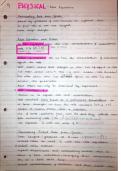
- Early in 20th century, many physicists were investigating recently discover
phenomenon of radioactivity, process whereby unstable nuclei emit radiat
radiation they found consisted of what they call α-particles (alpha-particle
- These α-particles were known to be smaller than atoms, and had relatively
energies; hence they were useful in experiments designed to discover com
atoms.
PHYSICS
,26 Particle and nuclear physics ............................... 3
26.1 Atoms, nuclei and radiation........................................3
Alpha-particle scattering and the nucleus ......................3
Simple model of atom ..................................................5
Nucleons and electrons ................................................7
Discovering radioactivity ............................................11
Radiation from radioactive substances .........................11
Properties of ionizing radiation ...................................12
Discovering neutrinos .................................................14
26.2 Fundamental particles ..............................................16
Fundamental particles? ...............................................16
Forces in nucleus ........................................................18
Fundamental forces ....................................................19
Families of particles ...................................................19
Fundamental families .................................................19
, 26 PARTICLE AN
NUCLEAR PHYSIC
Alpha-particle scattering is studied as evidence for the structure of the atom
Nuclear composition, in terms of nucleons, leads to an appreciation of mas
binding energy. Nuclear processes including radioactive decay, fission and
studied.
An introduction to fundamental particles is included.
2 6 .1 AT O M S , N U C L E I A
RADIATION
LEARNING OUTCOMES
C ANDIDATES SHOULD BE ABLE TO:
A. infer from the results of the α-particle scattering experiment the existenc
size of the nucleus
Alpha-particle scattering and the nucleus
- Early in 20th century, many physicists were investigating recently discover
phenomenon of radioactivity, process whereby unstable nuclei emit radiat
radiation they found consisted of what they call α-particles (alpha-particle
- These α-particles were known to be smaller than atoms, and had relatively
energies; hence they were useful in experiments designed to discover com
atoms.