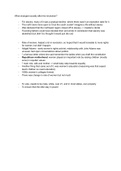
RESEARCHED PHARMACOLOGY TEST BANKS
RESEARCHED PHARMACOLOGY TEST BANKS 1. The nurse is preparing to administer the first dose of hydrochlorothiazide (HydroDIURIL) 50 mg to a patient who has a blood pressure of 160/95 mm Hg. The nurse notes that the patient had a urine output of 200 mL in the past 12 hours. The nurse will perform which action? a. Administer the medication as ordered. b. Encourage the patient to drink more fluids. c. Hold the medication and request an order for serum BUN and creatinine. d. Request an order for serum electrolytes and administer the medication. - CORRECT ANSWER -ANS: C Thiazide diuretics are contraindicated in renal failure. This patient has oliguria and should be evaluated for renal failure prior to administration of the diureticespecially in the absence of known renal failure for this patient. Drinking more fluids will not increase urine output in patients with renal failure. DIF: COGNITIVE LEVEL: Applying (Application) REF: Page 623 TOP: NURSING PROCESS: Assessment/Nursing Intervention MSC: NCLEX: Physiological Integrity: Pharmacological and Parenteral Therapies 2. The nurse is preparing to administer doses of hydrochlorothiazide (HydroDIURIL) and digoxin (Lanoxin) to a patient who has heart failure. The patient reports having blurred vision. The nurse notes a heart rate of 60 beats per minute and a blood pressure of 140/78 mm Hg. Which action will the nurse take? a. Administer the medications and request an order for serum electrolytes. b. Give both medications and evaluate serum blood glucose frequently. c. Hold the digoxin and notify the provider. d. Hold the hydrochlorothiazide and notify the provider. - CORRECT ANSWER -ANS: C When thiazide diuretics are taken with digoxin, patients are at risk of digoxin toxicity because thiazides can cause hypokalemia. The patient has bradycardia and blurred vision, which are both signs of digoxin toxicity. The nurse should hold the digoxin and notify the provider. Serum electrolytes may be ordered, but the digoxin should not be given. DIF: COGNITIVE LEVEL: Applying (Application) REF: Page 623 TOP: NURSING PROCESS: Nursing Intervention/Evaluation MSC: NCLEX: Physiological Integrity: Pathophysiology 3. The nurse is teaching a patient about taking hydrochlorothiazide. Which statement by the patient indicates a need for further teaching? a. I may need extra sodium and calcium while taking this drug. b. I should eat plenty of fruits and vegetables while taking this medication. c. I should take care when rising from a bed or chair when Im on this medication. d. I will take the medication in the morning to minimize certain side effects. - CORRECT ANSWER -ANS: A Patients do not need extra sodium or calcium while taking thiazide diuretics. Thiazide diuretics can lead to hypokalemia, so patients should be counseled to eat fruits and vegetables that are high in potassium. Patients can develop orthostatic hypotension and should be counseled to rise from sitting or lying down slowly. Taking the medication in the morning helps to prevent nocturiainduced insomnia. DIF: COGNITIVE LEVEL: Applying (Application) REF: Page 624 TOP: NURSING PROCESS: Nursing Intervention: Patient Teaching MSC: NCLEX: Physiological Integrity: Pharmacological and Parenteral Therapies 4. The nurse is caring for a patient who is to begin receiving a thiazide diuretic to treat heart failure. When performing a health history on this patient, the nurse will be concerned about a history of which condition?
Geschreven voor
- Instelling
- Pharmacology
- Vak
- Pharmacology
Documentinformatie
- Geüpload op
- 8 januari 2024
- Aantal pagina's
- 20
- Geschreven in
- 2023/2024
- Type
- Tentamen (uitwerkingen)
- Bevat
- Vragen en antwoorden
Onderwerpen
-
researched pharmacology test banks