Difficult conversations
Stone
Introduction
Our fear of consequence is why we find certain conversations so hard to have.
If we try to avoid the problem, we’ll feel taken advantage of and we’ll wonder why we didn’t
stick up for ourselves. But if we confront the problem, things might even get worse.
Delivering a difficult message is like throwing a hand grenade
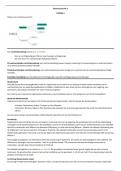
Chapter 1, sort out the three conversations
To make the structure of a difficult conversation visible, we need to understand not only
what is said, but also what is not said we need to understand what the people involved
are thinking and feeling.
Three types of conversations from difficult conversations
1. The “what happened?” conversation
a. Most difficult conversations involve disagreement about what has happened
or what should happen
2. The feelings conversation
a. Every difficult conversation also asks and answers questions about feelings
3. The identity conversation
a. The conversation we each have with ourselves about what this situations
means to us
The “what happened?” conversation
- We make assumptions about:
o Truth:
“I am right and you are wrong”
Difficult conversations are almost never about getting the facts right.
They’re about conflicting perceptions, interpretations and values
They are not about what is true, but about what is important
o Intention:
We make other people’s intentions up
But they are mostly less accurate than we think intentions are
complex
o Blame:
Produces disagreement, denial and little learning
What happened is mostly the result of things both people did or failed
to do
Punishment is rarely relevant or appropriate
, The smart move to do is firstly try to figure out what kept them from
seeing it coming and secondly how to prevent the problem from
happening again
Focussing on blame distracts us from exploring why things went wrong
and how we might correct them going forward
Difficult conversations don’t just involve feelings, they are at their very core about feelings.
They are an integral part of the conflict.
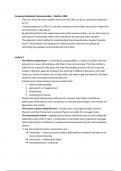
A battle of messages A learning conversation
The “what happened?” Assumption: I know all I Assumption: each of us is
conversation need to know to understand bringing different
what happened information and perceptions
Challenge: the situation is to the table; there’re likely
more complex than either Goal: persuade them I’m to be important things that
person can see right each of us doesn’t know
Goal: explore each other’s
stories: how we understand
the situation and why
Assumption: I know what Assumption: I know what I
they intended intended, and the impact
their actions had on me. I
Goal: let them know what don’t and can’t know what’s
they did was wrong in their head
Goal: share the impact on
me, and find out what they
were thinking. Also find out
what impact I’m having on
them
Assumption: it’s all their Assumption: we have
fault (or it’s all my fault) probably both contributed
to this mess
Goal: get them to admit
blame and take Goal: understand the
responsibility for making contribution system: how
amends our actions interact to
produce this result
The feelings conversation Assumption: feelings are Assumption: feelings are the
irrelevant and wouldn’t be heart of the situation.
Challenge: the situation is helpful to share Feelings are usually
emotionally charged complex. I may have to dig a
Goal: avoid talking about bit to understand my
feelings feelings
Goal: address feelings
, without judgements or
attributions. Acknowledging
feelings before problem-
solving
The identity conversation Assumption: I’m competent Assumption: there may be a
or incompetent, good or lot at stake psychologically
Challenge: the situation bad, lovable or unlovable. for both of us. Each of u sis
threatens our identity There is no in-between complex, neither of us is
perfect
Goal: protect my all-or-
nothing self-image Goal: understand the
identity issues on the line
for each of us. Build a more
complex self-image to
maintain my balance better
The “what happened?” conversation
Chapter 2, stop arguing about who’s right: explore each other’s stories
Explanation for what’s causing the problem
1. We think they are the problem
a. If the other person is stubborn, we assert harder in an attempt to break
through whatever is keeping them from seeing what’s sensible
b. If the other person is naïve, we try to educate them about how life really is
c. If the other person is selfish or manipulative,, we may try to be forthright and
call them on it
d. We persist in the hope that what we say will eventually make a difference
2. They think we are the problem
3. We each make sense in our story of what happened
4. Arguing blocks us from exploring each other’s stories
a. Arguing is not only a result of our failure to see that we and the other person
are in different stories, it’s also part of the cause
5. Arguing without understanding is unpersuasive
a. Arguing inhibits (prevents) change
To get anywhere in a disagreement, we need to understand the other person’s story well
enough to see how their conclusions make sense within it. And we need to help them
understand the story in which our conclusions make sense.
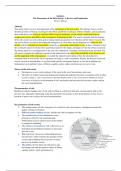
Our stories are built in often unconscious but systematic ways
1. We take in information (we experience the world)
2. We interpret what we see, hear and feel (we give it meaning)
3. We draw conclusions about what’s happening
We all have different stories about the world because we each take in different information
and then interpret this information in our own unique ways
Stone
Introduction
Our fear of consequence is why we find certain conversations so hard to have.
If we try to avoid the problem, we’ll feel taken advantage of and we’ll wonder why we didn’t
stick up for ourselves. But if we confront the problem, things might even get worse.
Delivering a difficult message is like throwing a hand grenade
Chapter 1, sort out the three conversations
To make the structure of a difficult conversation visible, we need to understand not only
what is said, but also what is not said we need to understand what the people involved
are thinking and feeling.
Three types of conversations from difficult conversations
1. The “what happened?” conversation
a. Most difficult conversations involve disagreement about what has happened
or what should happen
2. The feelings conversation
a. Every difficult conversation also asks and answers questions about feelings
3. The identity conversation
a. The conversation we each have with ourselves about what this situations
means to us
The “what happened?” conversation
- We make assumptions about:
o Truth:
“I am right and you are wrong”
Difficult conversations are almost never about getting the facts right.
They’re about conflicting perceptions, interpretations and values
They are not about what is true, but about what is important
o Intention:
We make other people’s intentions up
But they are mostly less accurate than we think intentions are
complex
o Blame:
Produces disagreement, denial and little learning
What happened is mostly the result of things both people did or failed
to do
Punishment is rarely relevant or appropriate
, The smart move to do is firstly try to figure out what kept them from
seeing it coming and secondly how to prevent the problem from
happening again
Focussing on blame distracts us from exploring why things went wrong
and how we might correct them going forward
Difficult conversations don’t just involve feelings, they are at their very core about feelings.
They are an integral part of the conflict.
A battle of messages A learning conversation
The “what happened?” Assumption: I know all I Assumption: each of us is
conversation need to know to understand bringing different
what happened information and perceptions
Challenge: the situation is to the table; there’re likely
more complex than either Goal: persuade them I’m to be important things that
person can see right each of us doesn’t know
Goal: explore each other’s
stories: how we understand
the situation and why
Assumption: I know what Assumption: I know what I
they intended intended, and the impact
their actions had on me. I
Goal: let them know what don’t and can’t know what’s
they did was wrong in their head
Goal: share the impact on
me, and find out what they
were thinking. Also find out
what impact I’m having on
them
Assumption: it’s all their Assumption: we have
fault (or it’s all my fault) probably both contributed
to this mess
Goal: get them to admit
blame and take Goal: understand the
responsibility for making contribution system: how
amends our actions interact to
produce this result
The feelings conversation Assumption: feelings are Assumption: feelings are the
irrelevant and wouldn’t be heart of the situation.
Challenge: the situation is helpful to share Feelings are usually
emotionally charged complex. I may have to dig a
Goal: avoid talking about bit to understand my
feelings feelings
Goal: address feelings
, without judgements or
attributions. Acknowledging
feelings before problem-
solving
The identity conversation Assumption: I’m competent Assumption: there may be a
or incompetent, good or lot at stake psychologically
Challenge: the situation bad, lovable or unlovable. for both of us. Each of u sis
threatens our identity There is no in-between complex, neither of us is
perfect
Goal: protect my all-or-
nothing self-image Goal: understand the
identity issues on the line
for each of us. Build a more
complex self-image to
maintain my balance better
The “what happened?” conversation
Chapter 2, stop arguing about who’s right: explore each other’s stories
Explanation for what’s causing the problem
1. We think they are the problem
a. If the other person is stubborn, we assert harder in an attempt to break
through whatever is keeping them from seeing what’s sensible
b. If the other person is naïve, we try to educate them about how life really is
c. If the other person is selfish or manipulative,, we may try to be forthright and
call them on it
d. We persist in the hope that what we say will eventually make a difference
2. They think we are the problem
3. We each make sense in our story of what happened
4. Arguing blocks us from exploring each other’s stories
a. Arguing is not only a result of our failure to see that we and the other person
are in different stories, it’s also part of the cause
5. Arguing without understanding is unpersuasive
a. Arguing inhibits (prevents) change
To get anywhere in a disagreement, we need to understand the other person’s story well
enough to see how their conclusions make sense within it. And we need to help them
understand the story in which our conclusions make sense.
Our stories are built in often unconscious but systematic ways
1. We take in information (we experience the world)
2. We interpret what we see, hear and feel (we give it meaning)
3. We draw conclusions about what’s happening
We all have different stories about the world because we each take in different information
and then interpret this information in our own unique ways