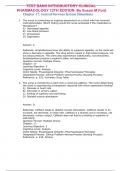
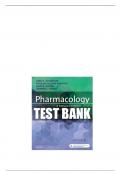
Chapter 17, Central Nervous System Stimulants TEST BANK INTRODUCTORY CLINICAL PHARMACOLOGY 12TH EDITION By Susan M Ford
TEST BANK INTRODUCTORY CLINICAL PHARMACOLOGY 12TH EDITION By Susan M Ford 1. The nurse is conducting an ongoing assessment on a client who has received methylphenidate. Which finding would the nurse anticipate if the medication is therapeutic? A) Decreased appetite B) Low blood pressure C) Drowsiness D) Depression Answer: A Rationale: Amphetamines have the ability to suppress appetite, so the client will show a decrease in appetite. The drug action results in high blood pressure, not low blood pressure. The client also experiences wakefulness, not drowsiness. Amphetamines produce a euphoric state, not depression. Question Format: Multiple Choice Chapter: 17 Learning Objective: 3 Cognitive Level: Analyze Client Needs: Physiological Integrity: Pharmacological Therapies Integrated Process: Clinical Problem-solving Process (Nursing Process) Reference: p. 223, Summary Drug Table 2. The nurse is monitoring a client who is receiving caffeine. The nurse determines the client is experiencing a therapeutic response with which assessment finding? A) Decease in heart rate B) Decrease in urinary output C) Feeling of euphoria and well-being D) Skeletal muscle stimulation Answer: D Rationale: Caffeine leads to skeletal muscle stimulation. Caffeine results in an increase, not decrease, in heart rate. Caffeine is a diuretic and it increases, not decreases, urinary output. Caffeine does not lead to a feeling of euphoria or well-being. Question Format: Multiple Choice Chapter: 17 Learning Objective: 2 Cognitive Level: Analyze Client Needs: Physiological Integrity: Pharmacological Therapies Integrated Process: Clinical Problem-solving Process (Nursing Process) Reference: p. 218, Actions 3. A client who is obese is to start receiving amphetamine as part of the treatment. Which factor should the nurse prioritize in the preadministration assessment? A) Temperature B) Weight C) Blood glucose level D) Arterial blood gas results Answer: B Rationale: Before administering amphetamine as part of obesity treatment, the nurse should record the client's weight. There is no need to record the client's temperature or blood glucose level. Arterial blood gas results are reviewed when a CNS stimulant is prescribed for respiratory depression but not for obesity treatment. Question Format: Multiple Choice Chapter: 17 Learning Objective: 3 Cognitive Level: Apply Client Needs: Physiological Integrity: Pharmacological Therapies Integrated Process: Communication/Documentation Reference: p. 219, Preadministration Assessment 4. A client has been prescribed benzphetamine. The nurse would question administering this drug if which is noted in the client medical record?

Geschreven voor
- Instelling
- Introductory Clinical Pharmacology
- Vak
- Introductory Clinical Pharmacology
Documentinformatie
- Geüpload op
- 28 november 2023
- Aantal pagina's
- 13
- Geschreven in
- 2023/2024
- Type
- Tentamen (uitwerkingen)
- Bevat
- Vragen en antwoorden
Onderwerpen
-
test bank introductory clinical pharmacology
-
12th edition by susan m ford
-
chapter 17 central nervous system stimulants

Ook beschikbaar in voordeelbundel