MS Exam 2.
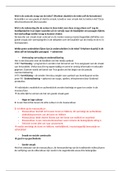
1. What are some reasons you would have an increased heart rate? Pg 693 ✔
• Stimulation of the sympathetic nervous system (positive chronotropy)
• Conduction through the AV node (positive dromotropy)
• The force of myocardial contraction (positive inotropy)
• Dysrhythmias
• Exercise
• Anxiety
• Fever
• Administration of catecholamines(dopamine, aminophylline, dobutamine)
• Hypovolemia
• Shock
• Infection
• Respiratory issues (distress)
• Dyspnea
2. What lab result would tell you your patient is in heart failure? Pg 675 ✔
• BNP(Brain Natriuretic Peptide) >than 100 pg/ml
• The BNP level is a key diagnostic indicator of HF; high levels are a sign of
high cardiac filling pressure and can aid in both the diagnosis and
management of HF
3. What medication would you use for peripheral vascular disease? Pg 837 ✔
• Statins
• Vasodilators(pentoxifylline & cilostazol (Pletal)
• Antiplatelets or blood thinners:aspirin or clopidogrel (Plavix)
4. What are the signs and symptoms for pericarditis? Pg 791 ✔
• May be asymptomatic
• Chest pain- hook up to ECG first, then vitals, then cath lab for diagnostic
• Pain radiating to beneath the clavicle, neck or scapula
• Creaky or scratchy friction rub
• Mild fever
• Increase WBC count
• Anemia
• Elevated ESR or C-reactive protein level
• Nonproductive cough or hiccup
• Dyspnea
• Other S&S of heart failure
5. After a stress test what would you further assess your patient for? ✔
• chest pain, extreme fatigue, a decrease in BP or pulse rate, serious
dysrhythmias, or ST-segment changes on the ECG during the stress test.
,MS Exam 2.
• Facial flushing, chest discomfort, anxiety, ischemia, ↑HR(vitals, ECG),
rest, atropine-dilates. ASSESS-ASSESS
• If chest discomfort persist during stress test: stop test, ECG, vitals
5. Define murmur ✔
• Sounds created by abnormal, turbulent flow of blood in heart
Intensity
A grading system is used to describe the intensity or loudness of a murmur.
Grade 1: Very faint and difficult for the inexperienced clinician
to hear Grade 2: Quiet but readily perceived by the
experienced clinician Grade 3: Moderately loud
Grade 4: Loud and may be associated with a thrill
Grade 5: Very loud; heard when stethoscope is partially off the chest; associated with a thrill
Grade 6: Extremely loud; detected with the stethoscope off the chest; associated with a thrill
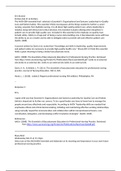
6. Patient teaching before, during, and after, cardiac catheterization. ✔
Nursing responsibilities before cardiac catheterization include:
• Instructing the patient to fast, usually for 8 to 12 hours, before the procedure
• Informing patient that if catheterization is to be performed as an outpatient
procedure, a friend, family member, or other responsible person must transport the
patient home
• Informing the patient about the expected duration of the procedure and advising that
it will involve lying on a hard table for less than 2 hours
• Reassuring the patient that IV medications are given to maintain comfort
• Informing the patient about sensations that will be experienced during the
catheterization. Knowing what to expect can help the patient cope with the
experience. The nurse explains that an occasional pounding sensation (palpitation)
may be felt in the chest because of extra heartbeats that almost always occur,
particularly when the catheter tip touches the endocardium. The patient may be
asked to cough and to breathe deeply, especially after the injection of contrast
agent. Coughing may help disrupt a dysrhythmia and clear the contrast agent from
the arteries. Breathing deeply and holding the breath help lower the diaphragm for
better visualization of heart structures. The injection of a contrast agent into either
side of the heart may produce a flushed feeling throughout the body and a sensation
similar to the need to void, which subsides in 1 minute or less.
• Encouraging the patient to express fears and anxieties. The nurse provides education
and reassurance to reduce apprehension.
, MS Exam 2.
Nursing responsibilities after cardiac catheterization are dictated by hospital policy
and primary provider preferences and may include:
•Observing the catheter access site for bleeding or hematoma formation and
assessing peripheral pulses in the affected extremity (dorsalis pedis and
posterior tibial pulses in the lower extremity, radial pulse in the upper
extremity) every 15 minutes for 1 hour, every 30 minutes for 1 hour, and
hourly for 4 hours or until discharge. BP and heart rate are also assessed
during these same time intervals. However, a recent study did not find an
association between changes in these vital signs and bleeding complications
(Mert, Intepeler, Bengu, et al., 2012). These results suggest that the best
method for discovering bleeding is through frequent nursing assessments of
the catheter access site (Chart 25-5).
•Evaluating temperature, color, and capillary refill of the affected extremity during
these same time intervals. The patient is assessed for affected extremity pain,
numbness, or tingling sensations that may indicate arterial insufficiency. The
best technique to use is to compare the examination findings between the
affected and unaffected extremities. Any changes are reported promptly.
•Screening carefully for dysrhythmias by observing the cardiac monitor or by
assessing the apical and peripheral pulses for changes in rate and rhythm. A
vasovagal reaction, consisting of bradycardia, hypotension, and nausea, can be
precipitated by a distended bladder or by discomfort from manual pressure that
is applied during removal of an arterial or venous catheter. The vasovagal
response is reversed by promptly elevating the lower extremities above the level
of the heart, infusing a bolus of IV fluid, and administering IV atropine to treat
the bradycardia.
•Maintaining bed rest for 2 to 6 hours after the procedure. If manual pressure or a
mechanical device was used during a femoral artery approach, the patient
remains on bed rest for up to 6 hours with the affected leg straight and the head
of the bed elevated no greater than 30 degrees (Weigand, 2011). For comfort,
the patient may be turned from side to side with the affected extremity straight.
If a percutaneous vascular closure device or patch was deployed, the nurse
checks local nursing care standards and anticipates that the patient will have
fewer activity restrictions. The patient may be permitted to ambulate within 2
hours (Hammel, 2009). If the radial artery was accessed, the patient remains on
bed rest for 2 to 3 hours or until the effects of sedation have dissipated. The
patient may sit up in bed. A hemostasis band or pressure dressing may be
applied over the catheter access site. Analgesic medication is administered as
prescribed for discomfort. Patients are instructed to avoid repetitive movement
of the affected extremity for 24 to 48 hours (Durham, 2012). Patients are
instructed to avoid sleeping on the affected arm for 24 hours.
•Instructing the patient to report chest pain and bleeding or sudden discomfort
from the catheter insertion sites promptly
•Monitoring the patient for contrast agent–induced nephropathy by observing for
elevations in serum creatinine levels. Oral and IV hydration is used to increase
urinary output and flush the contrast agent from the urinary tract; accurate
1. What are some reasons you would have an increased heart rate? Pg 693 ✔
• Stimulation of the sympathetic nervous system (positive chronotropy)
• Conduction through the AV node (positive dromotropy)
• The force of myocardial contraction (positive inotropy)
• Dysrhythmias
• Exercise
• Anxiety
• Fever
• Administration of catecholamines(dopamine, aminophylline, dobutamine)
• Hypovolemia
• Shock
• Infection
• Respiratory issues (distress)
• Dyspnea
2. What lab result would tell you your patient is in heart failure? Pg 675 ✔
• BNP(Brain Natriuretic Peptide) >than 100 pg/ml
• The BNP level is a key diagnostic indicator of HF; high levels are a sign of
high cardiac filling pressure and can aid in both the diagnosis and
management of HF
3. What medication would you use for peripheral vascular disease? Pg 837 ✔
• Statins
• Vasodilators(pentoxifylline & cilostazol (Pletal)
• Antiplatelets or blood thinners:aspirin or clopidogrel (Plavix)
4. What are the signs and symptoms for pericarditis? Pg 791 ✔
• May be asymptomatic
• Chest pain- hook up to ECG first, then vitals, then cath lab for diagnostic
• Pain radiating to beneath the clavicle, neck or scapula
• Creaky or scratchy friction rub
• Mild fever
• Increase WBC count
• Anemia
• Elevated ESR or C-reactive protein level
• Nonproductive cough or hiccup
• Dyspnea
• Other S&S of heart failure
5. After a stress test what would you further assess your patient for? ✔
• chest pain, extreme fatigue, a decrease in BP or pulse rate, serious
dysrhythmias, or ST-segment changes on the ECG during the stress test.
,MS Exam 2.
• Facial flushing, chest discomfort, anxiety, ischemia, ↑HR(vitals, ECG),
rest, atropine-dilates. ASSESS-ASSESS
• If chest discomfort persist during stress test: stop test, ECG, vitals
5. Define murmur ✔
• Sounds created by abnormal, turbulent flow of blood in heart
Intensity
A grading system is used to describe the intensity or loudness of a murmur.
Grade 1: Very faint and difficult for the inexperienced clinician
to hear Grade 2: Quiet but readily perceived by the
experienced clinician Grade 3: Moderately loud
Grade 4: Loud and may be associated with a thrill
Grade 5: Very loud; heard when stethoscope is partially off the chest; associated with a thrill
Grade 6: Extremely loud; detected with the stethoscope off the chest; associated with a thrill
6. Patient teaching before, during, and after, cardiac catheterization. ✔
Nursing responsibilities before cardiac catheterization include:
• Instructing the patient to fast, usually for 8 to 12 hours, before the procedure
• Informing patient that if catheterization is to be performed as an outpatient
procedure, a friend, family member, or other responsible person must transport the
patient home
• Informing the patient about the expected duration of the procedure and advising that
it will involve lying on a hard table for less than 2 hours
• Reassuring the patient that IV medications are given to maintain comfort
• Informing the patient about sensations that will be experienced during the
catheterization. Knowing what to expect can help the patient cope with the
experience. The nurse explains that an occasional pounding sensation (palpitation)
may be felt in the chest because of extra heartbeats that almost always occur,
particularly when the catheter tip touches the endocardium. The patient may be
asked to cough and to breathe deeply, especially after the injection of contrast
agent. Coughing may help disrupt a dysrhythmia and clear the contrast agent from
the arteries. Breathing deeply and holding the breath help lower the diaphragm for
better visualization of heart structures. The injection of a contrast agent into either
side of the heart may produce a flushed feeling throughout the body and a sensation
similar to the need to void, which subsides in 1 minute or less.
• Encouraging the patient to express fears and anxieties. The nurse provides education
and reassurance to reduce apprehension.
, MS Exam 2.
Nursing responsibilities after cardiac catheterization are dictated by hospital policy
and primary provider preferences and may include:
•Observing the catheter access site for bleeding or hematoma formation and
assessing peripheral pulses in the affected extremity (dorsalis pedis and
posterior tibial pulses in the lower extremity, radial pulse in the upper
extremity) every 15 minutes for 1 hour, every 30 minutes for 1 hour, and
hourly for 4 hours or until discharge. BP and heart rate are also assessed
during these same time intervals. However, a recent study did not find an
association between changes in these vital signs and bleeding complications
(Mert, Intepeler, Bengu, et al., 2012). These results suggest that the best
method for discovering bleeding is through frequent nursing assessments of
the catheter access site (Chart 25-5).
•Evaluating temperature, color, and capillary refill of the affected extremity during
these same time intervals. The patient is assessed for affected extremity pain,
numbness, or tingling sensations that may indicate arterial insufficiency. The
best technique to use is to compare the examination findings between the
affected and unaffected extremities. Any changes are reported promptly.
•Screening carefully for dysrhythmias by observing the cardiac monitor or by
assessing the apical and peripheral pulses for changes in rate and rhythm. A
vasovagal reaction, consisting of bradycardia, hypotension, and nausea, can be
precipitated by a distended bladder or by discomfort from manual pressure that
is applied during removal of an arterial or venous catheter. The vasovagal
response is reversed by promptly elevating the lower extremities above the level
of the heart, infusing a bolus of IV fluid, and administering IV atropine to treat
the bradycardia.
•Maintaining bed rest for 2 to 6 hours after the procedure. If manual pressure or a
mechanical device was used during a femoral artery approach, the patient
remains on bed rest for up to 6 hours with the affected leg straight and the head
of the bed elevated no greater than 30 degrees (Weigand, 2011). For comfort,
the patient may be turned from side to side with the affected extremity straight.
If a percutaneous vascular closure device or patch was deployed, the nurse
checks local nursing care standards and anticipates that the patient will have
fewer activity restrictions. The patient may be permitted to ambulate within 2
hours (Hammel, 2009). If the radial artery was accessed, the patient remains on
bed rest for 2 to 3 hours or until the effects of sedation have dissipated. The
patient may sit up in bed. A hemostasis band or pressure dressing may be
applied over the catheter access site. Analgesic medication is administered as
prescribed for discomfort. Patients are instructed to avoid repetitive movement
of the affected extremity for 24 to 48 hours (Durham, 2012). Patients are
instructed to avoid sleeping on the affected arm for 24 hours.
•Instructing the patient to report chest pain and bleeding or sudden discomfort
from the catheter insertion sites promptly
•Monitoring the patient for contrast agent–induced nephropathy by observing for
elevations in serum creatinine levels. Oral and IV hydration is used to increase
urinary output and flush the contrast agent from the urinary tract; accurate