HR IIA by ProfessorBurgerQueen
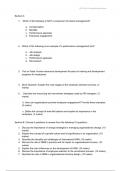
Section A:
1. Which of the following is NOT a component of reward management?
a. Compensation
b. Benefits
c. Performance appraisal
d. Employee engagement
2. Which of the following is an example of a performance management tool?
a. Job analysis
b. Job design
c. Performance appraisal
d. Recruitment
3. True or False: Human resources development focuses on training and development
programs for employees.
4. Short Question: Explain the main stages of the employee selection process. (3
marks)
5. . Describe two resourcing and recruitment strategies used by HR managers. (3
marks)
b. How can organisations promote employee engagement? Provide three examples.
(3 marks)
c. Define the concept of work-life balance and explain its importance in the
workplace. (3 marks)
Section B: Choose 5 questions to answer from the following 10 questions:
1. Discuss the importance of change strategies in managing organisational change. (10
marks)
2. Explain the concept of a growth culture and its significance in an organisation. (10
marks)
3. Describe the benefits and challenges of international HRM. (10 marks)
4. Discuss the role of HRM in practice and its impact on organisational success. (10
marks)
5. Explain the main influences on the development of HRM. (10 marks)
6. Discuss the importance of employee selection in the recruitment process. (10 marks)
7. Describe the role of HRM in organisational structure design. (10 marks)
Section A:
1. Which of the following is NOT a component of reward management?
a. Compensation
b. Benefits
c. Performance appraisal
d. Employee engagement
2. Which of the following is an example of a performance management tool?
a. Job analysis
b. Job design
c. Performance appraisal
d. Recruitment
3. True or False: Human resources development focuses on training and development
programs for employees.
4. Short Question: Explain the main stages of the employee selection process. (3
marks)
5. . Describe two resourcing and recruitment strategies used by HR managers. (3
marks)
b. How can organisations promote employee engagement? Provide three examples.
(3 marks)
c. Define the concept of work-life balance and explain its importance in the
workplace. (3 marks)
Section B: Choose 5 questions to answer from the following 10 questions:
1. Discuss the importance of change strategies in managing organisational change. (10
marks)
2. Explain the concept of a growth culture and its significance in an organisation. (10
marks)
3. Describe the benefits and challenges of international HRM. (10 marks)
4. Discuss the role of HRM in practice and its impact on organisational success. (10
marks)
5. Explain the main influences on the development of HRM. (10 marks)
6. Discuss the importance of employee selection in the recruitment process. (10 marks)
7. Describe the role of HRM in organisational structure design. (10 marks)