Information Management
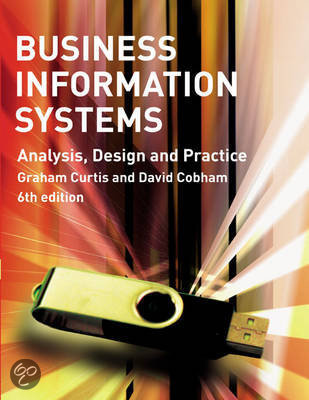
Book: Business Information Systems
Vu 2016/2017, Dominique van Schagen.
Chapter 1
- three levels of managerial decision taking:
1. strategic planning
• senior management
• broad issues concerning an organization’s development over the long term, e.g. what
markets to move into
• long-term horizon (much of the information the senior management needs will relate to the
future)
2. tactical planning and control
• middle management
• resource allocation within budget
• half future, half present
3. operational planning and control
• day-to-day operations
• hiring and firing personnel
• highly detailed, certain, immediately relevant
- structured and non-structured decisions:
• structured decisions:
• are governed by clear rules.
• can be left to low-grade personnel or even be automated
• have clearly specifiable and unambiguous information
• have a straightforward process of arriving at the decision
• unstructured decisions:
• have unclarity about what information is needed and how the decision should be reached
• use rules of thumb (heuristics) and ‘experience’
• semi-structured decisions:
• are where any of the three intelligence, design and choice elements are structured and some
are not
• lie in between of structured and non-structured
,- historical development of management information systems:
- in the last two decades:
• computers are used more by business organizations to carry out routine data processing, due
to the increased power of computing technology and its increasing cost
• management changed its thinking by accepting fast, effective provision of targeted info for
management planning and control
- this led to increased growth in management information systems, because of:
• cost: marginal costs are lower because the information is stored forever once it is stored
once.
• speed: it is faster because it is stored. So it may only take minutes for even writing a
complex report.
• interaction: users can request information and data online, which allows end users to be
selective about information from the MIS.
• flexibility: there will be new problems. However, a modern MIS will have in-built
flexibility that enables the manager to decide what information is needed.
- alternative terminology:
• describes ‘management information systems’ not as a designation for systems that assists
managers of a business in making decisions, but as a subset of this.
• highest-level: executive information systems (EIS)
- used by senior management to assist in strategic decision making
- typical examples: medium- to long-term forecasting and budgeting
• middle layer, tactical planning, is divided into two categories:
1. facilitating routine summarizing and reporting systems (here the MIS) —> short- to
medium-term forecasting and budgeting in inventory control
2. systems that allow ad hoc queries and analytical reporting, decision support systems
(DSS) —> analysis of sales, pricing and costing, scheduling production
• lowest layer: transaction processing systems (TPS)
- includes systems such as payroll, order tracking, machine control and employee
records
• complete set of layers:
• computer-based information systems,
• management support systems or
• business information support systems
• in this book: management information systems.
- database management system: where all the information is stored
- data is controlled, consistent and available to provide information
- information from a database can go to:
- models
• used to model predicted outcomes
• decision support system
- applications software
• e.g. global ageing of debt
- direct enquiry
• e.g. request names and balances of all customers with an unpaid balance greater than a given
figure.
- management information systems and decisions
• MIS aid the decision making by providing relevant information
• current data used for predictive purposes (using a model to generate future estimates from
existing data)
• model is used to:
• test the impact of altering the values of parameters
• analyse the effects of alternative plans
, • test the sensitivity of predictions to change
- special attributes of information when designing an MIS:
• Relevance: information is relevant to a decision if its content potentially affects the decision
taken.
• Accuracy: information should be as accurate as required.
• Timeliness: information must be presented within the time-span within which it is useful.
• Target: information must be directed to the correct recipient.
• Format: information should be presented in an understandable format.
• Interactive nature: information sometimes should be interactive in order to make a correct
decision.
• Control: information should be secure.
- approaches to MIS design
• by-product approach:
- developing a computerized system to deal with all the paperwork that was done manually
before
- only passing attention is paid to the information needs of management
- little or no analysis of requirements is undertaken
• null approach:
- reaction against the shortcomings of the by-product approach
- lays little emphasis on the production of formal information for management by means of
an MIS
- sees the activities undertaken by top-management as dynamic and ever-changing
• key variable approach:
- assumes that certain attributes of an organization are crucial for assessing its performance,
taking decisions and planning
- key variables are identified and the MIS is designed to provide reports on the values of
them
- variation to straight reporting: exception reporting.
• variable is only reported if it lies outside a ‘normal’ range
• total study:
- compares the information requirement of management and the information supply of the
MIS.
- IBM business system planning (BSP) does this by relying on the results of interviewing a
large number of managers to determine their key decisions, objectives and information
needs.
- gaining overall understanding of the information needs and getting to know where it is
currently going wrong
- expensive on manpower
- vast amount of data collected are not easy to analyse
- unacceptable biases may occur
• critical success factor approach (CSF):
- organization has certain goals, specific factors are crucial in achieving them
- main applicability in the design of systems for the provision of control information
- less effective at designing MIS for planning
- information- rather than data-led
Book: Business Information Systems
Vu 2016/2017, Dominique van Schagen.
Chapter 1
- three levels of managerial decision taking:
1. strategic planning
• senior management
• broad issues concerning an organization’s development over the long term, e.g. what
markets to move into
• long-term horizon (much of the information the senior management needs will relate to the
future)
2. tactical planning and control
• middle management
• resource allocation within budget
• half future, half present
3. operational planning and control
• day-to-day operations
• hiring and firing personnel
• highly detailed, certain, immediately relevant
- structured and non-structured decisions:
• structured decisions:
• are governed by clear rules.
• can be left to low-grade personnel or even be automated
• have clearly specifiable and unambiguous information
• have a straightforward process of arriving at the decision
• unstructured decisions:
• have unclarity about what information is needed and how the decision should be reached
• use rules of thumb (heuristics) and ‘experience’
• semi-structured decisions:
• are where any of the three intelligence, design and choice elements are structured and some
are not
• lie in between of structured and non-structured
,- historical development of management information systems:
- in the last two decades:
• computers are used more by business organizations to carry out routine data processing, due
to the increased power of computing technology and its increasing cost
• management changed its thinking by accepting fast, effective provision of targeted info for
management planning and control
- this led to increased growth in management information systems, because of:
• cost: marginal costs are lower because the information is stored forever once it is stored
once.
• speed: it is faster because it is stored. So it may only take minutes for even writing a
complex report.
• interaction: users can request information and data online, which allows end users to be
selective about information from the MIS.
• flexibility: there will be new problems. However, a modern MIS will have in-built
flexibility that enables the manager to decide what information is needed.
- alternative terminology:
• describes ‘management information systems’ not as a designation for systems that assists
managers of a business in making decisions, but as a subset of this.
• highest-level: executive information systems (EIS)
- used by senior management to assist in strategic decision making
- typical examples: medium- to long-term forecasting and budgeting
• middle layer, tactical planning, is divided into two categories:
1. facilitating routine summarizing and reporting systems (here the MIS) —> short- to
medium-term forecasting and budgeting in inventory control
2. systems that allow ad hoc queries and analytical reporting, decision support systems
(DSS) —> analysis of sales, pricing and costing, scheduling production
• lowest layer: transaction processing systems (TPS)
- includes systems such as payroll, order tracking, machine control and employee
records
• complete set of layers:
• computer-based information systems,
• management support systems or
• business information support systems
• in this book: management information systems.
- database management system: where all the information is stored
- data is controlled, consistent and available to provide information
- information from a database can go to:
- models
• used to model predicted outcomes
• decision support system
- applications software
• e.g. global ageing of debt
- direct enquiry
• e.g. request names and balances of all customers with an unpaid balance greater than a given
figure.
- management information systems and decisions
• MIS aid the decision making by providing relevant information
• current data used for predictive purposes (using a model to generate future estimates from
existing data)
• model is used to:
• test the impact of altering the values of parameters
• analyse the effects of alternative plans
, • test the sensitivity of predictions to change
- special attributes of information when designing an MIS:
• Relevance: information is relevant to a decision if its content potentially affects the decision
taken.
• Accuracy: information should be as accurate as required.
• Timeliness: information must be presented within the time-span within which it is useful.
• Target: information must be directed to the correct recipient.
• Format: information should be presented in an understandable format.
• Interactive nature: information sometimes should be interactive in order to make a correct
decision.
• Control: information should be secure.
- approaches to MIS design
• by-product approach:
- developing a computerized system to deal with all the paperwork that was done manually
before
- only passing attention is paid to the information needs of management
- little or no analysis of requirements is undertaken
• null approach:
- reaction against the shortcomings of the by-product approach
- lays little emphasis on the production of formal information for management by means of
an MIS
- sees the activities undertaken by top-management as dynamic and ever-changing
• key variable approach:
- assumes that certain attributes of an organization are crucial for assessing its performance,
taking decisions and planning
- key variables are identified and the MIS is designed to provide reports on the values of
them
- variation to straight reporting: exception reporting.
• variable is only reported if it lies outside a ‘normal’ range
• total study:
- compares the information requirement of management and the information supply of the
MIS.
- IBM business system planning (BSP) does this by relying on the results of interviewing a
large number of managers to determine their key decisions, objectives and information
needs.
- gaining overall understanding of the information needs and getting to know where it is
currently going wrong
- expensive on manpower
- vast amount of data collected are not easy to analyse
- unacceptable biases may occur
• critical success factor approach (CSF):
- organization has certain goals, specific factors are crucial in achieving them
- main applicability in the design of systems for the provision of control information
- less effective at designing MIS for planning
- information- rather than data-led