Developmental Theories
Lecture 1 Modernization
Theory in social science:
Theory is a means, not an objective
Theories tries to help us understand and explain reality by simplifying it
Validity limited can’t predict everyting
Theories are Human interpretations/representations of reality knowledge is socially-
constructed: context (e.g. time and place) influences theory formulation
Construction of a discourse: concepts and language used to frame our understanding of
reality Helps us make sense of reality, however can also lead to biases for certain
perspectives on the world
Nearly all theories have something to contribute Relevance is time and place specific
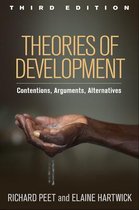
Development theories can be categorized in different ways, e.g. Peet & Hartwick:
‘Conventional theories’: (neo-)Classical economics, globalization, neoliberalism,
modernization theories
‘Nonconventional/critical theories’:Marxist, dependency, decoloniality, Poststructuralism,
Feminist theories
Lectures use somewhat different perspective:
Neoclassical vs critical theories and Structural versus actor-oriented theories
Grand umbrella theories: trying to ‘explain all development’ (4 ‘Paradigms’): Modernization,
Dependency, Post-structuralism, Sustainability (not really a paradigm as it can be done under the
other paradigms)
Meso-theories: Partial explanations (does not explain all development) theories about issues in
development not of development more modest thinking
The concept of ‘Development’ emerged in a historical context and has evolved over time:
Roots in religious beliefs and values: can be linked with modernization theory which suggest
that societies progress through fixed stages of development (as people do from birth)
Enlightenment (18th Century Europe) Makeability : A better life and society can be made
Strong belief in technological, scientific and economic progress ( positivism)
Foundations of modern empirical sciences
Industrial Revolution had a huge role in shaping the concept of development significant
shift from agrarian economies to industrial capitalism which is profit-driven and focused on
increasing capital accumulation.
Dualism/ thinking in binaries: categorizing and understanding the world based on sharp distinctions
It emerged during the colonial era when Western colonial powers interacted with indigenous
peoples
This thinking involves into dividing concepts into 2 opposing system models (which
emphasizes their differences) e.g. traditional versus modern, formal versus informal,
This lead to the stereotyping of groups and oversimplifying reality.
dualism reflects the clash between two societies, with one often imposing its perspective and
values onto the other still influences how we perceive and categorize the world.
Rudyard Kipling: The White Man’s Burden
Sound evil, but you must see in the context of time
Europeans were superior to people from elsewhere because their natural environment made
them that way serves to legitimate European imperialism
Economic dualism in Modernization Theory:
, Boeke: said that the dualist nature of society and economy stands in the way of development
the coexistence of traditional and moderns sectors hindered each other’s development
Lewis (1950s): Transforming resources (e.g. people, capital ) from traditional sector to
modern high productive sector is positive for development
growth of the modern sector will reduce the size of the traditional sector
Marked the start of the first development paradigm: Modernization
Modernization theory: views ‘development’ like a flower: A process that evolves along a fixed,
predetermined path. It can die throughout the way, but the destination is known (like the west).
“All societies move from primitive to advanced stages of development”: development a
universal phenomenon
The means are also known: follow the same path as we did and you will get there:
development as a unilinear process
Popular especially in 1950-1960s Post-WWII ‘recovery period’ and ‘decolonization’: a
fresh start without obstacles (‘optimism’)
Has remained influential ever since, although seriously challenged
Ideas resurface in a new package, e.g. in context of globalization and ‘technofixes’: use
modern technology and investments to fix problems and grow.
The modernization diagnosis of development:
Looks at a country individually
Under-developed countries are just lagging behind, usually explained in terms of internal
barriers development is a matter of removing barriers, e.g. lack of capital, knowledge,
structures and institutions This often requires external stimuli
Capitalism as the driver of modernization: market mechanism (strive for profit+ technological
advance)
Emphasis on role of investment and industrialization (increasing productivity)
Modernization was the West’s response to socialism. In which the socialist said: let us use
our resources and labor to meet the most basic needs of all our people the West replied
with the modernization theory which said that there is a process leading from tradition to
modernity and if you would follow that path you can have everything we (the West) have
let multinational corporations into your country and then the income etc will ‘trickle down’
to the rest of the countrygoal: high mass consumption (like the west).
Modernization was forerunner of neoliberalism and is kind of similar to ‘Developmentalism’
‘Development’ and ‘modernization’ cannot be viewed separate from a belief in progress
(makeability)
Patterns of modernization: Modernization was seen as a spatial diffusion process of innovation,
starting at specific contact points with the west (port cities or colonial administration centers) and
then spreading down to other (smaller) areas along transport routes.
Especially when induced by external stimuli, growth/ modernization is often polarized:
focused on the export sector, the main urban centers (more concentrations of modern
activities and investments in specific areas)
Trickle down idea: over time, benefits will spread to other areas and groups is expected
when there are sufficient linkages connecting poor industries/ groups to modern industries/
groups
Polarization reversal: increasing growth and concentration in modern cores causes a shift
outward, spreading effects towards the periphery (overcoming congestion in core)
Evolutionary theory: Development(even in nature) is not a unilinear process but a stochastic process
, Social systems are even more complex - ‘free will’ therefore societies cannot be expected
to follow a fixed path
Problems of modernization theories:
It does not view societies in their context (e.g. historical background and ‘starting’ position)
Narrow view of development as an essentially technical issue which just can be made and
follows a predetermined path
Eurocentrism: The West as the norm for the rest ‘just do as we did’
Modernization theory – legacy, recurrence:
Largely critized in academia but common in politics and policy (not just in Western countries)
Globalization is modernization reformulated on a global scale in which western ideas are
transported to other parts of the world without looking at the context of the countries
(culture, history etc)
In development cooperation: emphasis to the role of the private sector focus on
economic growth through project-based approach and with little attention for social
problems of development
High Modernism: Belief in unilinear progress through the application of science and technology.
Central control and planning may actually undermine development objectives
James Scott criticizes this approach In "Seeing like a state,": highlighted how states aim to
make everything easily understandable and controllable (legible), often by using statistics
and making things measurable often disregards the value of local knowledge "metis"
Lecture 2 Political economy approaches: Dependency
Lecture 1 Modernization
Theory in social science:
Theory is a means, not an objective
Theories tries to help us understand and explain reality by simplifying it
Validity limited can’t predict everyting
Theories are Human interpretations/representations of reality knowledge is socially-
constructed: context (e.g. time and place) influences theory formulation
Construction of a discourse: concepts and language used to frame our understanding of
reality Helps us make sense of reality, however can also lead to biases for certain
perspectives on the world
Nearly all theories have something to contribute Relevance is time and place specific
Development theories can be categorized in different ways, e.g. Peet & Hartwick:
‘Conventional theories’: (neo-)Classical economics, globalization, neoliberalism,
modernization theories
‘Nonconventional/critical theories’:Marxist, dependency, decoloniality, Poststructuralism,
Feminist theories
Lectures use somewhat different perspective:
Neoclassical vs critical theories and Structural versus actor-oriented theories
Grand umbrella theories: trying to ‘explain all development’ (4 ‘Paradigms’): Modernization,
Dependency, Post-structuralism, Sustainability (not really a paradigm as it can be done under the
other paradigms)
Meso-theories: Partial explanations (does not explain all development) theories about issues in
development not of development more modest thinking
The concept of ‘Development’ emerged in a historical context and has evolved over time:
Roots in religious beliefs and values: can be linked with modernization theory which suggest
that societies progress through fixed stages of development (as people do from birth)
Enlightenment (18th Century Europe) Makeability : A better life and society can be made
Strong belief in technological, scientific and economic progress ( positivism)
Foundations of modern empirical sciences
Industrial Revolution had a huge role in shaping the concept of development significant
shift from agrarian economies to industrial capitalism which is profit-driven and focused on
increasing capital accumulation.
Dualism/ thinking in binaries: categorizing and understanding the world based on sharp distinctions
It emerged during the colonial era when Western colonial powers interacted with indigenous
peoples
This thinking involves into dividing concepts into 2 opposing system models (which
emphasizes their differences) e.g. traditional versus modern, formal versus informal,
This lead to the stereotyping of groups and oversimplifying reality.
dualism reflects the clash between two societies, with one often imposing its perspective and
values onto the other still influences how we perceive and categorize the world.
Rudyard Kipling: The White Man’s Burden
Sound evil, but you must see in the context of time
Europeans were superior to people from elsewhere because their natural environment made
them that way serves to legitimate European imperialism
Economic dualism in Modernization Theory:
, Boeke: said that the dualist nature of society and economy stands in the way of development
the coexistence of traditional and moderns sectors hindered each other’s development
Lewis (1950s): Transforming resources (e.g. people, capital ) from traditional sector to
modern high productive sector is positive for development
growth of the modern sector will reduce the size of the traditional sector
Marked the start of the first development paradigm: Modernization
Modernization theory: views ‘development’ like a flower: A process that evolves along a fixed,
predetermined path. It can die throughout the way, but the destination is known (like the west).
“All societies move from primitive to advanced stages of development”: development a
universal phenomenon
The means are also known: follow the same path as we did and you will get there:
development as a unilinear process
Popular especially in 1950-1960s Post-WWII ‘recovery period’ and ‘decolonization’: a
fresh start without obstacles (‘optimism’)
Has remained influential ever since, although seriously challenged
Ideas resurface in a new package, e.g. in context of globalization and ‘technofixes’: use
modern technology and investments to fix problems and grow.
The modernization diagnosis of development:
Looks at a country individually
Under-developed countries are just lagging behind, usually explained in terms of internal
barriers development is a matter of removing barriers, e.g. lack of capital, knowledge,
structures and institutions This often requires external stimuli
Capitalism as the driver of modernization: market mechanism (strive for profit+ technological
advance)
Emphasis on role of investment and industrialization (increasing productivity)
Modernization was the West’s response to socialism. In which the socialist said: let us use
our resources and labor to meet the most basic needs of all our people the West replied
with the modernization theory which said that there is a process leading from tradition to
modernity and if you would follow that path you can have everything we (the West) have
let multinational corporations into your country and then the income etc will ‘trickle down’
to the rest of the countrygoal: high mass consumption (like the west).
Modernization was forerunner of neoliberalism and is kind of similar to ‘Developmentalism’
‘Development’ and ‘modernization’ cannot be viewed separate from a belief in progress
(makeability)
Patterns of modernization: Modernization was seen as a spatial diffusion process of innovation,
starting at specific contact points with the west (port cities or colonial administration centers) and
then spreading down to other (smaller) areas along transport routes.
Especially when induced by external stimuli, growth/ modernization is often polarized:
focused on the export sector, the main urban centers (more concentrations of modern
activities and investments in specific areas)
Trickle down idea: over time, benefits will spread to other areas and groups is expected
when there are sufficient linkages connecting poor industries/ groups to modern industries/
groups
Polarization reversal: increasing growth and concentration in modern cores causes a shift
outward, spreading effects towards the periphery (overcoming congestion in core)
Evolutionary theory: Development(even in nature) is not a unilinear process but a stochastic process
, Social systems are even more complex - ‘free will’ therefore societies cannot be expected
to follow a fixed path
Problems of modernization theories:
It does not view societies in their context (e.g. historical background and ‘starting’ position)
Narrow view of development as an essentially technical issue which just can be made and
follows a predetermined path
Eurocentrism: The West as the norm for the rest ‘just do as we did’
Modernization theory – legacy, recurrence:
Largely critized in academia but common in politics and policy (not just in Western countries)
Globalization is modernization reformulated on a global scale in which western ideas are
transported to other parts of the world without looking at the context of the countries
(culture, history etc)
In development cooperation: emphasis to the role of the private sector focus on
economic growth through project-based approach and with little attention for social
problems of development
High Modernism: Belief in unilinear progress through the application of science and technology.
Central control and planning may actually undermine development objectives
James Scott criticizes this approach In "Seeing like a state,": highlighted how states aim to
make everything easily understandable and controllable (legible), often by using statistics
and making things measurable often disregards the value of local knowledge "metis"
Lecture 2 Political economy approaches: Dependency