Approaches 16 Mark Essay Plans
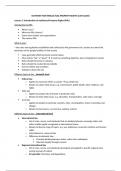
Outline and Evaluate the Behaviourist Approach
AO1 The behaviourist approach attempts to explain behaviour from past experiences using stimulus-
response connections and consequences.
Classical Conditioning:
- This is when a neutral stimulus is repeatedly paired with an unconditioned response to make a
conditioned stimulus that produces a conditioned response.
- This was demonstrated by Pavlov who used his dog. Originally, a bell was a neutral stimulus,
however it was continuously paired with his food (unconditioned stimulus producing an
unconditioned response- salivation). Therefore, the bell becomes the conditioned stimulus
which produces a conditioned response (salivation)
Operant Conditioning:
- This uses consequences to shape behaviour.
- This was demonstrated by Skinner using his rats. He put them into a cage which has a lever,
when the rats pressed the lever, food was released. Once the rats made this connection, the
behaviour was repeated due to positive reinforcement. However, if the lever was held for
more than 30 seconds, an electric shock was administered so by negative reinforcement, the
rats learnt not to hold the lever down.
Positive reinforcement- when a positive behaviour is rewarded so it is repeated.
Negative reinforcement- when a behaviour is done to escape a negative consequence, it is repeated.
Punishment- a negative behaviour is followed by a negative consequence, so the behaviour is not
repeated.
Extinction- a behaviour is not reinforced so is stopped.
AO3 1. This approach is highly environmentally deterministic as it implies, we are slaves of our past
experiences and the environment and hard determinist as it implies we have no free will in
how we behave. Furthermore, it is environmentally reductionist as it only takes into account
environmental factors into the development of our behaviour when actually, there are other
factors such as our biology which heavily influence how we behave.
2. There is a lot of strong, objective and scientific evidence for this approach such as Skinners rats
and Pavlov’s dogs as it involves systematically manipulating the variables to focus on
observable behaviours to determine a cause-and-effect relationship. This increases the
reliability and validity of the approach, contributing to the role of psychology as a creditable
science.
3. The use of animals in much of the research into this approach means that it is limited in its
application to humans. Animals have similar biology to humans, but human interaction and
behaviour is far more complex than animals as we have the role of cognitive factors such as
thought processing that interfere with our behaviours, unlike animals. This means the
evidence from animal studies cannot be generalised to humans. Meaning research from Pavlov
and Skinner is not valid. Furthermore, Skinner’s research has been criticised for being unethical
due to the harsh treatment of the rats when electrocuted.
4. This approach as practical application into the acquisition of phobias by classical conditioning
and maintenance of phobias by operant conditioning. Furthermore, it has treatment
implications into phobias for example, counter-conditioning principles used in both flooding
and systematic desensitization.
5. This approach contrasts the biological approach which states that behaviour is innate rather
than learnt. This means the behaviourist appraoch contributes to the nurture/ nature debate
Outline and Evaluate the Behaviourist Approach
AO1 The behaviourist approach attempts to explain behaviour from past experiences using stimulus-
response connections and consequences.
Classical Conditioning:
- This is when a neutral stimulus is repeatedly paired with an unconditioned response to make a
conditioned stimulus that produces a conditioned response.
- This was demonstrated by Pavlov who used his dog. Originally, a bell was a neutral stimulus,
however it was continuously paired with his food (unconditioned stimulus producing an
unconditioned response- salivation). Therefore, the bell becomes the conditioned stimulus
which produces a conditioned response (salivation)
Operant Conditioning:
- This uses consequences to shape behaviour.
- This was demonstrated by Skinner using his rats. He put them into a cage which has a lever,
when the rats pressed the lever, food was released. Once the rats made this connection, the
behaviour was repeated due to positive reinforcement. However, if the lever was held for
more than 30 seconds, an electric shock was administered so by negative reinforcement, the
rats learnt not to hold the lever down.
Positive reinforcement- when a positive behaviour is rewarded so it is repeated.
Negative reinforcement- when a behaviour is done to escape a negative consequence, it is repeated.
Punishment- a negative behaviour is followed by a negative consequence, so the behaviour is not
repeated.
Extinction- a behaviour is not reinforced so is stopped.
AO3 1. This approach is highly environmentally deterministic as it implies, we are slaves of our past
experiences and the environment and hard determinist as it implies we have no free will in
how we behave. Furthermore, it is environmentally reductionist as it only takes into account
environmental factors into the development of our behaviour when actually, there are other
factors such as our biology which heavily influence how we behave.
2. There is a lot of strong, objective and scientific evidence for this approach such as Skinners rats
and Pavlov’s dogs as it involves systematically manipulating the variables to focus on
observable behaviours to determine a cause-and-effect relationship. This increases the
reliability and validity of the approach, contributing to the role of psychology as a creditable
science.
3. The use of animals in much of the research into this approach means that it is limited in its
application to humans. Animals have similar biology to humans, but human interaction and
behaviour is far more complex than animals as we have the role of cognitive factors such as
thought processing that interfere with our behaviours, unlike animals. This means the
evidence from animal studies cannot be generalised to humans. Meaning research from Pavlov
and Skinner is not valid. Furthermore, Skinner’s research has been criticised for being unethical
due to the harsh treatment of the rats when electrocuted.
4. This approach as practical application into the acquisition of phobias by classical conditioning
and maintenance of phobias by operant conditioning. Furthermore, it has treatment
implications into phobias for example, counter-conditioning principles used in both flooding
and systematic desensitization.
5. This approach contrasts the biological approach which states that behaviour is innate rather
than learnt. This means the behaviourist appraoch contributes to the nurture/ nature debate