Chapter 4 (Clinical Psychology) Complete
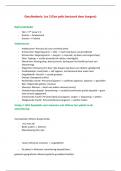
Chapter 4 (Clinical Psychology) Complete Culture diversity - Historically been a hallmark of the US population US population is increasingly diverse, particularly in certain areas/ cities - -20% of US school children speak a language other than English at home -In Miami, Detroit and Washington DC, a single ethnic minority group represents over half of the population -In a single decade (), the Asian American/ Pacific Islander population and the Latino/ Hispanic population each grew by about 50%. -In 2000, there were 28 million first generation immigrants in the United States, represent about 10% of the entire US population Multiculturalism as the "Fourth Force" - Defining issue of the current generation of psychology Multiculturalism - Represents the "fourth force" Multiculturalism is ranked with the three previous movement that have been recognized as dominant paradigms in their respective areas - 1. Psychoanalysis 2. Behaviorism 3. Humanism/ person- centered Multiculturalism stands as a major pervasive influence on the - Work of contemporary clinical psychologist -It represents a fundamental change of emphasis but one unlike the previous three in terms of its method of impact Culture shapes how clients understand their problems for which he or she is seeking help. It is this understanding- this worldwide, applied to psychological problems that the therapist should appreciate as he or she devises an approach to helping the client - Questions to assess client understanding - What do you call your problem (illness, distress)? -What do you think your problem does to you? -What do you think the natural cause of your problem is? -How do you think this problem should be treated? -Who else family, religious leaders do you turn to help you? Books offer education and guidance to psychologist working with cultural diverse populations - 1. Psychotherapy with women 2. Working with Asian Americans 3. Counseling Muslims 4. Ethnicity and Family Therapy 5. Counseling Diverse Populations Emergence of American Psychological Association Divisions (New APA division) - Division 35- Society for the Psychology of women Division 36- Psychology of religion Division 44- Society for the Psychological Study of Lesbian, Gay, and Bisexual Issues Division 45- Society for the Study of Ethnic Minority Issues Division 51- Society for the Psychological study of Men and Masculinity Ethical Principles of Psychologist and Code of Conduct - Revision to APA ethical code 1. Respect for peoples rights and dignity 2. Boundaries of Competence 3. Unfair discrimination 4. Interpreting Assessment results To graduate program in psychology - Multiculturism is the primary focus Cultural and Individual Differences and Diversity - One of the eight domains that an educational program must address adequately to be accredited -This requirement applies to doctoral programs, predoctoral internships. and postdoctoral internships seeking accreditation Revision to the fourth DSM-IV - -Special efforts to incorporate an awareness that the manual is used in culturally diverse population -One such effort is the inclusion of a subsection called "specific, culture, age and gender features" in the text describing each disorder -Culture bound syndromes are described as categories designed to capture "repetitive, patterned, and troubling" experiences of people within a specific cultural group or society ---The list includes about two dozen categories observed in groups from most part of the world Examples of culture-bound syndromes include rootwork, in which hexing, witchcraft, or the evil influence of another person brings forth anxiety and gastrointestinal problems (found in some African American, European American, and Caribbean cultures); sutso, in which a frightening event is thought to cause the soul to leave the body, resulting in depressive symptoms (found in some Latino/Latina/Hispanic cultures); and ghost sickness, in which a preoccupation with death and those who have died elicits a wide variety of psychological and physically debilitating symptoms (found in some Native American tribes). Revision of prominent assessment methods - 1. MMPI-2 - Minnesota Multiphasic Personality Inventory (PERSONALITY TEST) 2. Wechsler intelligence tests Cultural competence - The counselors acquisition of awareness, knowledge, and skills needed to function effectively in a pluralistic democratic society 3 main components 1. Awareness 2. Knowledge 3. Skills Self-awareness - Clinical Psychologist recognizes the uniqueness of his or her own cultural perspective -Learning about ones own culture --Values, assumption, biases --By doing so, become less egocentric --Realize that differences are not deficiencies -Psychologist will encounter clients who cultural backgrounds differs- sometimes slightly, sometimes considerably- from their own Knowledge of Diverse Cultures - Can knowledge by learning through reading (especially regarding history), direct experiences, relationships with people in various cultures -Psychologist should aim to enter session with sufficient knowledge of the clients cultural background Remember that there are exceptions to cultural trends - Metaphor- Asian men tend to be relatively short, but Yao Ming is 7'6 Cultural knowledge should include - Current lifestyle of the members of the cultural Groups history Especially regarding major social and political issues Accumulation - When find themselves in a new cultural environment they may respond in a variety of ways especially with regard to adopting elements of the new culture or retaining elements of their original culture Four separate ACCUMULATION strategies that have been identified - 1. ASSIMILATION- Individuals adopts much of the new culture and abandons much of the original 2. SEPARATION- Individual rejects much of the new cultures and retains much of the original 3. MARGINALIZATION- Individual rejects both the new and the original culture 4. INTEGRATION- Individual adopts much of the new cultural and retains much of the original Culturally Appropriate Clinical Skills - Once the psychologist has attained knowledge of self and clients - Next step is to develop suitable strategies for assessment and treatment --The approaches and techniques that a psychologist uses to improve a clients life should be consistent with the values and life experiences of that client ---Talk therapy- may work better for some cultural groups than for others ----Some cultural groups may respond more positively to "action" than "sight" Continues...
Geschreven voor
- Instelling
- Chapter 4 Complete
- Vak
- Chapter 4 Complete
Documentinformatie
- Geüpload op
- 12 oktober 2023
- Aantal pagina's
- 5
- Geschreven in
- 2023/2024
- Type
- Tentamen (uitwerkingen)
- Bevat
- Vragen en antwoorden
Onderwerpen
-
chapter 4
-
clinical psychology complete
-
chapter 4 clinical psychology complete