Emilia Hawkins
Unit 11: Genetics and Genetic Engineering
D: Explore basic DNA techniques and the use of genetic engineering technologies.
Extracting DNA from biological samples
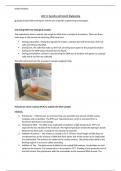
This experiment aims to extract and weigh the DNA from a sample of strawberry. There are three
main steps in the process of extracting DNA from fruit.
During preparation, mixing the ingredients makes a solution that will break down the fruit
cells and releases the DNA.
During lysis, the cells that make up the fruit are being burst open by the prepared solution
leading to the DNA being released into the liquid.
During precipitation, alcohol is used to bring the DNA out of solution and appear as a gloopy
solid which can then be collected.
The DNA extracted from the strawberry sample weighed 0.03g.
Polymerase chain reaction (PCR) to amplify the DNA samples
Method:
1. Polymerase – Polymerases are enzymes that can assemble new strands of DNA using a
template and nucleotides. The PCR uses Taq polymerase, which is extracted from a
bacterium that lives in hot springs.
2. Heating the DNA – The DNA to be replicated is heated to a high temperature (95 oC) to
separate the two strands of the molecule. The high temperature breaks the hydrogen bonds
between the base pairs, causing the two strands to separate.
3. Addition of primers – The mixture is cooled to 55 oC. Primers (small length of DNA that are
complementary to the sections of DNA that flank either side of the section to be replicated)
are synthesized. The primers are added to the cooled mixture. The primers then bind to the
flanking regions in a process called annealing.
4. Addition of Taq – Taq polymerase is added to the cooled DNA mixture. Nucleotides are also
added to the mixture. The temperature is increased to 72 oC. Starting at one particular end of
the DNA strand, the polymerase adds the nucleotides to the unwound DNA strands. The
, Emilia Hawkins
DNA has now been replicated and the cycle can be repeated. The increase in copies of the
DNA is exponential.
Gel electrophoresis to separate the amplified DNA
Method:
1. Incubation with enzymes - The sample of DNA is incubated at 37 oC with a restriction
endonuclease enzyme. Restriction endonuclease is an enzyme that cuts DNA, at specific
recognition sites, into shorter sections.
2. Addition of dye and placement into the electrophoresis tank – A dye is added to the digested
DNA to make it denser. The electrophoresis tank is filled with gel and buffer solution added.
The DNA and dye solution is added to wells that have been cut into one end of the gel.
3. Separation using electricity – A cathode and anode are placed at either end of the
electrophoresis tank. The power supply is connected and left for two hours. The DNA
fragments, negatively charged due to the phosphate groups in the molecule, move towards
the anode. Shorter fragments of DNA travel further than larger ones. The power supply is
disconnected, and the buffer solution poured away. A dye is added to stain the separated
DNA fragments.
4. Analysis – As the DNA fragments move different distances depending on their size, a banding
pattern is formed. This pattern, or profile, can be compared with other samples of DNA to
look for similarities and differences.
The current uses and relevance of genetic engineering technologies
Genetic engineering or genetic modification refers to the artificial manipulation and recombination
of DNA and other nucleic acid molecules with the aim of modifying an organism or population of
organisms. In the past, genetic engineering involved modifying organisms through processes of
heredity and reproduction. This included techniques like artificial selection and more biomedical
processes like artificial insemination, in vitro fertilization, cloning and gene manipulation. In the 20 th
century newer methods have been introduced which have shifted the definition of genetic
engineering to refer to methods of recombinant DNA technology, where DNA from two or more
sources is combined and then inserted into host organisms to propagate. There are four main areas
of genetic engineering and biotechnologies. The first is transgenic biotechnology, which involves
mixing the DNA and genetic material from multiple organisms or sources. The second
biotechnological technique is reproductive cloning which is used specifically to clone certain species.
The third technique is reprogramming of cells which involves reprogramming differentiated cells or
stem cells to become tissues required for patients with diseases or injuries. And finally, forensic
biotechnology is the use of restriction enzymes and electrophoresis to distinguish one person’s DNA
from another.
Genetic engineering technologies are vital for research and use in industry, as it has led to the
production of medical products and disease resistant plants that have improved the quality of life for
many people. Advances in technology made by genetic modification could not have been
reproduced without it as the understanding of genes and alleles was discovered using selective
breeding.
https://www.britannica.com/science/genetic-engineering
Unit 11: Genetics and Genetic Engineering
D: Explore basic DNA techniques and the use of genetic engineering technologies.
Extracting DNA from biological samples
This experiment aims to extract and weigh the DNA from a sample of strawberry. There are three
main steps in the process of extracting DNA from fruit.
During preparation, mixing the ingredients makes a solution that will break down the fruit
cells and releases the DNA.
During lysis, the cells that make up the fruit are being burst open by the prepared solution
leading to the DNA being released into the liquid.
During precipitation, alcohol is used to bring the DNA out of solution and appear as a gloopy
solid which can then be collected.
The DNA extracted from the strawberry sample weighed 0.03g.
Polymerase chain reaction (PCR) to amplify the DNA samples
Method:
1. Polymerase – Polymerases are enzymes that can assemble new strands of DNA using a
template and nucleotides. The PCR uses Taq polymerase, which is extracted from a
bacterium that lives in hot springs.
2. Heating the DNA – The DNA to be replicated is heated to a high temperature (95 oC) to
separate the two strands of the molecule. The high temperature breaks the hydrogen bonds
between the base pairs, causing the two strands to separate.
3. Addition of primers – The mixture is cooled to 55 oC. Primers (small length of DNA that are
complementary to the sections of DNA that flank either side of the section to be replicated)
are synthesized. The primers are added to the cooled mixture. The primers then bind to the
flanking regions in a process called annealing.
4. Addition of Taq – Taq polymerase is added to the cooled DNA mixture. Nucleotides are also
added to the mixture. The temperature is increased to 72 oC. Starting at one particular end of
the DNA strand, the polymerase adds the nucleotides to the unwound DNA strands. The
, Emilia Hawkins
DNA has now been replicated and the cycle can be repeated. The increase in copies of the
DNA is exponential.
Gel electrophoresis to separate the amplified DNA
Method:
1. Incubation with enzymes - The sample of DNA is incubated at 37 oC with a restriction
endonuclease enzyme. Restriction endonuclease is an enzyme that cuts DNA, at specific
recognition sites, into shorter sections.
2. Addition of dye and placement into the electrophoresis tank – A dye is added to the digested
DNA to make it denser. The electrophoresis tank is filled with gel and buffer solution added.
The DNA and dye solution is added to wells that have been cut into one end of the gel.
3. Separation using electricity – A cathode and anode are placed at either end of the
electrophoresis tank. The power supply is connected and left for two hours. The DNA
fragments, negatively charged due to the phosphate groups in the molecule, move towards
the anode. Shorter fragments of DNA travel further than larger ones. The power supply is
disconnected, and the buffer solution poured away. A dye is added to stain the separated
DNA fragments.
4. Analysis – As the DNA fragments move different distances depending on their size, a banding
pattern is formed. This pattern, or profile, can be compared with other samples of DNA to
look for similarities and differences.
The current uses and relevance of genetic engineering technologies
Genetic engineering or genetic modification refers to the artificial manipulation and recombination
of DNA and other nucleic acid molecules with the aim of modifying an organism or population of
organisms. In the past, genetic engineering involved modifying organisms through processes of
heredity and reproduction. This included techniques like artificial selection and more biomedical
processes like artificial insemination, in vitro fertilization, cloning and gene manipulation. In the 20 th
century newer methods have been introduced which have shifted the definition of genetic
engineering to refer to methods of recombinant DNA technology, where DNA from two or more
sources is combined and then inserted into host organisms to propagate. There are four main areas
of genetic engineering and biotechnologies. The first is transgenic biotechnology, which involves
mixing the DNA and genetic material from multiple organisms or sources. The second
biotechnological technique is reproductive cloning which is used specifically to clone certain species.
The third technique is reprogramming of cells which involves reprogramming differentiated cells or
stem cells to become tissues required for patients with diseases or injuries. And finally, forensic
biotechnology is the use of restriction enzymes and electrophoresis to distinguish one person’s DNA
from another.
Genetic engineering technologies are vital for research and use in industry, as it has led to the
production of medical products and disease resistant plants that have improved the quality of life for
many people. Advances in technology made by genetic modification could not have been
reproduced without it as the understanding of genes and alleles was discovered using selective
breeding.
https://www.britannica.com/science/genetic-engineering