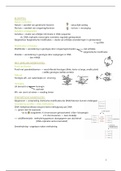
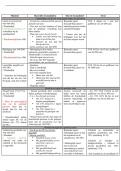
Shivering to generate heat
Erector muscles raise hair to trap heat
5.1.2 Excretion as an example of homeostatic control
, The kidneys, liver and lungs are all involved in the removal of toxic products of metabolism from the blood. The
liver also metabolises toxins that have been ingested.
The kidneys also play a major role in the control of the water potential of the blood.
Excretion = The removal of unwanted and toxic waste products of metabolism from the body
Carbon dioxide is toxic. Breathed out.
Reacts with water via carbonic anhydrase in red blood cells to form carbonic acid
Dissociates to hydrogencarbonate and hydrogen ions
Haemoglobin absorbs the H+ ions in the red blood cells to form haemoglobonic acid,
Causes them to lose the oxygen molecules they are carrying
CO2 can combine directly with haemoglobin to form carbaminohaemoglobin which has a lower affinity for
oxygen
H+ ions lower the pH, making the blood more acidic.
If pH falls below 7.35
Slowed/difficult breathing, headache, drowsiness, confustion; rapid heart rate, changes in blood pressure.
Urea is produced in the liver
Breaking down excess amino acids
Passed to the bloodstream (plasma) and goes to the kidneys.
There it is removed from the blood to form part of urine and is stored in the bladder before being excreted via
the urethra.
The liver is supplied blood from two sources;
Hepatic artery;
- Oxygenated blood from the heart
Hepatic portal vein;
- Deoxygenated blood from the digestive system
- Blood has products of digestion; may contain
toxic compounds that have been absorbed in
the intestine
Blood leaves the liver via the hepatic vein
The bile duct is not a blood vessel.
Carries bile from the liver (where it is made) to the gall
bladder where it is stored before being released into the
small intestine
What does it contain?
- Bile salts; emulsifies lipid droplets
- Hydrogencarbonate ions; neutralizes stomach acid
- Bilirubin; excretory waste from breakdown of old red blood cells
Bile goes to intestine
Erector muscles raise hair to trap heat
5.1.2 Excretion as an example of homeostatic control
, The kidneys, liver and lungs are all involved in the removal of toxic products of metabolism from the blood. The
liver also metabolises toxins that have been ingested.
The kidneys also play a major role in the control of the water potential of the blood.
Excretion = The removal of unwanted and toxic waste products of metabolism from the body
Carbon dioxide is toxic. Breathed out.
Reacts with water via carbonic anhydrase in red blood cells to form carbonic acid
Dissociates to hydrogencarbonate and hydrogen ions
Haemoglobin absorbs the H+ ions in the red blood cells to form haemoglobonic acid,
Causes them to lose the oxygen molecules they are carrying
CO2 can combine directly with haemoglobin to form carbaminohaemoglobin which has a lower affinity for
oxygen
H+ ions lower the pH, making the blood more acidic.
If pH falls below 7.35
Slowed/difficult breathing, headache, drowsiness, confustion; rapid heart rate, changes in blood pressure.
Urea is produced in the liver
Breaking down excess amino acids
Passed to the bloodstream (plasma) and goes to the kidneys.
There it is removed from the blood to form part of urine and is stored in the bladder before being excreted via
the urethra.
The liver is supplied blood from two sources;
Hepatic artery;
- Oxygenated blood from the heart
Hepatic portal vein;
- Deoxygenated blood from the digestive system
- Blood has products of digestion; may contain
toxic compounds that have been absorbed in
the intestine
Blood leaves the liver via the hepatic vein
The bile duct is not a blood vessel.
Carries bile from the liver (where it is made) to the gall
bladder where it is stored before being released into the
small intestine
What does it contain?
- Bile salts; emulsifies lipid droplets
- Hydrogencarbonate ions; neutralizes stomach acid
- Bilirubin; excretory waste from breakdown of old red blood cells
Bile goes to intestine